Tesla is working on several versions of its 4680 cells tailored to different types of vehicles
 Javier Cantagalli
8 October 2024
2 min.
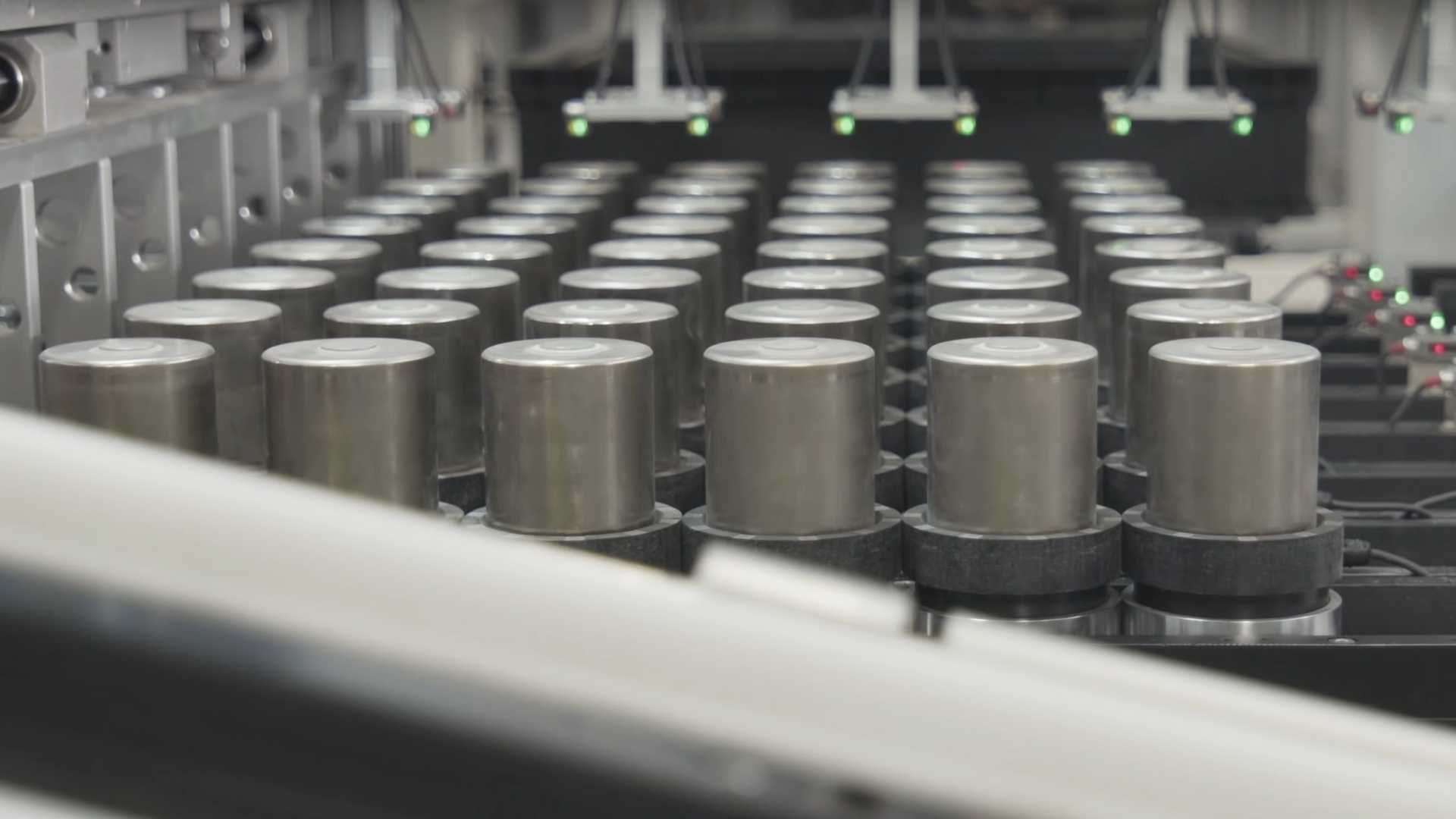
Not all vehicles require battery packs with the same characteristics, so it seems like a good idea to adapt cell capacities to the specific needs of each application.
The North American manufacturer is preparing a revolution in battery technology with the introduction of four variants of its 4680 cell with dry-coated cathodes, an innovation that promises to improve efficiency and reduce production costs. These variants, known internally as NC05, NC20, NC30 and NC50, are designed to meet different performance needs in electric vehicles from Tesla, with their market launch expected in 2026.
The NC05 has been described as the “workhorse” of the manufacturer’s battery range, intended to supply energy to vehicles such as the upcoming Robotaxi, the Cybertruck and the Semi truck, standing out especially for its long service life and reliability. This cell has been developed specifically for all those vehicles that require durability and consistency of the cells over time.
On the other hand, the NC20 is expected to deliver outstanding performance in terms of range and instantaneous energy transfer, making it suitable for the more powerful versions of the Cybertruck and future Tesla models with similar characteristics.
The best of the best
The NC30 and NC50 variants, meanwhile, are the most advanced in the series, incorporating silicon components in the anode, which significantly improves battery properties compared with pure graphite anodes. The NC30 is intended for some versions of the Cybertruck and a future electric saloon, while the NC50 is aimed at high-performance vehicles, such as the future second-generation Roadster.
According to some experts, dry-coating technology represents a significant advance in battery manufacturing. Until now, the wet process has been the standard, where the mixture of active materials is applied as a paste and then dried in huge ovens, a process that is not only costly in terms of energy consumed but also in space and time. Dry coating eliminates the need for these ovens, thereby reducing production costs and the floor area required for manufacturing, which is a considerable advantage both economically and environmentally.
Thus, with these four variants of its 4680 cells, Tesla not only seeks to improve efficiency and reduce costs, but also to tailor each type of cell to the specific needs of different vehicle models, from robustness for heavy transport to agility and power for electric sports cars.


 Peugeot E-208 GTi: a battery-powered toy that revives the spirit of the 1980s sports cars
 New Lexus ES: luxury grows and goes electric
 First contact with the Dacia Sandero Hybrid 155: power and efficiency from €19,890
Deja un comentario