The 8 best value-for-money compact SUVs in 2026, ranked from lowest to highest value
 Bruno Salvatierra
11 May 2026
6 min.
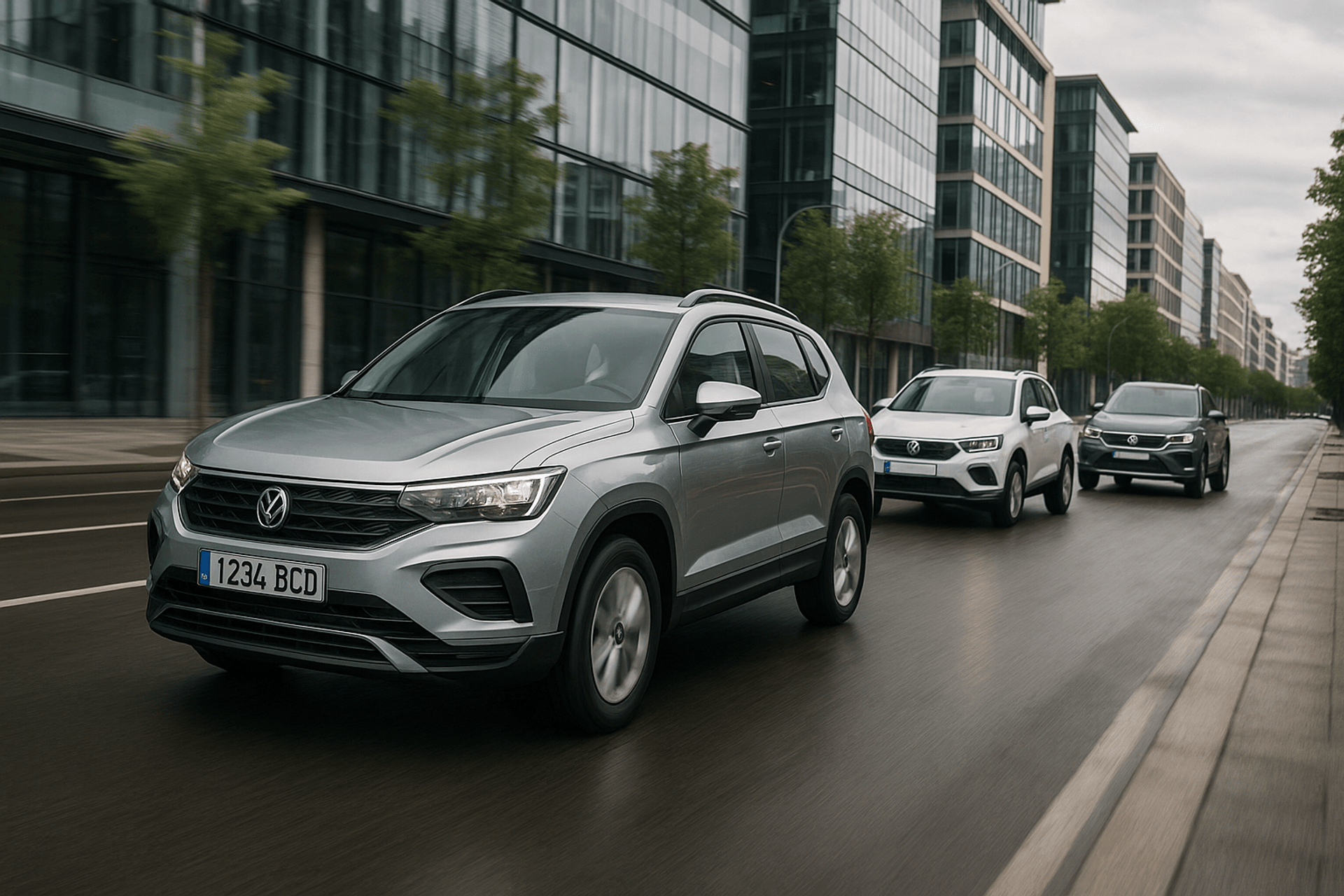
Editorial ranking of the best value-for-money compact SUVs in Spain in 2026, with technical specifications, indicative prices and comparative scoring per model.
Segment C remains the most hotly contested battlefield in the Spanish market. In 2026, the best value-for-money compact SUVs combine electrification, increasingly comprehensive standard equipment and, above all, a price war that benefits the demanding buyer. We have analysed eight models sold in Spain, ranked from lowest to highest perceived value, taking into account equipment, engines, warranty, expected residual value and indicative RRP. All prices mentioned correspond to the manufacturer’s recommended retail price, without dealer discounts, one-off campaigns or current purchase incentives.
How we built this ranking of value-for-money compact SUVs
To define the compact SUV comparison we crossed six variables: entry price, standard equipment, electrified engines, factory warranty, estimated residual value over three years and running cost. The order goes from lowest to highest perceived value, that is: the first offers a lot for little money in absolute terms, and the last concentrates the best overall balance between outlay, performance and long-term outlook.
1. Dacia Duster — from ~20,500 €
The Duster remains the most affordable entry point into the segment C SUV market in Spain. Its third generation, with the CMF-B platform and mild-hybrid and LPG bi-fuel engines, completely reshapes the brand’s image: improved materials, decent connectivity and a boldly chiselled design that ages well. It is not the most refined, but it offers a euro-to-equipment ratio that is hard to match.
| Power kW | Power CV | Top speed | Range | Consumption | Label | Fuel |
|---|---|---|---|---|---|---|
| 96 kW | 130 CV | 180 km/h | ~900 km | 5.8 L/100 km | ECO | Petrol mild-hybrid |
2. MG ZS Hybrid+ — from ~22,500 €
MG has understood the Spanish customer: aggressive pricing, a seven-year warranty and a self-charging hybrid proposition that competes directly with the Japanese for far less money. The ZS Hybrid+ is one of the most interesting cheap compact SUVs 2026, with a sober but functional interior and a realistic urban consumption figure.
| Power kW | Power CV | Top speed | Range | Consumption | Label | Fuel |
|---|---|---|---|---|---|---|
| 143 kW | 196 CV | 190 km/h | ~850 km | 4.7 L/100 km | ECO | Hybrid |
3. Renault Symbioz E-Tech — from ~30,500 €
The Symbioz arrives to fill the gap between the Captur and the Austral, and is positioned as a full hybrid, with the 145 CV E-Tech full-hybrid system already proven in the Clio and the Austral. Renault bets on a modular cabin, a 16 cm sliding rear bench and an optional Solarbay roof that is genuinely distinctive. It is a refined compact, with very relaxed driving in town thanks to the electric mode that predominates at low speeds.
| Power kW | Power CV | Top speed | Range | Consumption | Label | Fuel |
|---|---|---|---|---|---|---|
| 107 kW | 145 CV | 170 km/h | ~1,000 km | 4.6 L/100 km | ECO | Hybrid |
4. Hyundai Tucson Hybrid — from ~31,900 €
Few cars in the segment offer an image as bold as the Tucson. Parametric lines, curved screens, solid finishes and a 215 CV hybrid powertrain that combines performance and reasonable consumption. The five-year warranty with no mileage limit remains one of the strongest commercial arguments in the segment.
| Power kW | Power CV | Top speed | Range | Consumption | Label | Fuel |
|---|---|---|---|---|---|---|
| 158 kW | 215 CV | 193 km/h | ~900 km | 5.7 L/100 km | ECO | Hybrid |
5. Peugeot 3008 Hybrid — from ~36,000 €
The 3008 has evolved into a fastback SUV with its own personality. The panoramic i-Cockpit, the dashboard materials and the driving feel lift it above the generalist average. In its 136 CV 48V mild-hybrid variant it offers urban efficiency, while the 100% electric e-3008 expands the range with autonomies above 500 km WLTP.
| Power kW | Power CV | Top speed | Range | Consumption | Label | Fuel |
|---|---|---|---|---|---|---|
| 100 kW | 136 CV | 200 km/h | ~950 km | 5.4 L/100 km | ECO | Petrol mild-hybrid |
6. Kia Sportage PHEV — from ~40,500 €
The plug-in Sportage is one of the best compact SUVs 2026 if your use combines city driving with occasional long trips. Its 13.8 kWh battery allows more than 60 km in electric mode, and the DGT’s CERO label unlocks access to the ZBEs of the major cities. The seven-year warranty, proven residual value and an interior with a 12.3″ curved dual screen reinforce its position.
| Power kW | Power CV | Top speed | Range | Consumption | Label | Fuel |
|---|---|---|---|---|---|---|
| 198 kW | 265 CV | 191 km/h | ~70 km electric / ~800 km total | 1.1 L/100 km | CERO | PHEV |
7. Cupra Formentor 1.5 e-Hybrid — from ~42,000 €
The Formentor proves that a compact SUV can have a sporty soul without tipping into shrillness. Cupra has refined the design in its latest update: triangular headlights, an illuminated grille and an interior with wrap-around seats. The 204 CV e-Hybrid version offers more than 100 km in electric mode according to WLTP, a figure few PHEVs in the segment reach. CERO label, dynamism and a finish clearly above its price.
| Power kW | Power CV | Top speed | Range | Consumption | Label | Fuel |
|---|---|---|---|---|---|---|
| 150 kW | 204 CV | 210 km/h | ~100 km electric / ~900 km total | 0.9 L/100 km | CERO | PHEV |
8. Toyota RAV4 Hybrid — from ~43,500 €
We close the value-for-money compact SUV ranking with the absolute benchmark for reliability. The hybrid RAV4 has spent more than a decade perfecting a system that today comes close to operational perfection: starts without hesitation, invisible transitions between engines and urban consumption below 5 L/100 km. Add to this one of the highest residual values in the segment and the Toyota Relax warranty, which can reach up to 15 years while respecting the official maintenance schedule.
| Power kW | Power CV | Top speed | Range | Consumption | Label | Fuel |
|---|---|---|---|---|---|---|
| 160 kW | 218 CV | 180 km/h | ~1,000 km | 5.0 L/100 km | ECO | Hybrid |
Comparative summary table and editorial score
| Model | Fuel | CV | Label | Price from | Score /10 |
|---|---|---|---|---|---|
| Dacia Duster | Mild-hybrid | 130 | ECO | ~20,500 € | 8.2 |
| MG ZS Hybrid+ | Hybrid | 196 | ECO | ~22,500 € | 8.0 |
| Renault Symbioz E-Tech | Hybrid | 145 | ECO | ~30,500 € | 8.3 |
| Hyundai Tucson Hybrid | Hybrid | 215 | ECO | ~31,900 € | 8.5 |
| Peugeot 3008 Hybrid | Mild-hybrid | 136 | ECO | ~36,000 € | 8.1 |
| Kia Sportage PHEV | PHEV | 265 | CERO | ~40,500 € | 8.7 |
| Cupra Formentor e-Hybrid | PHEV | 204 | CERO | ~42,000 € | 8.9 |
| Toyota RAV4 Hybrid | Hybrid | 218 | ECO | ~43,500 € | 9.1 |
Frequently asked questions
Which is the compact SUV with the best value for money in 2026?
In absolute terms, the Dacia Duster still sets the benchmark for entry price. If we weigh total cost of ownership and residual value, the Toyota RAV4 Hybrid is the most balanced in the ranking, followed by the Cupra Formentor e-Hybrid in the premium-sporty space.
Is a plug-in hybrid compact SUV worth it in 2026?
Yes, especially if you have a home charging point and your use combines short daily trips with occasional long journeys. Models such as the Kia Sportage PHEV or the Cupra Formentor e-Hybrid offer more than 60-100 km of electric range and the CERO label, which translates into tax savings and access to ZBEs.
What warranty do the most competitive brands in the segment offer?
MG and Kia lead with seven years, Hyundai maintains five years with no mileage limit, and Toyota extends its cover up to 15 years with the Relax programme under official maintenance. Dacia, Renault, Peugeot and Cupra offer the standard two or three years European warranty, extendable for a fee.
Do the indicated prices include discounts or incentives?
No. All figures are the manufacturer’s recommended retail price, without dealer discounts, one-off commercial campaigns or official incentives such as the MOVES Plan. The final transaction price is usually noticeably lower depending on the offer and the time of year.


 Peugeot E-208 GTi: a battery-powered toy that revives the spirit of the 1980s sports cars
 New Lexus ES: luxury grows and goes electric
 First contact with the Dacia Sandero Hybrid 155: power and efficiency from €19,890
Deja un comentario