The best tips for washing your car without damaging it... and without getting fined
 Antonio Roncero @roncero_antonio
17 August 2022
7 min.
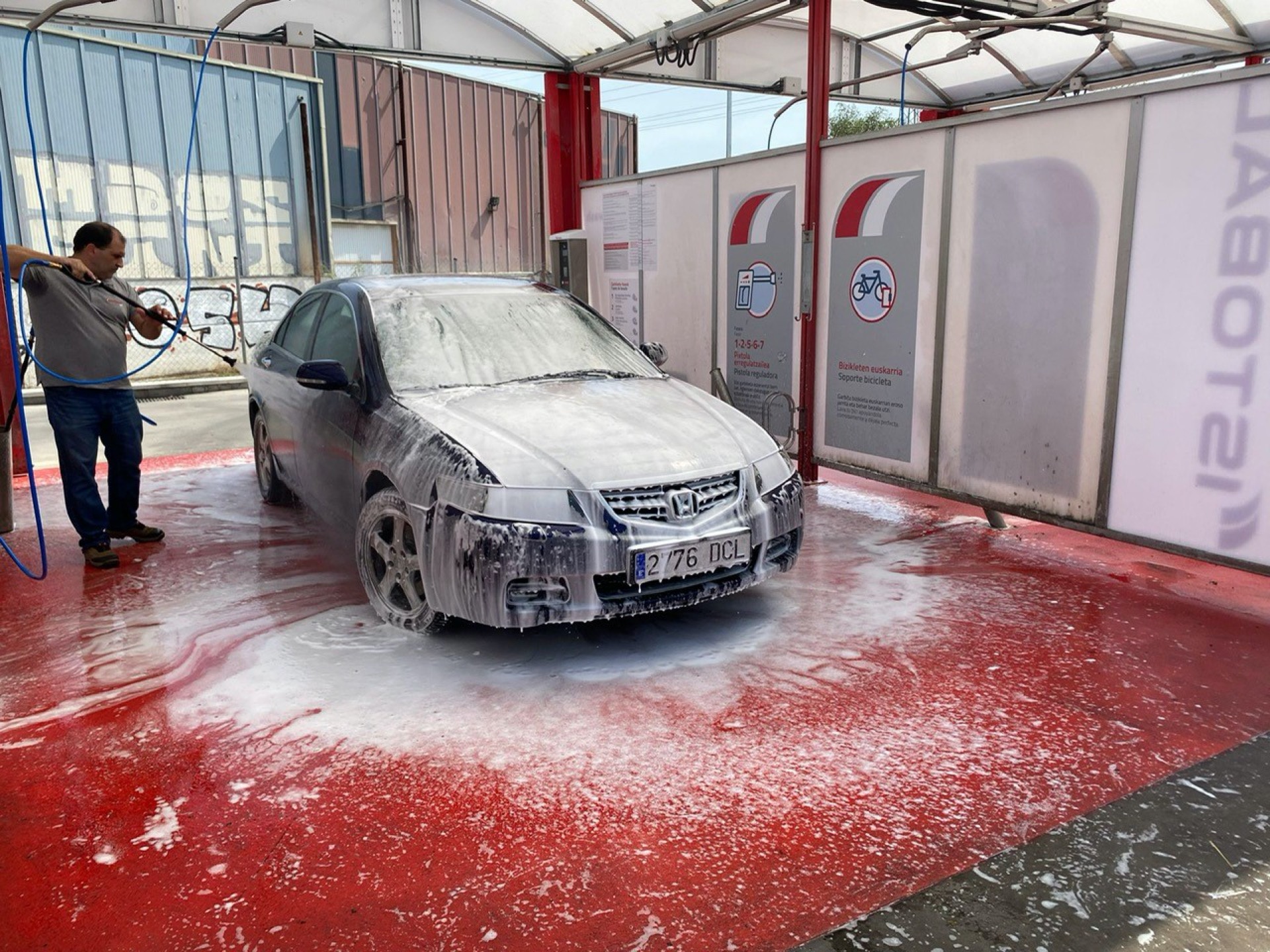
When washing your car, especially in summer, there are things you should avoid if you want to keep the bodywork and paint in good condition.
If you like to keep your car spotless, the solution is a good wash every now and then. But be careful, because washing a car properly is not so easy. There are many myths about homemade products and miracle practices that, in the end, cause more problems than they remove dirt, and you should also know that you can be fined both for driving it on the street… and for driving it when it is very dirty.
Following these tips, your car will always look “like a million dollars”, with no fines -yes, you read that right, fines- and without damaging the paint, bodywork or wheels.
1.- Fines for washing your car on the street
Yes, you read that right. Washing your car on public roads is prohibited. Article 4.2 of the General Traffic Regulation states that it is prohibited to deposit objects or materials that could obstruct traffic, and the very act of washing a vehicle in the street means you will leave water, soap residue and dirt on the road.
Depending on the municipality, the amount of the fine for washing your car on the street can vary. And you may be surprised to learn how much: from 60… up to more than 1,000 euros! The generic penalty is set at around 100 euros. Be careful, because if you decide to wash your car inside a communal garage, you can also run into problems; the best thing is to find out about the established regulations or ask permission from the community manager.
2.- Fines for driving a dirty car
Let’s continue with the fines… this time for driving a dirty car. Again, you read that right: driving a dirty car can be grounds for a penalty. It makes sense: it is the driver’s responsibility to keep the number plate fully legible, and if it is covered in mud, grease or any other substance that prevents its identification, the fine can be 200 euros.
So can I just clean the number plate and drive with the rest of the car dirty? No. It is also mandatory for the windows to be clean enough so that you can see properly and drive safely. Likewise, the headlights must not be very dirty or have cloudy or clearly degraded lenses that limit their ability to light the road. Again, the fine in these cases amounts to 200 euros. You will surely now understand better why, at the MOT inspection, they check that the windscreen washer “water jet” works, or the condition of the headlight lenses.
3.- Where can I wash my car without problems?
If you do not have a private garage or plot, you will have to go to a place specially set up for washing cars, whether at the car wash bays found at many petrol stations, at specialised vehicle washing centres, or at the common automatic car washes you can find in shopping centres and petrol stations.
4.- DO NOT use just any soap on the bodywork
If you are lucky enough to wash your car by hand without risking a fine, using any soap you have at home is totally inadvisable. It is very common to resort to dishwashing liquid or shower gels. But any product that is not specifically formulated for washing cars can be harmful not only to the bodywork, but will end up drying out the rubber parts of the vehicle affected by that soap, such as door seals, window frames or windscreen seals, etc.
In any specialist shop or even online you will find many brands of special car wash soap, which are usually alkaline and biodegradable. The price is around 10-15 euros for a 5-litre canister; in the end, the litre actually works out cheaper than household dishwashing liquid or shower gel.
5.- Self-service wash with pressure lance is better than tunnel
I agree with you, the most convenient option is to go to an automatic tunnel wash. But I confess it is not my favourite option by any means, although I use it from time to time. It is not that they leave the car dirty; in fact they clean it very well. But if you look closely, you will see that in most tunnel washes the nylon strands of the brushes are worn and even have dirt residue from other cars. And those strands spinning and rubbing against the bodywork can end up causing micro-scratches in the paint.
So the best option, and an increasingly popular one, is self-service bays with pressure lances or guns. You have to put in a bit of effort, but that is the price if you want to keep your car looking like new. The best approach is to start with a good rinse to remove the surface layer of dirt and loosen the rest, then move on to the soaping stage with warm water. From there, use the brush instead of the lance usually found in these bays; if you do not trust it, you can always do this stage with a microfibre glove or a special bodywork cleaning mitt. In these self-service bays you can also apply wax polish after the final rinse, which is also applied with the lance.
It is very important to keep the lance about 30-40 cm from the bodywork, to apply it from top to bottom, and not to aim it directly or hold it on areas where rubber seals are present.
6.- Drying, best in the shade and by hand
If you wash your car in a tunnel wash, the air dryers will take care of the stage we normally pay least attention to when washing the vehicle. But if you wash it by hand, or do it at a self-service bay with a lance or gun, try to avoid letting the car dry in the sun or while driving. If you do not, stains are very likely to appear on the bodywork.
The best thing is to dry it by hand, using special microfibre towels or chamois. It will not take long: you simply need to remove the water left on the bodywork, and for this you only need to pass the chamois without applying much pressure, taking care to wring it out when it holds a lot of water. Many people do not know this, but good drying makes all the difference in a good wash.
7.- Shiny wheels: use a special wheel cleaner
If not even the tunnel wash or the lance manages to remove those ugly marks on the wheels, do not be surprised. The black dust given off by brake pads is the cause in most cases of that dirt, which many confuse with grease… and try to remove with degreasing products. There is even a very widespread myth that the best wheel cleaner is cola. Never do that.
To clean the wheels, and do it without harming the other components the product may reach (remember that the brakes are behind the wheels), the best thing is to use a special wheel cleaner. There are many on the market, and they are characterised by containing no acids or alkalis, having a neutral pH, and having an effect that removes ferrous residues without even needing to scrub. It is as easy as spraying the wheel, letting the product work for about five or ten minutes, and rinsing. A good idea is to apply it before driving the car through the tunnel wash or using the lance.
The Sisbrill V60 or the Liqui Moly 1597 are two examples of wheel cleaners with very good user reviews.
Related information of interest


 Peugeot E-208 GTi: a battery-powered toy that revives the spirit of the 1980s sports cars
 New Lexus ES: luxury grows and goes electric
 First contact with the Dacia Sandero Hybrid 155: power and efficiency from €19,890
Deja un comentario