Focus Ford Hybrid Cars Sports Cars
The new Ford Focus RS depends on its hybrid system
 Mónica Redondo @MonicaRedondoD
11 February 2020
4 min.
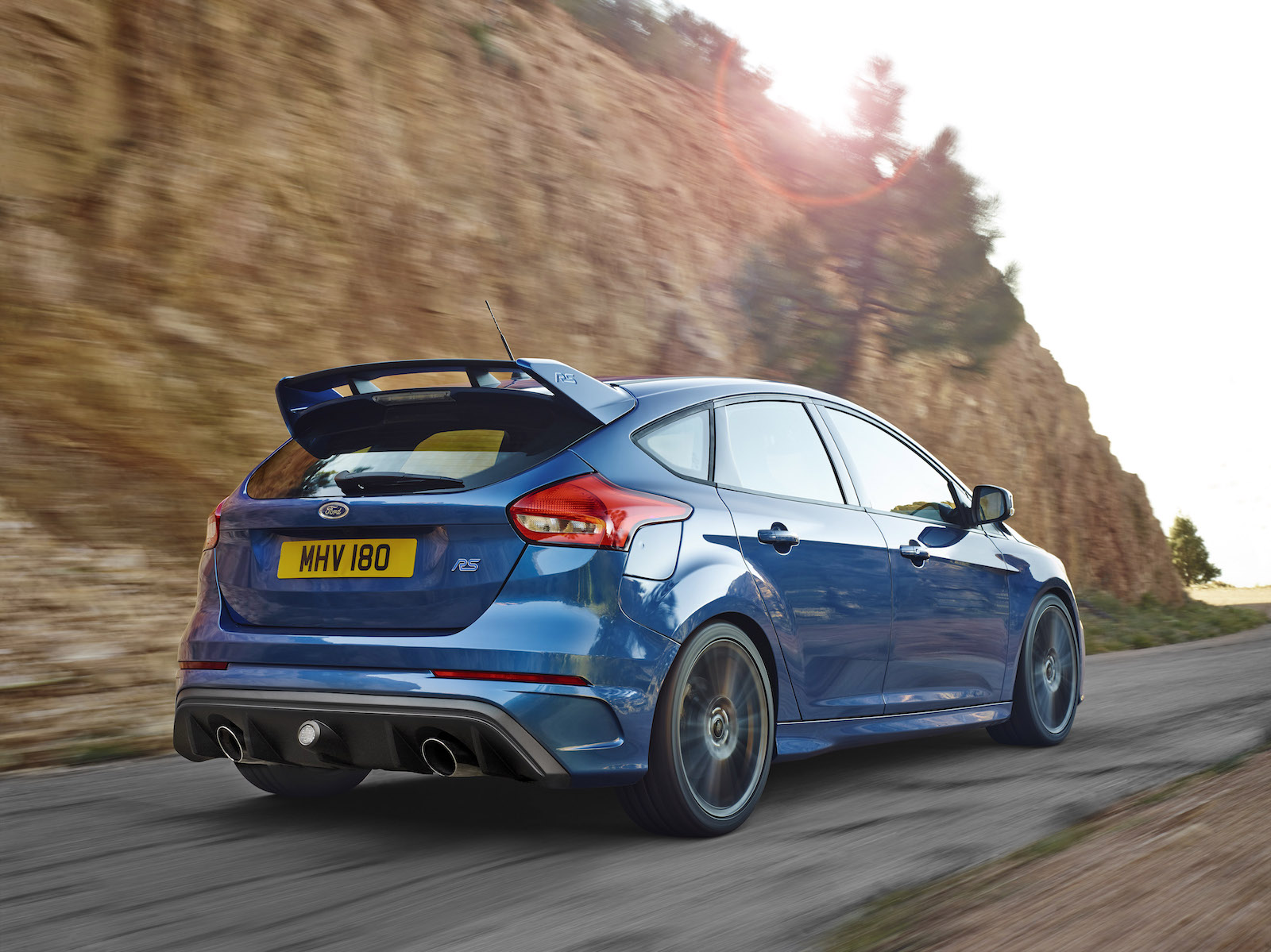
The new Ford Focus RS will have to fit a fully hybrid powertrain to meet the CO2 emissions regulations in the European Union.
Engineers are struggling to make a new Ford Focus RS possible after a switch to full hybridisation.
The future of a new Ford Focus RS depends on its engineers creating a high-performance, fully hybrid powertrain that meets the European Union’s new regime for fleet-average CO2 emissions, a challenge that Ford bosses describe as “waiting for a solution”.
A senior executive at the oval-badged brand has said that “we are waiting for our engineering team to find a solution for the powertrain, and that is not easy given the new fleet CO2 regulations“.
Eighteen months ago, it was understood that Ford was looking at a 48V mild-hybrid powertrain. To minimise CO2 figures, the company now believes the engine has to be a full hybrid. “The mild hybrid is not enough,” the brand source said.
Ford Focus RS, awaiting a hybrid powertrain
The challenge of the new fleet-average figure, set across the industry at 95 g/km but varying according to a car maker’s vehicle mix and their kerb weights, now means the Focus RS will not appear in 2020 as rumoured. Instead, it is more likely to launch in 2022/23.
In order to achieve high performance and low emissions, it is understood that Ford has switched its attention to an RS version of the fully hybridised 2.5-litre petrol unit that will power top-end models of the new Kuga this year. In that application, the engine and motor combination, with a 2.5-litre four-cylinder Atkinson-cycle engine, produces 222 CV, with transmission via an automatic CVT and optional all-wheel drive.
All-wheel drive will be vital to harness the power required by the Focus RS, which is likely to approach 400 CV. The last Focus RS was all-wheel drive and produced 345 CV and 376 lb-ft from a 2.3-litre turbo four, but since then the equivalent models from Audi and Mercedes-Benz have pushed outputs beyond 400 CV and more.
Matching a similar output would require a combination of combustion and electric power, possibly 300 CV from a turbocharged 2.5-litre engine and 100 CV from the electric motor.
Another engineering problem to solve is whether the project’s goal can be achieved at a reasonable cost, with a performance-oriented gearbox and an all-wheel-drive system delivering the much-loved Drift mode that was programmed into a GKN intelligent differential — key to the unique driving characteristics of the old RS. Integrating that into a hybrid system without raising project costs would be a challenge.
Ford RS, 50 years and the story continues
“The history of all previous RS models is one of engineers working on the project in their spare time and at weekends, pitching ideas and concepts. On the new one, we are still waiting for the right concept, especially for the powertrain,” the source said.
But there is hope that a new Focus RS will at least face a much easier journey to production than the last model, which was caught in the strict product-development straitjacket of former CEO Alan Mulally. As a result, the Focus RS had to pass every set of global standards for a new productFord, after dozens of hurdles were placed in front of its engineering development teams.
Indeed, the Focus RS project was almost cancelled because of these problems, until the then chief engineer at Ford, Raj Nair, intervened at a product review meeting to personally guarantee that the RS project could be successfully delivered within budget.
Since Mulally retired in 2014, Ford has dismantled global bureaucracy, allowing Ford Europe to develop market-specific models such as the newly launched Puma crossover, which earlier this month was crowned What Car? Car of the Year — the first Ford to win the award since the Fiesta in 2009.
There is hope that this process, championed by Ford president and former Ford Europe boss Jim Farley, will make it easier to clear the obstacles in the way of a new RS. Another hurdle will be finding engineering resources while Ford’s product development teams work flat out on a major electrification drive.
Around 8 billion is being injected into a global offensive to deliver 40 new battery-electric, mild-hybrid and plug-in hybrid models by 2022.
Technical specifications of this car


 Peugeot E-208 GTi: a battery-powered toy that revives the spirit of the 1980s sports cars
 New Lexus ES: luxury grows and goes electric
 First contact with the Dacia Sandero Hybrid 155: power and efficiency from €19,890
Deja un comentario