The update to the Volkswagen Golf brings many new features, including a plug-in hybrid with... up to 141 km of range in electric mode!
 Antonio Roncero @roncero_antonio
20 September 2024
6 min.
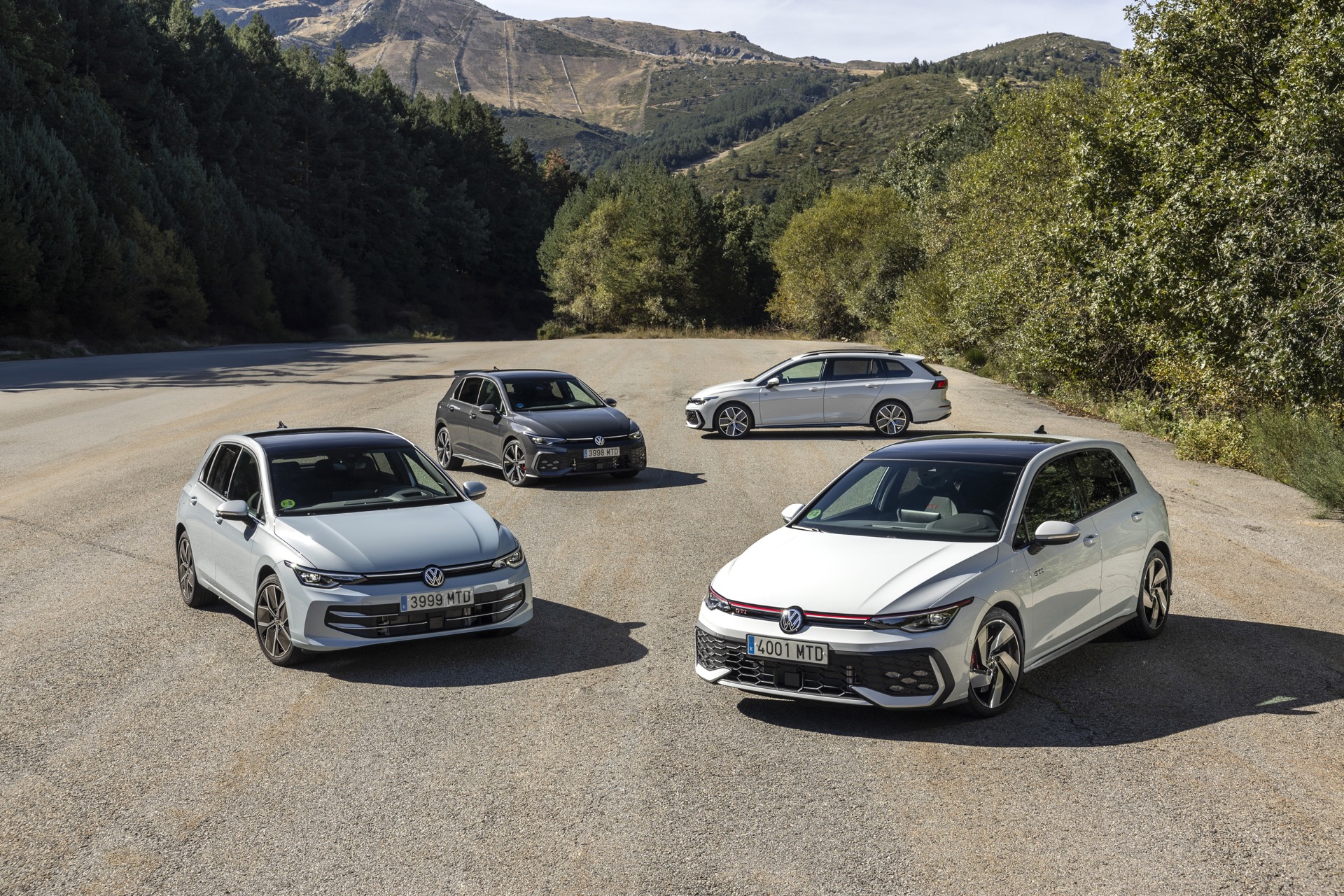
Coinciding with its 50th anniversary, Volkswagen is renewing the range of its most popular model, the Volkswagen Golf, which arrives with changes to its exterior and interior design, new equipment and important mechanical updates.
Eight generations over five decades have already passed since the launch of the first Volkswagen Golf back in 1974. In total, more than 37 million units have been built, making the popular German compact the best-selling model in Europe in the entire history of the automobile… and the third best-selling in the world. Now, coinciding with its 50th anniversary, Volkswagen is renewing the eighth generation of the Golf, which reached the market in 2020. And it does so with very slight aesthetic changes, but important technical updates affecting equipment and the engine range. Let’s take a look.
What changes inside and out on the VW Golf VIII MY25
You know how these “facelifts” work, especially on models that are still very much current, as is the case with the Golf VIII. The aim is to give the impression that it changes a lot while touching up as little as possible, usually the bumpers and the lights. What draws the most attention is the illuminated front logo, with the Golf being the first combustion-engined model from the brand to incorporate it.
The new front headlights can incorporate LED Matrix technology (as part of the new IQ.Light package), which, combined with the dynamic light assistant, doubles the reach compared with the previous version, lighting the road up to 550 metres ahead of the vehicle. Both the front headlights and the new 3D LED rear lights allow you to configure and personalise the animations with which the car welcomes you or bids you farewell when you activate the central locking.
Inside, beyond the new upholstery, the standout is the new infotainment system with the new software already used by the electric models in the ID range, which brings a large 12.9-inch multimedia screen as an alternative to the 10.4-inch one. Equipment improves from the base versions, adding App-Connect wireless connectivity, and from the Life trim onwards, a wireless charger for the mobile phone. New options in the list include the 360-degree camera system and the remote parking assistant, which allows the manoeuvre to be carried out from the smartphone.
Wisely, and applying the “it’s never too late…” principle, Volkswagen has also decided to return to conventional buttons on the multifunction steering wheel, which is much appreciated, since they are easier to use than touch-sensitive ones. Backlighting has also been included to make the controls below the central screen easier to use, allowing the climate control system and radio volume to be operated without resorting to the touchscreen. Another novelty is the arrival of an artificial intelligence-based voice assistant, with ChatGPT integration.
Engines: petrol and diesel, outputs between 115 CV and 333 CV
As with other models in the group, such as its “close relative” the Audi A3, the Golf also says goodbye to the 1.0 TSI three-cylinder engine. Its place as the entry-level engine in the range is taken by a new 1.5 TSI four-cylinder with the same output, 115 CV, which is also offered with 150 CV replacing the previous 130 CV engine, paired with the DSG dual-clutch gearbox. The same engine forms the basis of the eTSI versions with mild hybridisation and the ECO DGT environmental label, with 115 and 150 CV, and always with the DSG gearbox.
The petrol engine range is completed by the 2.0 TSI of 204 CV, combined with 4Motion all-wheel drive, while the 2.0 TSI in the Golf GTI increases its output from 245 to 265 CV. As more sporty versions, the Golf GTI Club Sport still produces 300 CV, and the Golf GTI R, with 4Motion all-wheel drive, keeps its output at 333 CV.
There are no changes to the diesels either, which remain part of the Golf range. The 2.0 TDI engine is split into two variants: with 115 CV and a 6-speed manual gearbox, or with 150 CV paired with the 7-speed DSG gearbox, both carrying the C label, as they have no hybridisation. It is this latter version that I was able to drive during the presentation of the new range in Madrid, confirming what we already suspected: little has changed behind the wheel of the new Golf in terms of driving feel, which remains excellent. It is among the best in its class if you are not looking for the most agile car or the most comfortable one, but rather a good balance between the two qualities.
Incidentally, now that there are fewer and fewer of them left, the 2.0 TDI once again made it clear that turbodiesel engines remain unbeatable when it comes to covering long distances for little money, however much the new generations of petrol engines have come fairly close in this respect.
More electric range for the VW Golf plug-in hybrid
The most important change comes with the VW Golf plug-in hybrid, which now uses the 1.5 TSI engine instead of the previous 1.4 TSI, and practically doubles the battery capacity, which now reaches 19.7 kWh. Two versions are retained, with a system output of 204 CV for the eHybrid, or 272 CV in the Golf GTE, with an electric-mode range of 141 km and 131 km respectively. This makes the Golf the compact plug-in hybrid with the greatest electric range on the market.
The greater battery capacity also brings an increase in maximum AC charging power, from 3.7 to 11 kW. And it is now also possible to charge the Golf plug-in hybrid with DC, at a power of up to 40 kW.
Volkswagen has improved the standard equipment of the new Golf, which at launch can be ordered with special packs at no additional cost. For the base trim this pack includes adaptive cruise control, a 10-inch digital instrument cluster, a 12.9-inch multimedia screen and 16-inch alloy wheels. In the Life and Style trims, the launch pack at no cost adds three-zone climate control, blind-spot and rear parking exit warning assistants, and 360-degree emergency braking assist.
Prices for the new Golf start from 23,600 euros, including promotional discounts and the financing offer. And there are still units left of the interesting 50th Anniversary edition, which is distinguished by specific trim details and very complete equipment, with Matrix LED headlights, 18-inch wheels, alarm, metallic paint, heated front seats and steering wheel, navigation with the IDA voice assistant, 360-degree camera and keyless entry.
Volkswagen Golf – Image gallery
Technical specifications of this car


 Peugeot E-208 GTi: a battery-powered toy that revives the spirit of the 1980s sports cars
 New Lexus ES: luxury grows and goes electric
 First contact with the Dacia Sandero Hybrid 155: power and efficiency from €19,890
Deja un comentario