Tips for driving at night without scares
 Victor Alós Yus @sepelaci
30 June 2016
3 min.
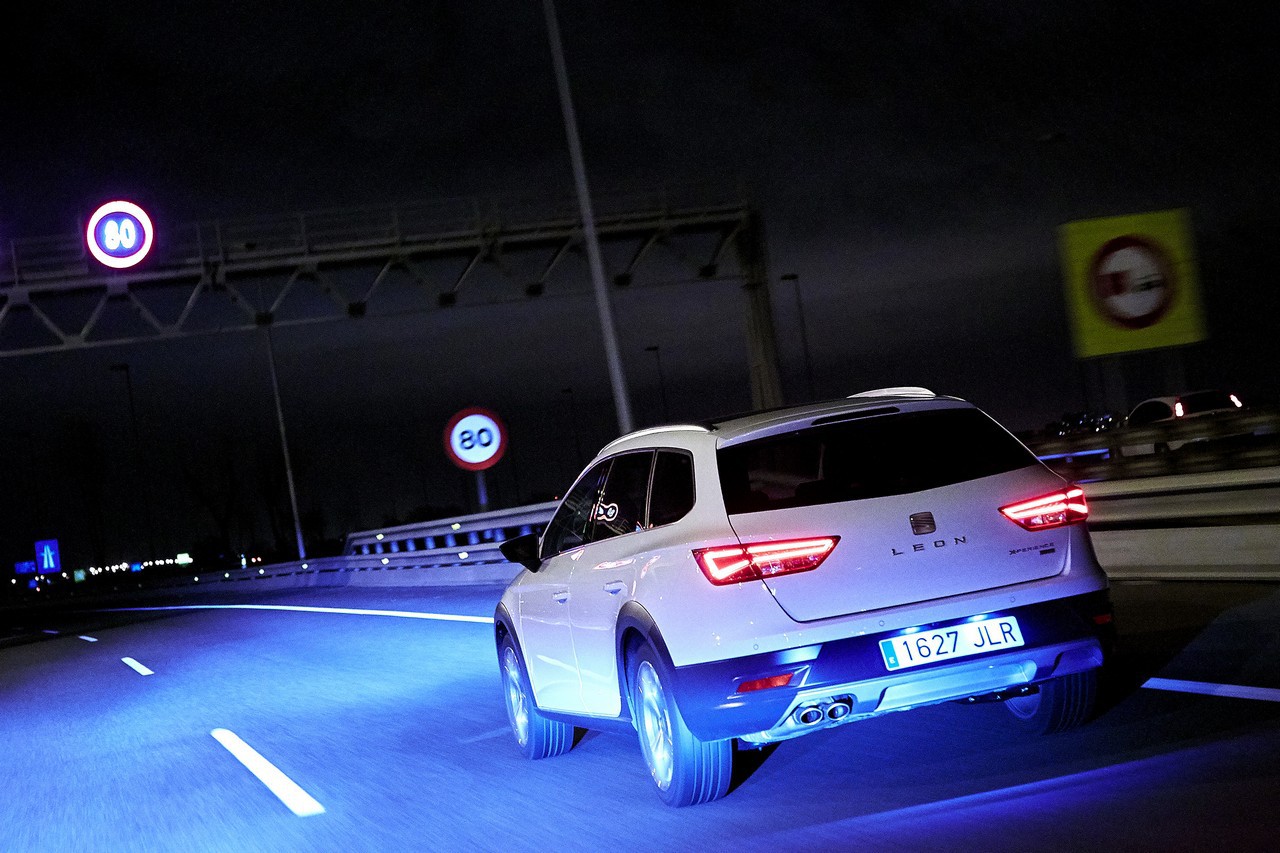
When we start a trip that will take us to drive during the night hours, when there is not enough natural light to drive safely, the symptoms of fatigue appear, so we are going to offer you some tips so that you can drive safely at those times
Although in the summer months we have more hours of daylight throughout the day, the moment comes when the sun disappears, so, just like in winter, the moment comes when you have to drive at night. If in the winter months you have to drive in the dark because there is no other choice, in summer the night is usually taken advantage of to drive and make the most of rest days.
But you have to be careful, since driving at night is more tiring than driving during the day. In fact, 37% of the fatal accidents that occur each year happen at night. That is why precautions must be taken to the extreme to prevent fatigue from affecting concentration and to be able to reach the destination without any setback.
Turn on the lights at dusk
Although at night it is indisputable that dipped headlights must be on, it is important to start using them before the sun sets completely. At dusk, when the light decreases, it is time to switch them on to improve visibility. They will not only help us see better, but also let other drivers see us. If the lack of light is combined with rain or some fog, it is advisable to use the lights, as this increases safety.
Some of the most modern models have a system that switches on the dipped headlights when it determines that the lighting conditions are no longer sufficient for good visibility.
Adjust your speed to the field of vision
When we are driving, we must maintain an appropriate speed that allows us to stop the vehicle within the range of the headlights. This is very logical, since we cannot see beyond them, and when an obstacle appears, the car must be able to stop safely.
Keep a safe following distance
For the same reason as in the previous section, you must keep a safe distance that allows you to brake so as not to hit the rear of the vehicle in front. The margin could perfectly be three seconds between one car and the next, enough time to react and brake if necessary.
Be alert to the first signs of fatigue
It is easy to notice when you are succumbing to the effects of fatigue. Your eyes begin to sting and it becomes hard to keep them open. In addition, you start to feel uncomfortable in your seat and your reflexes slow down. It is time to stop and rest for a while, sleeping a little if necessary. After an hour or two of rest, you can continue driving through the night. It is best to rest for as long as possible, but if necessary, once the most immediate tiredness has gone, you can carry on, though taking extra precautions.
Source | SEAT


 Peugeot E-208 GTi: a battery-powered toy that revives the spirit of the 1980s sports cars
 New Lexus ES: luxury grows and goes electric
 First contact with the Dacia Sandero Hybrid 155: power and efficiency from €19,890
Deja un comentario