Top 8 electric SUVs by real-world efficiency: kWh/100 km in real road tests
 Javi Vicente @javivicente
12 May 2026
7 min.
An objective ranking of the most efficient electric SUVs on sale in Spain, measured in real-world consumption in kWh/100 km under mixed conditions, not optimistic WLTP figures.
Efficiency has become the true battlefield of the electric SUV. While manufacturers compete to advertise ever-larger batteries, drivers covering long routes in Spain are discovering that a car with an 82 kWh battery can perform worse than another with 64 kWh if its real consumption soars. At Highmotor we have spent months collecting consumption data in typical Spanish mixed conditions—motorway at 120 km/h, dense urban traffic, secondary roads with gradients—to build a ranking that does not depend on the WLTP cycle, but on the kWh/100 km shown by the on-board computer at the end of the trip.
This is our Top 8 of the most efficient electric SUVs sold in Spain during 2024-2025, ranked by verified real-world consumption.
Why real consumption matters more than battery capacity
A 100 kWh battery does not guarantee range if the car consumes 22 kWh/100 km. Another 70 kWh battery with an average consumption of 15 kWh/100 km offers practically the same usable range, weighs less, charges faster and costs less in electricity. Real efficiency depends on aerodynamics (drag coefficient, Cx), weight, thermal management, tyres and the drivetrain software. In winter, moreover, models with a standard heat pump show differences of up to 4 kWh/100 km compared with those using resistive heaters.
Methodology: how we measure real consumption at Highmotor
Each model is tested on a 250 km mixed route split between motorway (50%), interurban (30%) and urban (20%), with temperatures between 8 and 22 °C, air conditioning set to 21 °C, tyres at homologated pressure and a single occupant with 30 kg of luggage. We reset the computer at the start and validate consumption against the energy replenished at the charger. No hypermiling: normal driving, respecting speed limits.
The ranking: from most efficient to least efficient
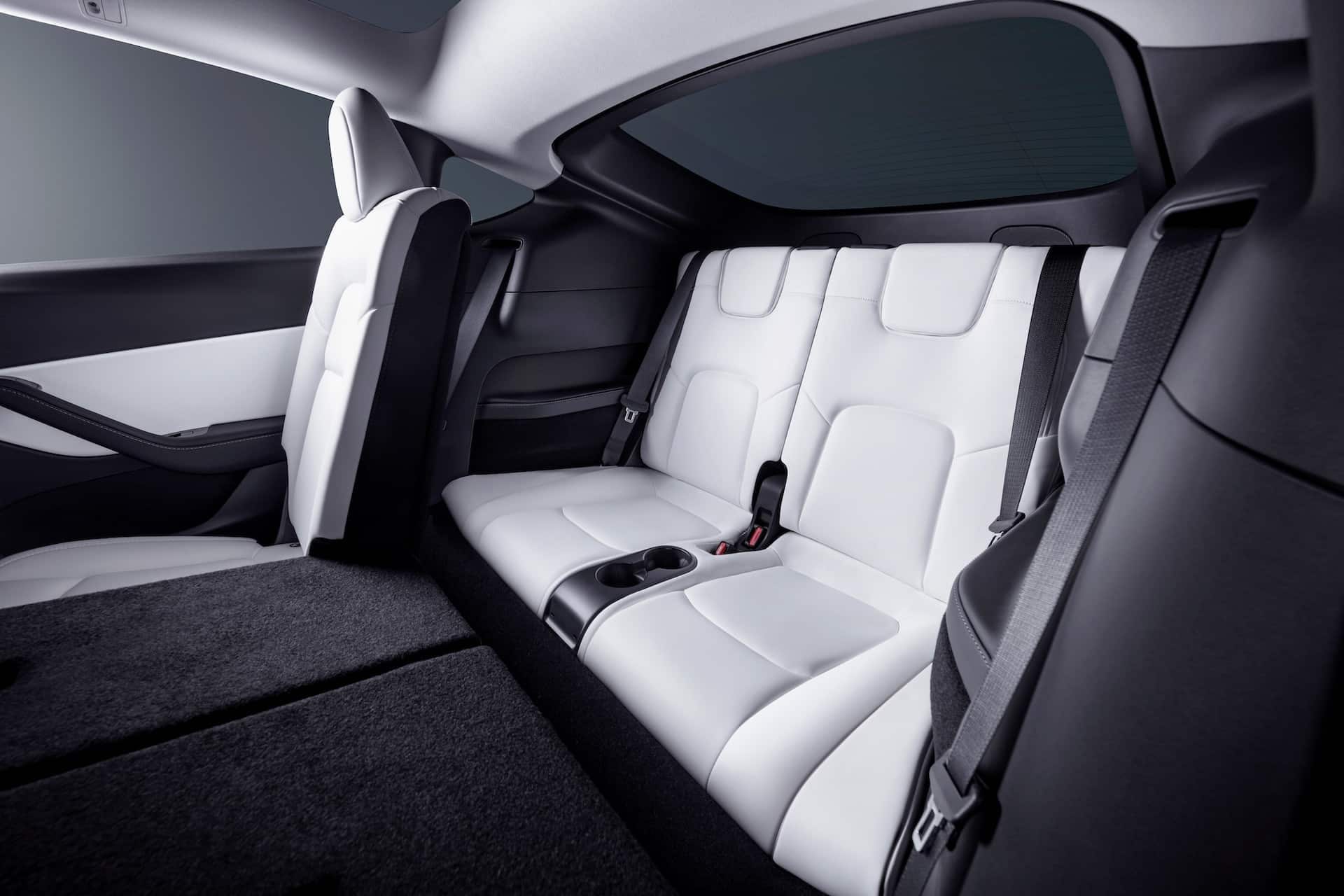
1. Tesla Model Y RWD — from approximately €46,000 · 14.8 kWh/100 km
It remains the benchmark. The Model Y RWD combines a Cx of 0.23, a standard heat pump and energy management software refined over years of iteration. On our route it recorded 14.8 kWh/100 km, which with its 60 kWh usable battery translates into more than 400 real km without effort.
| Power kW | Power CV | Top speed | Range | Real consumption | Label | Fuel |
|---|---|---|---|---|---|---|
| 220 kW | 299 CV | 217 km/h | 455 km WLTP | 14.8 kWh/100 km | Zero emissions | Electric |
2. Hyundai Kona Electric 65 kWh — from approximately €41,500 · 15.1 kWh/100 km
The second-generation Kona is one of the most efficient compact SUVs on the market. Its platform is not the E-GMP of its bigger siblings, but its aerodynamic work and thermal management allow it to close the route at 15.1 kWh/100 km. It charges at 400 V (not 800 V), a weak point for long journeys.
| Power kW | Power CV | Top speed | Range | Real consumption | Label | Fuel |
|---|---|---|---|---|---|---|
| 160 kW | 218 CV | 172 km/h | 514 km WLTP | 15.1 kWh/100 km | Zero emissions | Electric |
3. Renault Scenic E-Tech 87 kWh — from approximately €42,900 · 15.4 kWh/100 km
The reborn Scenic has surprised friends and foes alike. With its large 87 kWh battery and a measured consumption of 15.4 kWh/100 km, it exceeds 560 real km in mixed use. Standard heat pump and a carefully worked aerodynamic profile.
| Power kW | Power CV | Top speed | Range | Real consumption | Label | Fuel |
|---|---|---|---|---|---|---|
| 160 kW | 218 CV | 170 km/h | 625 km WLTP | 15.4 kWh/100 km | Zero emissions | Electric |
4. Skoda Enyaq 85 — from approximately €47,000 · 15.8 kWh/100 km
With its MEB software update and subtle aerodynamic improvements, the rear-wheel-drive Enyaq 85 registers 15.8 kWh/100 km. It is the most balanced family SUV in the group in terms of space versus efficiency Volkswagen.
| Power kW | Power CV | Top speed | Range | Real consumption | Label | Fuel |
|---|---|---|---|---|---|---|
| 210 kW | 286 CV | 180 km/h | 563 km WLTP | 15.8 kWh/100 km | Zero emissions | Electric |
5. Volvo EC40 Single Extended Range 82 kWh — from approximately €52,700 · 16.2 kWh/100 km
The Volvo EC40 is the refined evolution of the former C40 Recharge. The Extended Range version with its 252 CV rear motor has been the big surprise: the switch to rear-wheel drive and the new synchronous motor have trimmed the Swedish model’s consumption to 16.2 kWh/100 km on our route. Volvo has managed to leave behind the “thirsty” image that the previous front-wheel-drive generation carried. With its 82 kWh and 579-582 km WLTP depending on trim, real-world range is around 500 km. Volvo also offers the 408 CV Twin variant with all-wheel drive, faster but less efficient.
| Power kW | Power CV | Top speed | Range | Real consumption | Label | Fuel |
|---|---|---|---|---|---|---|
| 185 kW | 252 CV | 180 km/h | 582 km WLTP | 16.2 kWh/100 km | Zero emissions | Electric |
6. Kia EV6 RWD 84 kWh — from approximately €51,000 · 16.5 kWh/100 km
The 800 V architecture remains its best weapon for long journeys. The rear-wheel-drive EV6 registers 16.5 kWh/100 km, slightly above its rivals due to its greater mass, but compensates with charging from 10 to 80% in under 20 minutes.
| Power kW | Power CV | Top speed | Range | Real consumption | Label | Fuel |
|---|---|---|---|---|---|---|
| 168 kW | 229 CV | 185 km/h | 528 km WLTP | 16.5 kWh/100 km | Zero emissions | Electric |
7. Zeekr X Long Range RWD — from approximately €44,990 · 16.9 kWh/100 km
The Zeekr X marks the serious entry of the Geely group into the premium compact segment in Spain. With the SEA platform, 66 kWh net and a 200 kW rear motor, the Zeekr X registers 16.9 kWh/100 km, a respectable figure considering its luxurious trim and weight. Zeekr plays the card of fast charging (DC up to 150 kW) and an interior reminiscent of brands two steps higher in price. The Zeekr crossover is also one of the few Chinese electric cars to have landed in Spain with an official network and European warranty, which reinforces its credibility.
| Power kW | Power CV | Top speed | Range | Real consumption | Label | Fuel |
|---|---|---|---|---|---|---|
| 200 kW | 272 CV | 180 km/h | 440 km WLTP | 16.9 kWh/100 km | Zero emissions | Electric |
8. BMW iX1 eDrive20 — from approximately €50,500 · 17.3 kWh/100 km
The iX1 closes the ranking at 17.3 kWh/100 km. Good thermal management, but a higher Cx than the rest and considerable mass penalise it. In return it offers a premium finish, BMW dynamics and full compatibility with the European fast-charging network.
| Power kW | Power CV | Top speed | Range | Real consumption | Label | Fuel |
|---|---|---|---|---|---|---|
| 150 kW | 204 CV | 170 km/h | 475 km WLTP | 17.3 kWh/100 km | Zero emissions | Electric |
Summary table and Highmotor score
Weighted score (1-10) considering real consumption, usable range, power, top speed and indicative price. All prices shown are manufacturer’s recommended retail price (RRP), without dealer discounts, one-off promotions or purchase grants.
| Model | Real consumption | WLTP range | Power CV | Price from | Score |
|---|---|---|---|---|---|
| Tesla Model Y RWD | 14.8 kWh/100 km | 455 km | 299 CV | ~€46,000 | 9.4 |
| Hyundai Kona 65 kWh | 15.1 kWh/100 km | 514 km | 218 CV | ~€41,500 | 9.1 |
| Renault Scenic E-Tech 87 | 15.4 kWh/100 km | 625 km | 218 CV | ~€42,900 | 9.0 |
| Skoda Enyaq 85 | 15.8 kWh/100 km | 563 km | 286 CV | ~€47,000 | 8.7 |
| Volvo EC40 ER 82 kWh | 16.2 kWh/100 km | 582 km | 252 CV | ~€52,700 | 8.5 |
| Kia EV6 RWD | 16.5 kWh/100 km | 528 km | 229 CV | ~€51,000 | 8.3 |
| Zeekr X LR RWD | 16.9 kWh/100 km | 440 km | 272 CV | ~€44,990 | 8.1 |
| BMW iX1 eDrive20 | 17.3 kWh/100 km | 475 km | 204 CV | ~€50,500 | 7.8 |
Conclusion: efficiency is the new displacement
The ranking confirms a clear trend: the brands that have spent the most years developing drivetrain software—Tesla, Hyundai-Kia, Renault—maintain their efficiency edge. But the newcomers are closing in: Zeekr shows that the 2024 generation of Chinese electric cars is already competing head-to-head on consumption, and Volvo has made a qualitative leap with the EC40 Extended Range thanks to its switch to a rear motor. If your priority is cost per kilometre and real-world range, look at kWh/100 km before battery size.
Frequently asked questions
Which electric SUV consumes least on the motorway at 120 km/h?
In our tests, the Tesla Model Y RWD is the most efficient on the motorway, holding around 17 kWh/100 km at a constant legal speed, followed by the Hyundai Kona and the Renault Scenic E-Tech.
Why is real consumption higher than WLTP?
The WLTP cycle is measured in a laboratory with gentle speed profiles and controlled temperature. In real use, motorway driving, air conditioning, wind and gradients raise consumption by between 15% and 30% over the homologated figure.
Is it worth paying more for a large battery if the car is inefficient?
Not always. An SUV with 60 kWh and a consumption of 15 kWh/100 km offers similar range to another with 80 kWh and a consumption of 20 kWh/100 km, but weighs less, charges faster and usually costs considerably less.
Do consumption figures change much in winter?
Yes. Without a heat pump, consumption can rise by 3-5 kWh/100 km at 0 °C. The models in the ranking with a standard heat pump (Tesla, Volvo, Renault, Skoda) mitigate that impact and maintain more stable ranges.


 Peugeot E-208 GTi: a battery-powered toy that revives the spirit of the 1980s sports cars
 New Lexus ES: luxury grows and goes electric
 First contact with the Dacia Sandero Hybrid 155: power and efficiency from €19,890
Deja un comentario