C-HR Toyota Hybrid Cars Comparisons SUV
Toyota C-HR PHEV versus Kia Niro PHEV: the plug-in compact SUV showdown for the most efficient city driving
 Iván Navarro
26 June 2026
5 min.
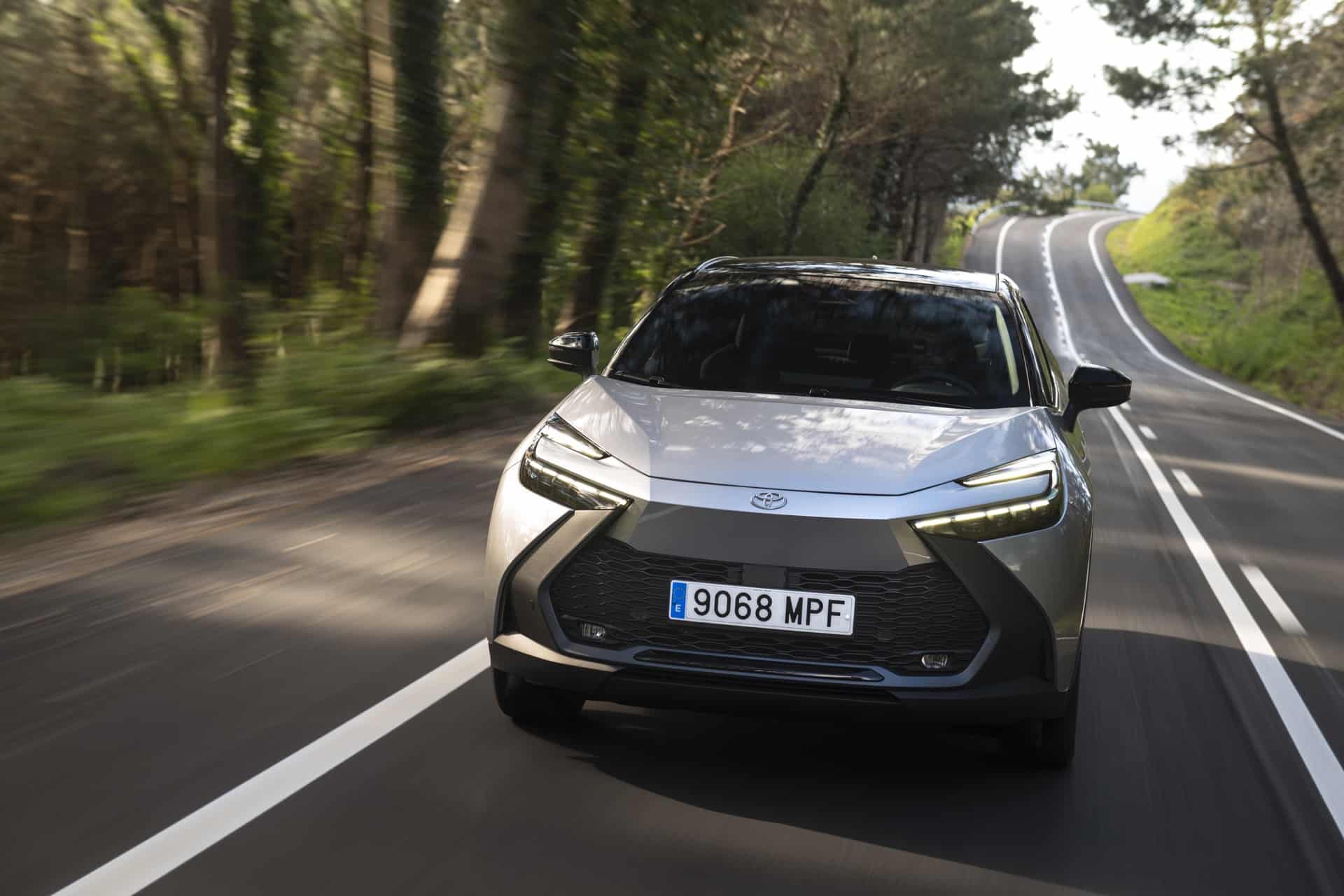
Technical comparison of the Toyota C-HR and Kia Niro in their plug-in hybrid versions: range, urban consumption, CERO label and price-to-equipment ratio for the Spanish driver.
The plug-in compact SUV segment has become the most interesting battleground in the Spanish market. Those who live in a big city want a car that fits into any gap, moves quietly through the centre and, when the weekend trip comes around, doesn’t force them to calculate every kilometre. Toyota and Kia take that philosophy to its peak with two proposals that share urban DNA but diverge radically in their technical approach. The question is straightforward: Toyota C-HR PHEV vs Kia Niro PHEV, which one fits best with the daily routine of a Spanish driver who lives between roundabouts, narrow car parks and short intercity journeys?
Why does a plug-in compact SUV make sense in the city?
The CERO label from the DGT remains the great pass for moving without restrictions through the Low Emission Zones that keep multiplying in Madrid, Barcelona, Valencia or Seville. A plug-in compact SUV with more than 40 km of certified electric range qualifies for that category, which in practice means free parking in regulated zones in many municipalities and freedom of movement.
Added to this is a less visible but key fact: in real urban use, a well-managed PHEV can spend entire weeks driving in electric mode if the user charges every night. The combustion engine becomes a safety net, not the protagonist.
Toyota C-HR, from approximately €40,000
The C-HR is probably the compact SUV with the most disruptive design on the market. Sharp lines, almost hidden rear windows and a coupé silhouette that in its second generation has gained maturity without losing character. Toyota positions it as the urban flagship, with an interior that makes an important qualitative leap over the previous model.
The current range includes the conventional hybrid and the plug-in version, the latter designed specifically for those who want to maximise daily electric use.
| Power kW | Power CV | Top speed | Label |
|---|---|---|---|
| 162 kW | 220 CV | 180 km/h | CERO |
What defines the Toyota C-HR plug-in hybrid in the city is the smoothness of its powertrain, the immediate response from standstill and an insulation that surprises for the segment. Its compact size (just over 4.3 metres) makes it very manageable in city-centre car parks, although rear visibility remains its Achilles’ heel.
Kia Niro, from approximately €35,000
The Kia Niro PHEV plays in a different league aesthetically: more sober, more functional, with that decorative piece on the C-pillar that breaks the monotony. Where the C-HR provokes, the Niro convinces with rational arguments. Superior liveability, a more usable boot and clearly more comfortable access to the rear seats.
The Niro range offers three forms of electrification — hybrid, plug-in and electric — making this model one of the most versatile on the national market. The specification sheet we use as reference corresponds to the plug-in hybrid variant.
| Power kW | Power CV | Top speed | Label |
|---|---|---|---|
| 134 kW | 183 CV | 168 km/h | CERO |
In its plug-in version, the Niro carries the CERO label and positions itself as one of the most balanced options in the segment in terms of price-to-equipment ratio, with a finish level and onboard technology that once were only seen in higher categories.
PHEV city comparison: dimensions, range and real consumption
In daily urban life there are three variables that make the difference: overall length, usable electric range and consumption once the battery runs out. The C-HR is slightly shorter and lower, which gives it an advantage in manoeuvres; the Niro compensates with a contained turning circle and better perimeter visibility.
As regards electric range, both fall within similar certified figures in their PHEV configurations, sufficient to cover the working week of an average metropolitan driver without starting the combustion engine. Once the battery is depleted, city consumption depends greatly on driving style, but both systems are designed to stay below 6 l/100 km in mixed urban use.
Summary table and score
| Model | Power | Label | Price from | Urban use | Equipment | Score |
|---|---|---|---|---|---|---|
| Toyota C-HR | 220 CV | CERO | ≈€40,000 | 9/10 | 8.5/10 | 8.8/10 |
| Kia Niro | 183 CV | CERO | ≈€35,000 | 8.5/10 | 9/10 | 8.7/10 |
The prices indicated are the manufacturer’s recommended retail prices (RRP) and are given for guidance only: they do not include dealer discounts, one-off sales campaigns or purchase grants.
Verdict: which is the best urban PHEV SUV?
If the criteria are design, technology and refinement, the C-HR takes the win. If the equation weighs price, space and family versatility, the Niro is hard to beat. In the end, everything will ultimately depend on how many kilometres are driven each day and how much the emotional factor weighs in the decision.
Frequently asked questions
What DGT label do the Toyota C-HR PHEV and the Kia Niro PHEV have?
Both models in their plug-in version obtain the DGT CERO label, by exceeding 40 km of certified electric range.
Which has the better price-to-equipment ratio?
The Kia Niro starts at a lower price (around €34,200 for the hybrid variant) and maintains a very complete level of equipment, which puts it ahead in the rational equation.
Can they be used in Low Emission Zones without restrictions?
Yes. The CERO label allows circulation and parking in the LEZs of the main Spanish cities without the limitations affecting ECO or C-label vehicles.
Is a PHEV worth it if I don’t have a charging point at home?
The real profitability of a plug-in drops considerably without nightly domestic charging. If you cannot recharge regularly, a conventional hybrid such as the Niro HEV itself is more coherent.
Technical specifications of this car


 Peugeot E-208 GTi: a battery-powered toy that revives the spirit of the 1980s sports cars
 New Lexus ES: luxury grows and goes electric
 First contact with the Dacia Sandero Hybrid 155: power and efficiency from €19,890
Deja un comentario