CATL expects up to 20 thousand electric vehicles equipped with its new sodium-ion batteries to reach the market this year
 Javier Cantagalli
26 June 2026
3 min.
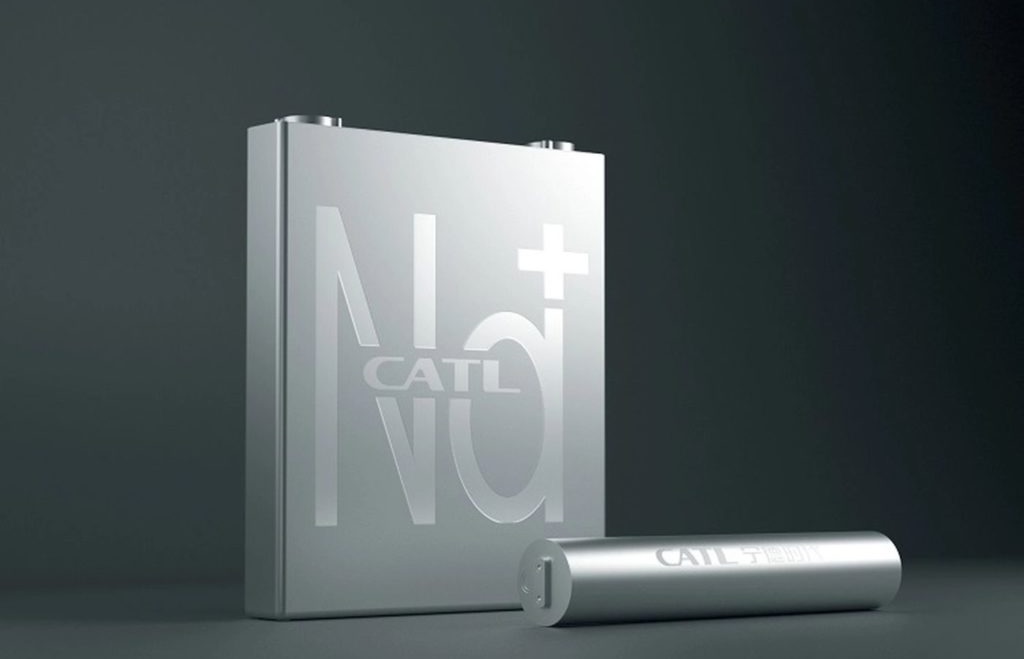
CATL positions sodium-ion technology as a strategic complement to lithium, capable of reducing costs, improving sustainability and ensuring supply in a rapidly expanding energy market.
CATL, the current global leader in battery manufacturing for electric vehicles, expects a major leap in the adoption of sodium-ion technology this year. The company estimates that between 10 and 20 thousand electric vehicles equipped with its new sodium-ion batteries will hit the market in 2026. The Chinese giant has also presented its first stationary energy storage system based on this chemistry.
CATL has been developing sodium-ion batteries for several years. In April 2026, during its Super Technology Day, it unveiled the Naxtra, a battery that achieves an energy density of up to 175 Wh/kg and whose mass production will begin before the end of the year. These batteries will be fitted to models such as the Changan Nevo A06, a city car designed for the Chinese market.
During the annual Annual Meeting of the New Champions of the World Economic Forum held in Dalian, CATL executives elaborated on the company’s strategy. Ni Jun, head of Production, confirmed the vehicle figures that will incorporate this technology in 2026, while founder and CEO Robin Zeng highlighted the company’s capacity to reach an annual output of 100 GWh of sodium-ion batteries within the next three to five years.
“We can manufacture sodium batteries on a large scale for energy storage and thus reduce our dependence on lithium”.
Sodium-ion battery technology is of great interest at the present time
Two key factors are driving CATL to bet on sodium-ion battery technology: the sharp rise in lithium prices in China (190% since last summer) and the advantages of sodium chemistry beyond electric vehicles, especially in stationary energy storage systems (BESS) for AI data centres and other large-scale applications.
Regarding this last point, CATL presented just a few days ago in Munich the Tener Sodium Energy Storage System, considered the world’s first sodium-battery storage system tested in the field. The Tener system offers more than 30 MWh of capacity in a fully modular architecture and can be easily scaled: 34 units are needed to reach 1 GWh. This flexibility makes it ideal for large-scale projects.
Sodium-ion batteries stand out for their good performance at low temperatures, their high safety and their ability to be manufactured from more abundant and accessible materials. Unlike lithium, cobalt and nickel—whose extraction causes significant environmental impacts and depends on highly concentrated regions—sodium is one of the most common elements on Earth and is easily obtained from common salt or seawater.

 Kia offers an electric range of 10 models, 50 versions and 400 possible combinations
 The seven finalists for the 2027 European Car of the Year (COTY) are exclusively electric
 Peugeot E-208 GTi: a battery-powered toy that revives the spirit of the 1980s sports cars
Deja un comentario