C-HR Toyota Hybrid Cars Comparisons Tests
Toyota C-HR vs Renault Captur E-Tech: the most efficient city hybrid compact SUV showdown
 Iván Navarro
10 June 2026
4 min.
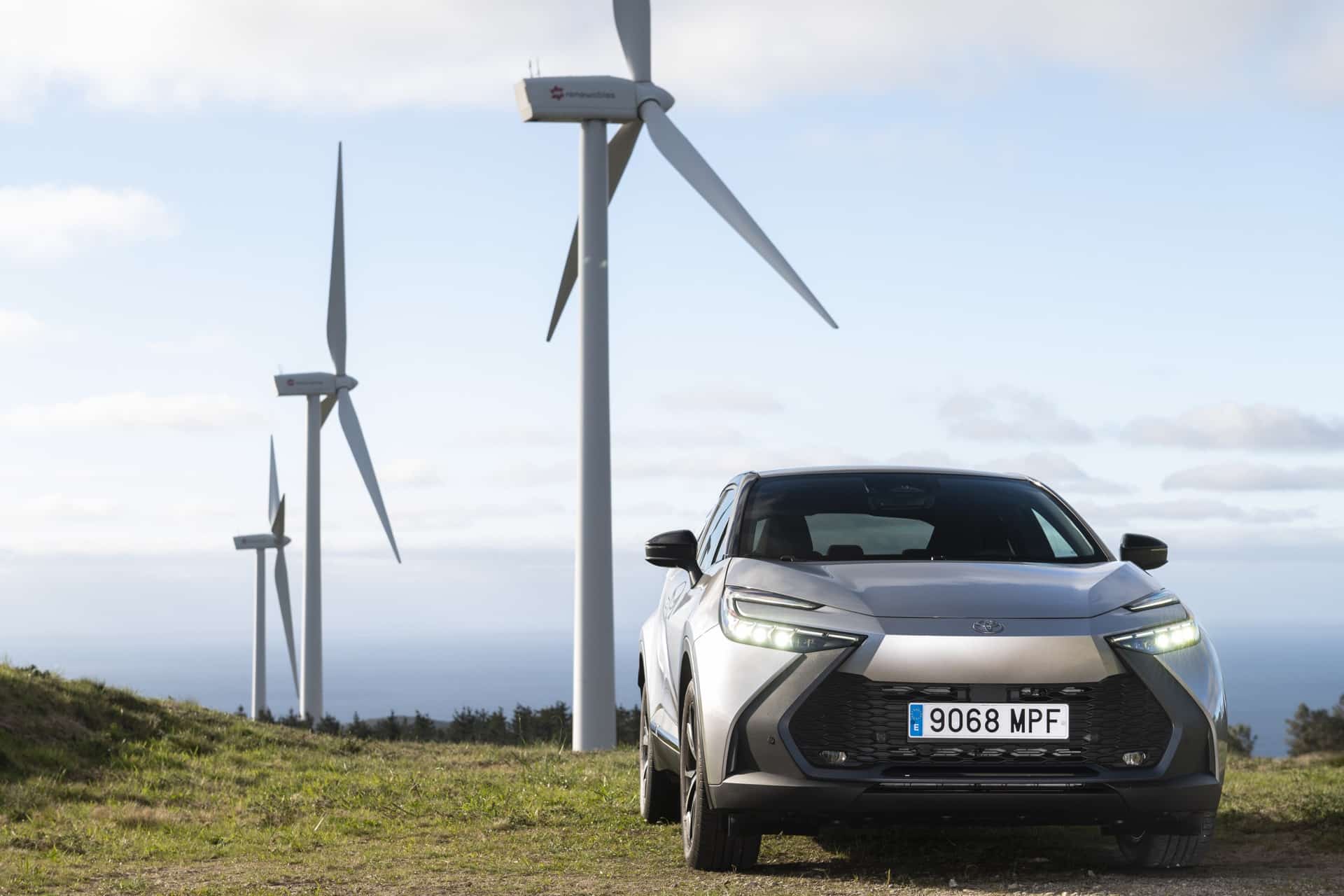
We compare the Toyota C-HR and the Renault Captur E-Tech, two benchmarks of the compact hybrid SUV segment in Spain, to find out which one offers better efficiency, equipment and value for money in urban driving.
The compact hybrid SUV segment is going through its most interesting moment in Spain. Two names dominate the debate when customers walk into the dealership looking for an efficient car for everyday city use: the Toyota C-HR, renewed in 2024 with a more radical design and electrified powertrains; and the Renault Captur E-Tech, which has reinvented itself with its own hybrid technology derived from Formula 1. Both compete on the same ground, but with very different philosophies.
Why the compact hybrid SUV is the king of the city
In urban environments, where pull-aways, traffic lights and low speeds dominate, the conventional hybrid really shines. The electric motor handles most of the cold-start traffic, the combustion engine barely intervenes at low revs, and regenerative braking returns much of the kinetic energy to the battery. The result: real-world consumption of around 4 l/100 km and an ECO label that opens the doors to the ZBEs of Madrid, Barcelona or Valencia.
Toyota C-HR: the Japanese benchmark of bold design — from approximately €40,000
The new C-HR keeps its disruptive character: sharp lines, mandatory two-tone paint and interior space that prioritises the driver over rear passengers. The Spanish range is built around the fifth-generation Hybrid system, with 140 and 200 CV versions, plus a PHEV variant. The reference unit for this comparison — in its top-of-the-range electric trim — sits at around €40,000 manufacturer’s suggested retail price, with no discounts or promotions applied.
Inside, the double qualitative leap stands out: recyclable upholstery, a 12.3-inch central screen, a head-up display and a Toyota Safety Sense 3 system that includes sign recognition, emergency braking with junction detection and active lane keeping. City driving is smooth, quiet and especially refined when running in pure EV mode, where the C-HR can travel several kilometres without starting the petrol engine.
| Power kW | Power CV | Top speed | Range | Consumption | Label | Fuel |
|---|---|---|---|---|---|---|
| 170 kW | 220 CV | 160 km/h | 600 km | — | CERO | Electric |
Renault Captur E-Tech: the French bet with F1 technology — from approximately €27,900
The Captur E-Tech is one of the best-selling B-SUVs in Spain, and that is no coincidence. Its hybrid system combines a 1.6 naturally aspirated engine with two electric motors and a dog box clutchless gearbox inherited from the Renault sports division. It always starts in electric mode and, in town, it can run in EV mode up to 80% of the time.
The Evolution trim starts from around €27,900 indicative manufacturer’s RRP — always the manufacturer’s RRP, without considering offers, campaigns or aid — a figure that places it clearly below the C-HR. In return, the French car offers less standard technology on the entry versions, although its interior modularity — with a sliding rear bench of 16 cm — remains unique in its segment.
| Power kW | Power CV | Top speed | Range | Consumption | Label | Fuel |
|---|---|---|---|---|---|---|
| 110 kW | 145 CV | 170 km/h | — | 4.5 l/100 km | ECO | Hybrid |
Real city consumption: the true battlefield
Both hover around the homologated 4.5 l/100 km on the combined cycle, but in strictly urban use the balance tilts slightly towards the Captur, which can record real figures of 3.8-4.2 l/100 km thanks to its aggressive use of EV mode. The C-HR responds with figures of 4.0-4.4 l/100 km, very commendable for a heavier and more powerful SUV.
Equipment, space and driving feel
The Toyota plays the card of dynamic refinement: more precise steering, better soundproofing and an overall more premium feel. The Renault hits back with practicality: a boot of up to 536 litres thanks to the sliding bench (compared with the C-HR’s 388) and a more versatile interior for families.
Comparison table and score
| Model | Power | Urban consumption | Boot | Label | Price from | Score /10 |
|---|---|---|---|---|---|---|
| Toyota C-HR | 220 CV | 4.0-4.4 l | 388 L | CERO | ≈€40,000 | 8.7 |
| Renault Captur E-Tech | 145 CV | 3.8-4.2 l | 536 L | ECO | ≈€27,900 | 8.4 |
Verdict: which is the best urban hybrid SUV?
If your priorities are budget, space and pure city efficiency, the Renault Captur E-Tech is the most rational choice. If you are looking for design, cutting-edge technology and a step up in refinement, the Toyota C-HR justifies its higher price. Remember that the prices quoted here correspond to the manufacturer’s suggested retail price, without discounts or commercial campaigns applied.
Frequently asked questions
Which one consumes less in the city, the Toyota C-HR or the Renault Captur E-Tech?
In strictly urban use, the Captur E-Tech tends to be slightly more efficient (3.8-4.2 l/100 km real-world) compared with the C-HR’s 4.0-4.4 l/100 km, thanks to its longer time in electric mode.
Do both have the DGT ECO label?
The Renault Captur E-Tech carries the ECO label. The Toyota C-HR, depending on version, can carry ECO (conventional hybrid) or CERO (PHEV or electric variant).
Which hybrid SUV has the better boot?
The Renault Captur E-Tech offers up to 536 litres thanks to its sliding rear bench, compared with the 388 litres of the Toyota C-HR.
Which one holds its resale value better?
Toyota has traditionally held its residual value better, thanks to the proven reliability of its hybrid system and strong demand for used C-HRs in Spain.
Technical specifications of this car


 Peugeot E-208 GTi: a battery-powered toy that revives the spirit of the 1980s sports cars
 New Lexus ES: luxury grows and goes electric
 First contact with the Dacia Sandero Hybrid 155: power and efficiency from €19,890
Deja un comentario