Toyota unveils its third-generation hydrogen fuel cell propulsion system
 Javier Cantagalli
16 February 2025
3 min.
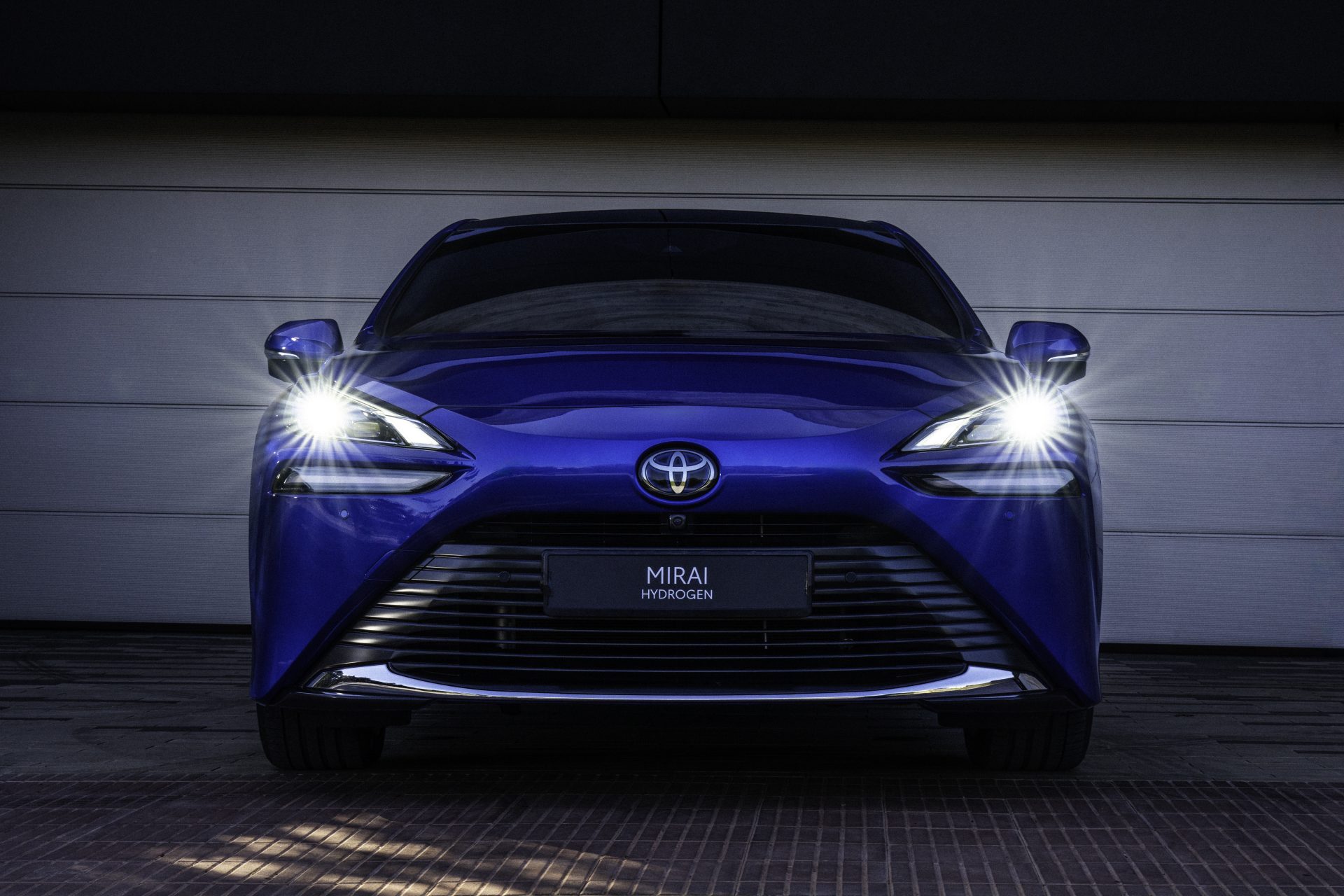
The new third-generation hydrogen fuel cell system from Toyota offers greater durability and efficiency, as well as lower production costs.
Toyota continues to bet on hydrogen, even though this technology has yet to take off, but the Japanese manufacturer is convinced that its moment will come in the more or less near future. Anticipating that hypothetical future, the company has just unveiled its third-generation hydrogen fuel cell system, designed for use not only in passenger cars or commercial vehicles, but also in trains or ships, among other applications. Its market launch is scheduled for next year.
According to Toyota, this new-generation system stands out for its greater durability and efficiency, as well as for the significant reduction achieved in production costs, as a result of innovations applied to cell design and production processes. The Japanese company claims that the durability of the system has doubled and that efficiency has increased by a factor of 1.2 compared with the current generation.
However, Toyota has not specified how significant the aforementioned cost reduction has been. Nevertheless, the company will showcase its new third-generation hydrogen fuel cell propulsion system at the H2 & FC EXPO fair, which will be held in Tokyo starting next Wednesday, February 19, and it may use this event to provide more information on the matter.
Meanwhile, as far as the performance of this new system is concerned, no concrete data is yet known. The current generation, which reached the market in 2021, offered options of 60 or 80 kW per module, with a voltage range of 400 to 750 volts. There were also two housing variants, one vertical and one horizontal. The four types of modules can further be combined as needed to tailor the system to the required power level and the space available in the vehicle.
More advantages to consider
This new-generation system is also expected to allow Toyota to market a broader range of hydrogen-powered vehicles. Thanks to its compact design, this new system should be easier to integrate, for example, into commercial vehicles. According to the Japanese company, in the case of passenger vehicles the system’s greater efficiency will allow for longer range. Meanwhile, the system’s greater durability will allow it to compete head-to-head in the commercial vehicle segment with diesel-powered models.
The third generation of Toyota’s fuel cell propulsion system will be available from 2026 in several models to be sold in Japan, Europe, North America and China. These systems will also be available in products from other manufacturers with which Toyota has collaboration agreements. This may be the case with BMW, one of its partners but not the only one.


 Peugeot E-208 GTi: a battery-powered toy that revives the spirit of the 1980s sports cars
 New Lexus ES: luxury grows and goes electric
 First contact with the Dacia Sandero Hybrid 155: power and efficiency from €19,890
Deja un comentario