C-HR Honda Jazz Toyota Yaris Hybrid Cars Compact Comparisons Tests
Toyota Yaris vs Honda Jazz: which hybrid city car offers better efficiency under £25,000 in 2026
 Iván Navarro
25 October 2026
5 min.
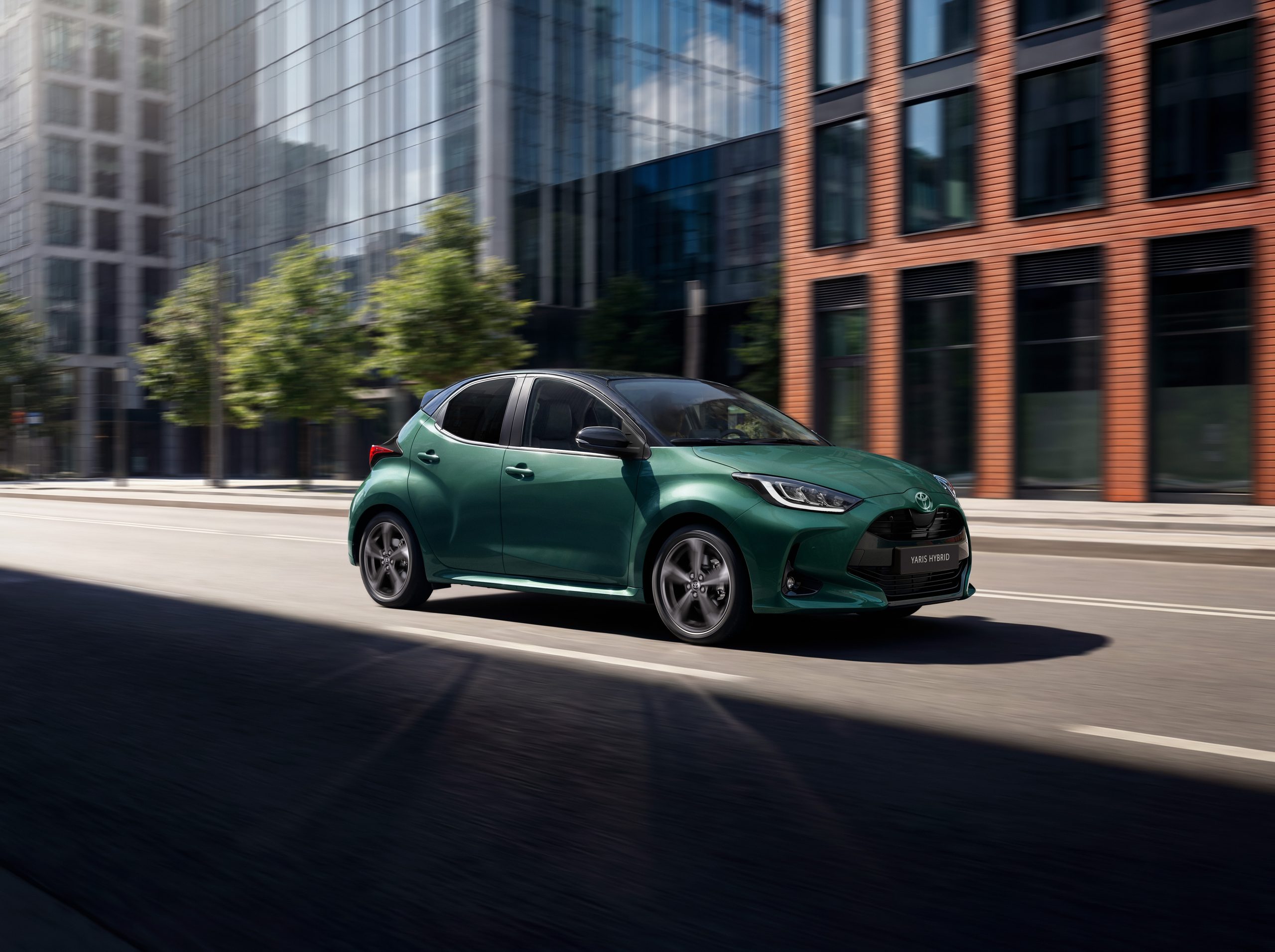
We compare the Toyota Yaris Hybrid and the Honda Jazz e:HEV, the two benchmark hybrid city cars in Spain, to see whether it’s really possible to get below €25,000 and what compromises that involves.
Few segments generate as much loyalty as the hybrid city car. And few rivalries sum up that tension better than Toyota Yaris versus Honda Jazz. Two mild-hybrid philosophies, designed for the city, with a shared goal: spending little without giving up anything essential. The question many of our readers ask is simple: can you buy either of the two for less than €25,000 in 2026? To be honest, the answer is nuanced.
Toyota Yaris Hybrid, from €28,250: efficiency and smoothness in their purest form
The Yaris has been the standard-bearer of Toyota hybridisation in the B-segment for more than a decade. The 130 Style 5-door version we tested uses a petrol-electric combination producing 96 kW (130 CV), enough to move with ease around town and without strain on the open road. The way power is split between the combustion and electric motors is its great asset: in urban traffic it can run in pure electric mode over short journeys, something you especially notice at traffic lights and in jams.
| Model | Power (kW) | Power (CV) | Top speed | Consumption | CO₂ emissions | Fuel | Indicative RRP |
|---|---|---|---|---|---|---|---|
| Toyota Yaris 130 Style | 96 kW | 130 CV | 175 km/h | 4.2-4.4 l/100 km | 96-101 g/km | Petrol/electric hybrid | from ≈€28,250 |
Honda Jazz e:HEV, from €28,800: the other route to hybrid without plug-in
The Jazz Hybrid, in its 1.5 i-MMD 122 Advance version, takes a different architectural approach: the electric motor usually carries most of the propulsion work while the combustion engine acts more as a generator. In practice this means very quiet driving, almost like an electric car, with linear power delivery that in our view is more pleasant in town than on the motorway, where the Jazz loses some of its spark compared with the Yaris.
| Model | Power (kW) | Power (CV) | Top speed | Consumption | CO₂ emissions | Fuel | Indicative RRP |
|---|---|---|---|---|---|---|---|
| Honda Jazz Hybrid 1.5 i-MMD Advance | 90 kW | 122 CV | 175 km/h | ≈4.6 l/100 km | ≈104 g/km | Petrol/electric hybrid | from ≈€28,800 |
Real-world consumption: who wins the battle of 4.5 l/100 km?
On paper, the Yaris is homologated at 4.2-4.4 l/100 km and the Jazz at ≈4.6 l/100 km. In real urban use—the environment they are designed for—the figures tend to hold up fairly well, which is not always the case with other hybrids in the segment. The difference lies in nuances: the Yaris tends to be slightly more consistent on country roads and motorways, while the Jazz shines particularly in dense traffic, where its electric-combustion split makes the most of the situation. On mixed journeys, the difference between the two barely shows up in the fuel tank at the end of the month.
Power and dynamic behaviour: 130 CV versus 122 CV in town
The Yaris’s 130 CV give it a noticeable advantage when overtaking and on the motorway, where it feels a little more comfortable. The Jazz, with its 122 CV, is not short for everyday use, but in practice it is questionable whether those 8 CV of difference justify choosing one over the other—what really shapes the experience is the character of each hybrid system, not the figure in the brochure. The Yaris is somewhat more agile through corners, with more direct steering; the Jazz prioritises comfort and quietness.
The €25,000 threshold: is it realistic today?
Here we need to be clear. Neither the Yaris (from ≈€28,250) nor the Jazz (from ≈€28,800) starts below €25,000 at the factory in their official RRPs. That psychologically important figure, so often searched for, in practice depends on dealer discounts, financing campaigns and public aid such as the Plan Auto+, whose current amount should always be checked on the official website before assuming anything. All prices mentioned in this article are manufacturer’s recommended RRPs, with no discounts or promotions applied, so treat them as a starting point, not as the final figure at the dealership.
Summary table and Highmotor score
| Model | Power (CV) | Consumption | Indicative RRP | Efficiency score | Price score | Overall score |
|---|---|---|---|---|---|---|
| Toyota Yaris Hybrid | 130 CV | 4.2-4.4 l/100 km | from ≈€28,250 | 8.5 | 7.5 | 8 |
| Honda Jazz e:HEV | 122 CV | ≈4.6 l/100 km | from ≈€28,800 | 8 | 7 | 7.5 |
Highmotor verdict: which one to choose?
There is no absolute winner, and that is not a magic formula for anyone looking for a quick answer. If you prioritise available power and better behaviour on the open road, the Yaris justifies its somewhat higher price. If your use is mainly urban and quiet cruising matters more, the Jazz comes out slightly better on price and does not fall behind on consumption. Those looking for something larger within Toyota’s hybrid range may also consider the Toyota C-HR, although it is in a different segment and positioned at a different price point.
Frequently asked questions
Which uses less fuel, the Toyota Yaris or the Honda Jazz? The Yaris is homologated at 4.2-4.4 l/100 km and the Jazz at ≈4.6 l/100 km; in real urban use the differences are minimal and depend more on driving style than on the model chosen.
Can you buy either for less than €25,000? Not at their official RRP—the Yaris starts at ≈€28,250 and the Jazz at ≈€28,800—although dealer discounts and aid such as the Plan Auto+ can bring the final figure closer to that threshold.
Which has more power? The Toyota Yaris, with 130 CV compared with the 122 CV of the Honda Jazz, although the difference is more noticeable on the open road than in town.
Which is better for exclusively urban use? The Honda Jazz tends to be slightly quieter and smoother in dense traffic, while the Yaris offers more power margin for trips out on country roads or motorways.
Technical specifications of the cars in this article


 Peugeot E-208 GTi: a battery-powered toy that revives the spirit of the 1980s sports cars
 New Lexus ES: luxury grows and goes electric
 First contact with the Dacia Sandero Hybrid 155: power and efficiency from €19,890
Deja un comentario