Volkswagen Sedans Photos Tests
Volkswagen Jetta 2.0 TDI 140 CV DSG, road test (Engine and performance)
 Diego G. Moreira
31 January 2012
4 min.
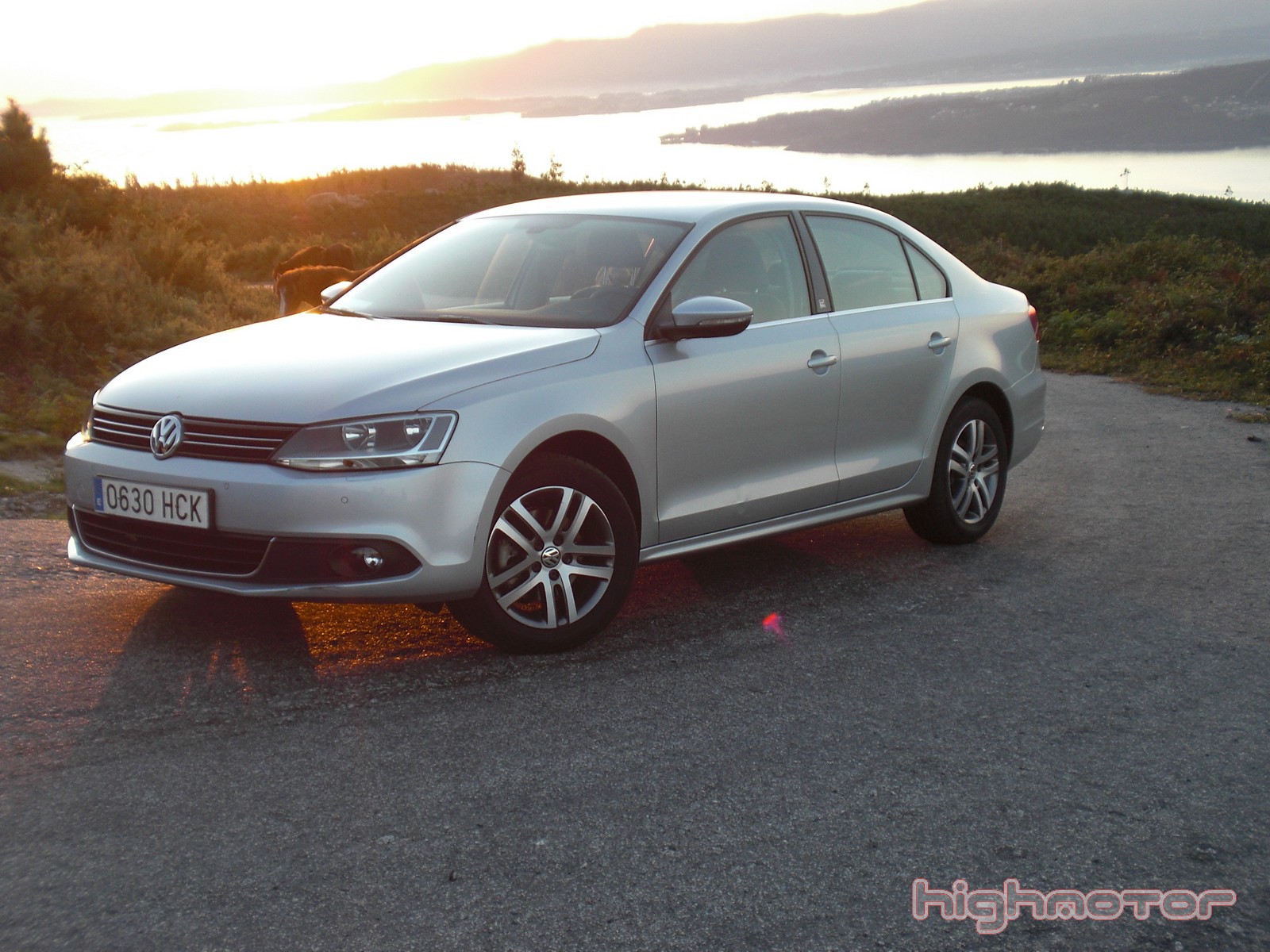
We continue with the Volkswagen Group in our tests, but this time we want to introduce you to a very interesting saloon that often goes unnoticed among the big best-sellers in the segment. It is the Volkswagen Jetta, a model derived from the Golf but with a bigger boot and more interior space. If you are looking for a mid-size saloon, the VW Jetta could be an interesting candidate.
Recently I read a comparison in a motoring magazine between the Jetta and the Passat, a comparison that was ultimately won by the smaller German car thanks to its lower price, consumption, and its spacious interior with good-quality finishes.
For the test we have a well-known engine, the 2.0-litre 140 CV TDI, the most powerful variant available for the Jetta. We have also paired it with the DSG dual-clutch automatic gearbox, which in this case has six gears. Before analysing the engine in depth, we can say in advance that it stands out for its performance and above all its consumption.
Engine and performance
We can hardly add anything to the well-known 2.0 TDI 140 CV, an engine that in this case represents the most powerful option for the Jetta, which among its diesel engines also offers the 1.6 TDI 105 CV. Our 140 CV version is recommended for its performance and above all because we have achieved a really low consumption, so you don’t have to give up power to achieve greater economy of use.
The engine starts to respond from 1,500 rpm, but it is not until we reach 2,000 rpm that we truly feel the thrust, which is maintained up to 4,500 rpm. It is a fairly flexible engine and we barely hear the engine noise inside the vehicle.
The engine’s response is quick and forceful (320 Nm), we press the accelerator and feel the response, partly thanks to the DSG gearbox, which stands out for its speed. Paired with this diesel engine, the option is the DSG dual-clutch automatic gearbox with six ratios (and not seven).
Normally the DSG gearbox stands out for its speed when engaging gears, but in the specific case of this test unit we found the gearbox response could be improved; it is surely something specific to our car. It has a Sport mode that keeps the car revving high (between 2,500 and 3,500 rpm) so that when we press the accelerator the car responds with the greatest possible torque, and it is also a useful mode to use as engine braking on long downhill stretches, since it offers more retention than the normal gearbox mode.
Handling
As a good saloon it has comfortable suspension, which is cosy but not soft, typical of the Golf for example. It stands out for its composure on the road, both on winding sections and when cruising on the motorway, showing stability and transmitting comfort to the cabin.
If we like to drive a bit more sportily, its suspension is up to the task, but the size of the car and the tyres with fairly high sidewalls, can cause the car to tend towards understeer (running wide), which the stability control quickly corrects.
Finally, we have the steering with a firm weighting and fairly direct, well balanced for the model in question, while the braking system has a peculiar feel but is effective and stops the VW Jetta without problems.
Consumption
Finally, there is the consumption section, where the Volkswagen Jetta precisely stands out because there are not many mid-size saloons that manage an average of 4.7 litres per 100 km on the motorway (our usual route) and even more so when we consider the size of the car and its power.
On country roads it averages 5.3-5.5 litres per 100 km, driving calmly. In town it averages 7.5 litres per 100 km. These are all quite tight figures for a mid-size saloon, more typical perhaps of a compact.
In the second part of the test we will review the exterior design, interior spaciousness and quality, as well as talk about the boot and habitability.
Photos | Diego G. Moreira


 Kia offers an electric range of 10 models, 50 versions and 400 possible combinations
 The seven finalists for the 2027 European Car of the Year (COTY) are exclusively electric
 Peugeot E-208 GTi: a battery-powered toy that revives the spirit of the 1980s sports cars
un comentario
Deja un comentario
no tendrás un comentario mas reciente??