EX60 Volvo Electric Cars Review
Volvo EX60 review: why the new Volvo could become the benchmark electric SUV
 Óscar Sanz
30 July 2026
11 min.
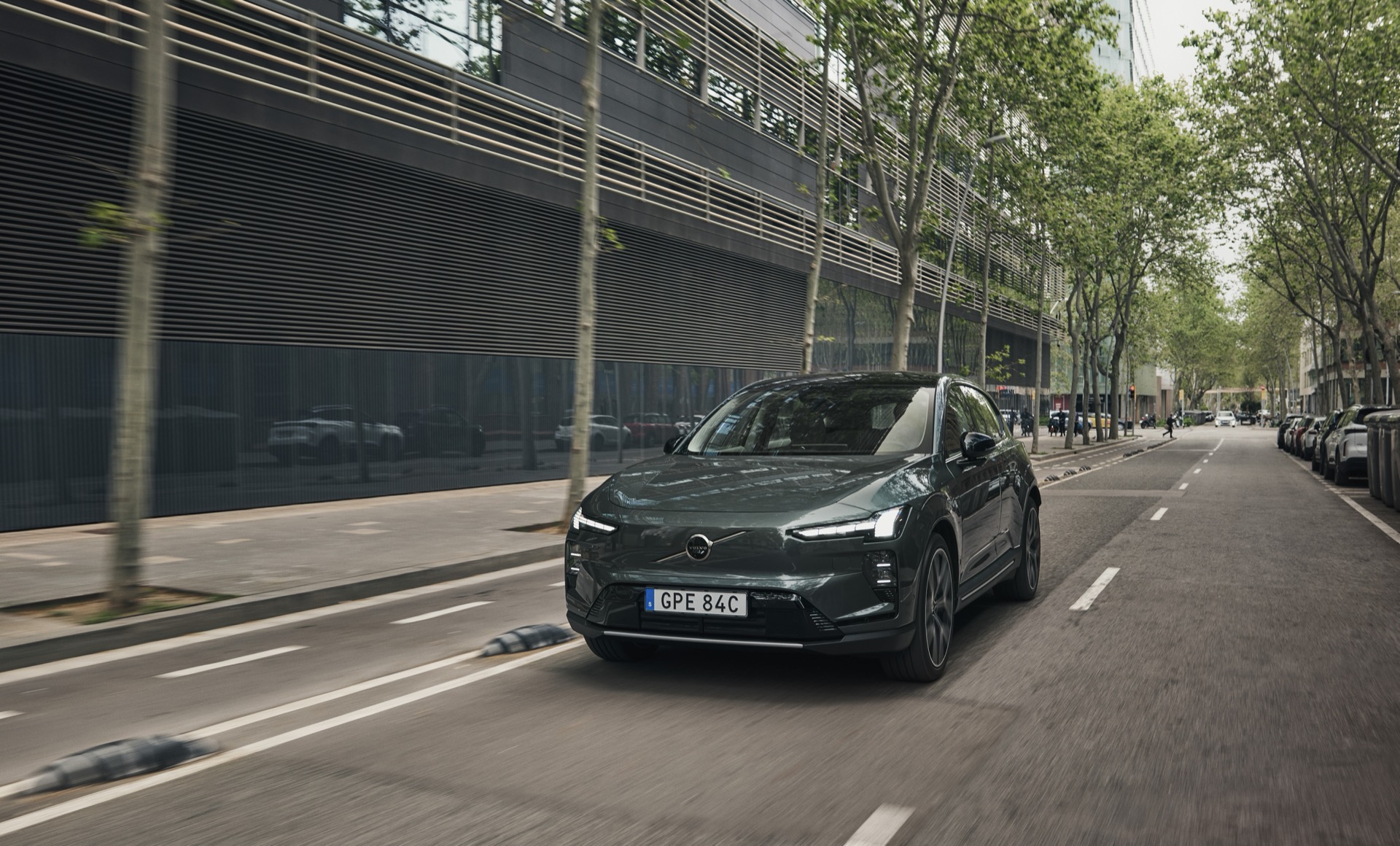
The Volvo EX60 could become the benchmark electric SUV because it tackles the issues that still hold many buyers back: range, charging time, technological confidence and family use
The Volvo EX60 arrives with enough arguments to become one of the most important premium electric SUVs of the coming years. Not only because of its maximum range of up to 810 kilometres, but because of how it combines that figure with an 800-volt architecture, ultra-rapid charging, up to 680 CV, a vehicle-defined software platform, Google Gemini, HuginCore and a strong focus on comfort and family safety. Volvo presents it as its most advanced electric car to date and as a key model for eliminating range anxiety in the SUV segment.
In terms of size, approach and positioning, the EX60 occupies the natural space of the XC60 in the brand’s new electric era. In other words, it is not meant to be a niche product, but the electric SUV that can attract premium family buyers who need range, space, technology, safety and ease of use in a single car. That is its great opportunity: to become the most balanced electric Volvo in the range.
An electric SUV designed for the heart of the premium market
The Volvo EX60 sits between the EX40 and the EX90. It is larger, more ambitious and more advanced than the brand’s compact electric model, but it does not reach the size or the seven-seat focus of the EX90. That intermediate position is precisely the most interesting one, because it fits one of the most important segments of the market: the mid-size premium family SUV.
The brand itself defines it as a 100% electric mid-size SUV and presents it as a model capable of changing the rules of the game in terms of range, charging speed, performance and price. According to the manufacturer, the EX60 is a five-seat vehicle suitable for families, with an innovative user experience and a new frontier in safety.
That approach matters because the EX60 does not rely on a single figure. Its proposal combines several arguments that carry great weight today when buying an electric car: realistic range for travelling, fast charging, family space, comfort, advanced connectivity and safety technology.
| Model | Maximum range | Maximum power | Fast charging | Key technology |
| Volvo EX60 | Up to 810 km | Up to 680 CV | Up to 340 km in 10 min | 800 V, SPA3, HuginCore and Google Gemini |
Up to 810 kilometres of range: the figure that changes the conversation
Range is the first big argument for the Volvo EX60. According to Volvo, it can cover up to 810 kilometres on a single charge in all-wheel-drive configuration, the highest figure ever offered by one of the brand’s electric cars. The company also claims this figure surpasses recently launched competitors and sets a new benchmark in its segment.
In practice, that range puts the EX60 in a very favourable position for those who want to use an electric car as their main vehicle. We are no longer talking only about urban commutes or daily journeys, but about long trips with fewer stops and greater margin for use.
It is also worth understanding the figure within the range. Volvo has configured the EX60 in several versions: P6, P10 AWD and P12 AWD. On the brand’s Spanish website, performance figures such as 0 to 100 km/h in 5.9 seconds appear for the P6, 4.6 seconds for the P10 AWD and 3.9 seconds for the P12 AWD. In other words, even the versions geared towards rational use offer high performance for a family SUV.
Fast charging: up to 340 km in 10 minutes
The second key to the Volvo EX60 is charging. Volvo announces that, thanks to its 800-volt technology, the EX60 can add up to 340 kilometres of range in just 10 minutes using 400 kW direct-current fast chargers. The brand presents it as a way to make a charging stop feel more like a short break than a long wait.
This point is fundamental to understanding why the EX60 can be a benchmark. In an electric car, having a large battery is not enough. How long it takes to recover range while travelling also matters. An SUV with more than 800 kilometres of reach and the ability to add hundreds of kilometres during a short stop greatly reduces one of the great psychological barriers of electric driving: the constant planning of charging.
Volvo also links this improvement to the SPA3 architecture, defined by the brand as its most advanced electric architecture to date. This base introduces key technologies such as megacasting, cell-to-body battery and central computing, three elements that explain why the EX60 is not simply another electric SUV, but a new technological platform for the brand.
SPA3, structural battery and megacasting
The EX60 is developed on the SPA3 architecture, a platform specifically designed for electric vehicles. According to Volvo, this architecture is the key to achieving its industry-leading range and charging speeds. It also introduces technologies such as megacasting, cell-to-body battery integration and central computing.
The cell-to-body battery means that the battery pack forms part of the vehicle’s structure. This type of integration allows space, rigidity and structural efficiency to be optimised. Megacasting, for its part, reduces the number of structural parts and simplifies manufacturing, with the potential to improve rigidity and industrial efficiency.
These elements are relevant because they explain the technical leap of the EX60. We are not looking at an electric car built on an inherited base, but at an SUV developed from the outset to take advantage of the benefits of a modern electric architecture.
HuginCore and Google Gemini: the smartest Volvo
Volvo defines the EX60 as its smartest car to date. One of the reasons is HuginCore, the central system that integrates in-house developed electrical architecture, central computer, zone controllers and vehicle software. According to Volvo, HuginCore is the foundation of a software-defined car, capable of thinking, processing and acting through its internal architecture.
On top of this comes Google Gemini. The EX60 is the first Volvo designed to launch with Google’s artificial intelligence assistant, allowing a more natural conversation with the vehicle. The idea is that the driver does not have to memorise rigid commands, but can interact with the car more fluidly to manage functions, resolve questions or simplify tasks during the journey.
This approach is one of the most interesting aspects of the EX60. The technology does not appear only as a large screen or a list of menus, but as a layer that can improve the relationship between driver, vehicle and connected services.
Family comfort: five seats and plenty of practicality
Although technology is one of its major selling points, the EX60 does not lose sight of family use. Volvo presents it as a five-seat SUV suitable for families, designed for long journeys and for those looking for a main electric car.
Its proposal fits the historical DNA of Volvo: calm interiors, ride comfort, ease of use and safety. In that sense, the EX60 does not aim to be just the SUV that announces the most range, but a car capable of making the transition to electric comfortable for families coming from a combustion or plug-in hybrid SUV.
The overall value of the proposal lies in that mix: range for travelling, enough power to move with ease, advanced software to simplify use and a family approach that avoids turning the electric car into an overly experimental product.
Safety: the Volvo value brought to electric
Safety remains one of the central arguments. Volvo states that the EX60 represents “the next frontier of safety”, within a proposal in which technology is not limited to improving infotainment, but also extends to protection and driver assistance.
The brand is not positioning the EX60 solely as a long-range electric car, but as an SUV where safety, assistance and software form part of the same package. This approach makes sense within the EX range: the EX90 acts as the showcase for advanced safety, while the EX60 brings much of that philosophy to the heart of the market.
In a premium segment full of power figures and screens, the differentiating value of Volvo lies precisely in applying technology to confidence. The EX60 aims to convince not only the buyer looking for range, but also the one who prioritises protection, comfort and ease of use.
Could it become the benchmark electric SUV?
The Volvo EX60 has solid arguments for becoming a benchmark, especially if its official figures translate well into real-world use. The combination of up to 810 kilometres of range, 800-volt architecture, recovery of up to 340 kilometres in 10 minutes, HuginCore and Google Gemini places it in a very strong position within the premium electric SUV segment.
Its greatest virtue does not lie in a single area, but in its balance. There are very powerful electric cars, models with more spectacular interiors and larger SUVs, but the EX60 brings several keys together in one proposal: range, fast charging, software, artificial intelligence, safety and a family focus.
| Key points of the Volvo EX60 | What it offers |
| Up to 810 km of range | Allows travel with fewer stops and reduces range anxiety |
| 800 V architecture | Enables high-power fast charging |
| Up to 340 km in 10 min | Makes road stops more practical |
| SPA3 | New electric base with megacasting, cell-to-body and central computing |
| HuginCore | Central system for a software-defined car |
| Google Gemini | More natural conversational interaction with the vehicle |
| Five family seats | Practical approach for daily use and travel |
Frequently asked questions about the Volvo EX60
What is the Volvo EX60?
The Volvo EX60 is a 100% electric mid-size SUV from Volvo. It sits between the EX40 and the EX90 and is designed as a premium family SUV with high range, fast charging, advanced software and Google connectivity.
How much range does the Volvo EX60 have?
The Volvo EX60 offers up to 810 kilometres of range, according to official data from Volvo. It is the highest figure announced by the brand for one of its electric cars.
How long does the Volvo EX60 take to charge?
Volvo indicates that the EX60 can add up to 340 kilometres of range in 10 minutes using a 400 kW direct-current fast charger.
What technology does the Volvo EX60 debut?
The EX60 introduces the SPA3 architecture, 800-volt technology, HuginCore as the central system, wireless updates and Google Gemini as a conversational artificial intelligence assistant.
Is the Volvo EX60 a family SUV?
Yes. Volvo presents it as a five-seat mid-size SUV suitable for families, with a proposal focused on range, comfort, safety and ease of use.
Why could it be a benchmark among electric SUVs?
Because it combines range of up to 810 kilometres, fast charging, a modern electric architecture, vehicle-defined software, artificial intelligence, Volvo safety and a family focus. That mix makes it one of the most complete premium electric SUVs of its generation.
Opinion
The Volvo EX60 could become the benchmark electric SUV because it tackles the points that still hold many buyers back: range, charging time, technological confidence and family use. Its 810 kilometres of range are the most eye-catching headline, but not the only one. The key is that this figure comes with 800-volt architecture, fast charging, SPA3, HuginCore, Google Gemini and a very Volvo safety philosophy.
If the EX90 is the brand’s large-format technology showcase, the EX60 can be the model that brings that ambition to the heart of the market. That is why it matters so much. It does not aim simply to be another premium electric SUV, but the Volvo capable of convincing many families that electric can already be their main car.
In an increasingly competitive segment, the EX60 has something particularly valuable: a proposal that is easy to understand. More range, less charging time, more software, more safety and a family format. That combination explains why the new Volvo has real arguments to become one of the benchmarks of the premium electric SUV.
Technical specifications of this car


 Peugeot E-208 GTi: a battery-powered toy that revives the spirit of the 1980s sports cars
 New Lexus ES: luxury grows and goes electric
 First contact with the Dacia Sandero Hybrid 155: power and efficiency from €19,890
Deja un comentario