Volvo XC60 Hybrid Cars Comparisons SUV
Volvo XC60 vs Lexus NX: the hybrid SUV battle with the most safety technology
 Iván Navarro
7 June 2026
5 min.
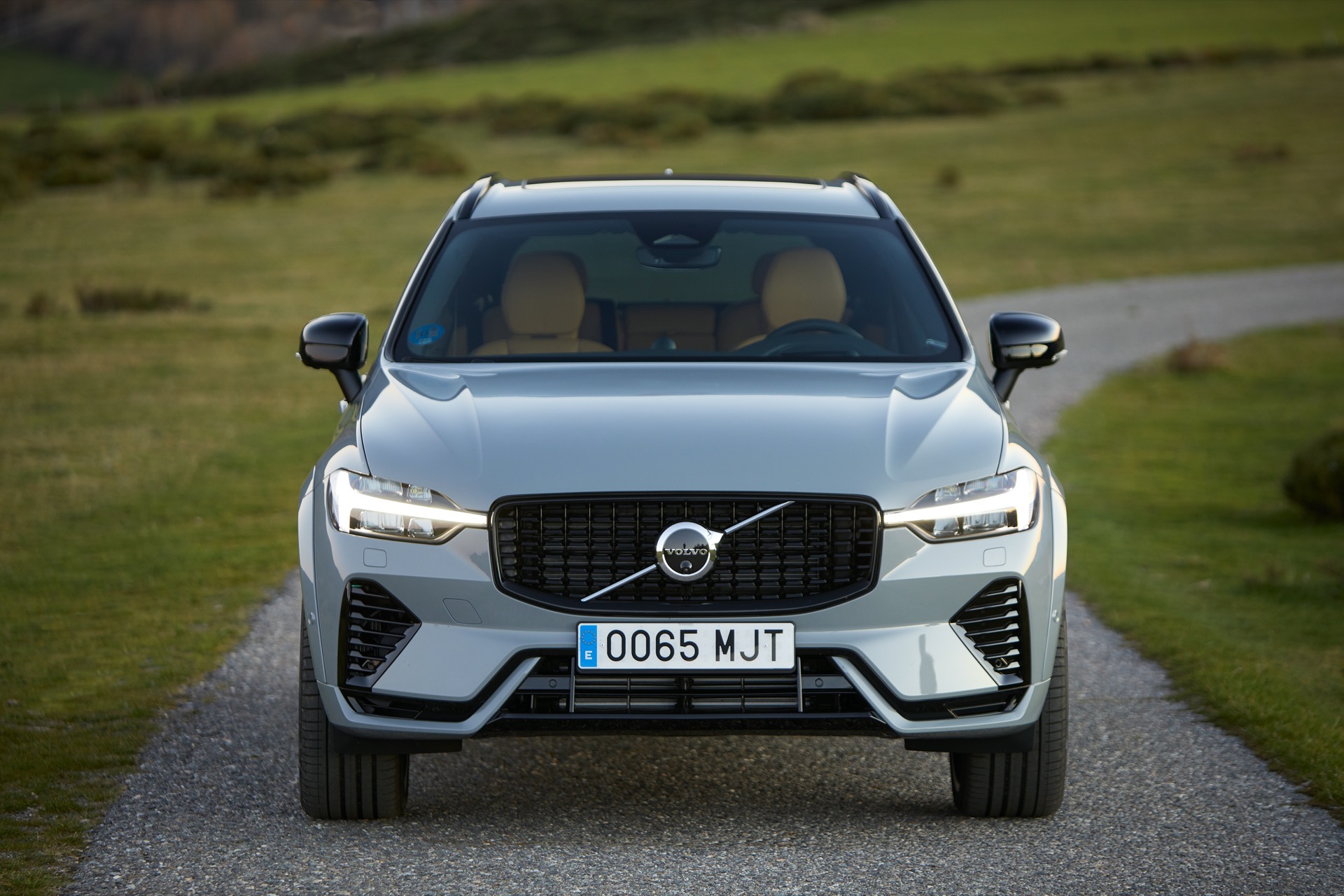
Technical comparison between the Volvo XC60 B5 MHEV and the Lexus NX 350h: active safety, efficiency and value proposition in the electrified premium SUV segment.
The electrified premium SUV segment has become the true battlefield of the industry. Two opposing philosophies coexist on the same ground: the Scandinavian, obsessed with safety and technological minimalism, and the Japanese, faithful to mechanical refinement and the reliability of its full hybrid. The Volvo XC60 vs Lexus NX is not just a comparison of figures; it is a cultural clash between Gothenburg and Nagoya.
Two premium philosophies face to face
The Volvo XC60 has led global sales for the Swedish brand for seven years and has become synonymous with standard active safety. The Lexus NX, meanwhile, represents the maturity of the conventional hybrid, with four accumulated generations of experience in electrification. Both measure around 4.70 metres in length and share the same target audience, but their technical approach could not be more different.
Volvo XC60 B5 MHEV: Nordic safety in SUV form — from approximately €56,900
The XC60 in its B5 Essential AWD version starts with a 2.0 turbo petrol four-cylinder assisted by a 48-volt mild-hybrid system. The label is ECO and all-wheel drive is standard, which in countries with demanding terrain makes a clear difference compared with front-wheel-drive alternatives.
What sets the Volvo apart is not the mechanics but its safety package. The IntelliSafe system includes as standard autonomous emergency braking with detection of pedestrians, cyclists and large animals, lane-keeping assist with active correction, rear cross-traffic alert with automatic braking, and the semi-autonomous Pilot Assist up to 130 km/h. It is probably the most complete active safety equipment in its class without paying extra.
| Power kW | Power hp | Top speed | Range | Consumption | Label | Fuel |
|---|---|---|---|---|---|---|
| 180 kW | 250 CV | 180 km/h | ≈700 km | 7.5 l/100 km | ECO | Petrol mild hybrid |
Lexus NX 350h: the most refined Japanese hybrid — from approximately €54,100
The NX 350h Premium+ features the well-known 2.5 naturally aspirated Atkinson-cycle engine combined with two electric motors and the fourth generation of Toyota’s hybrid system. The result: 243 CV combined, ECO label and a homologated consumption of around 5.5 l/100 km, clearly below the Volvo thanks to pure electric operation at low speeds.
The Lexus responds with its Safety System+ 3.0 package, which includes pre-collision system with motorcycle and intersection turn detection, adaptive cruise control with curve function, proactive driving assistant and, a world first, the Safe Exit Assist which locks the doors if it detects a cyclist approaching from behind. The panoramic camera with underbody view is another nod to urban driving.
| Power kW | Power hp | Top speed | Range | Consumption | Label | Fuel |
|---|---|---|---|---|---|---|
| 180 kW | 240 CV | 200 km/h | ≈950 km | 5.5 l/100 km | ECO | Petrol hybrid |
Active safety: where each one makes the difference
The Volvo is objectively the segment benchmark for autonomous emergency braking: its City Safety system operates up to 60 km/h with detection even at night. The Lexus, on the other hand, excels in proactive assistance: its cooperative power steering anticipates the bend before the driver reacts. Both achieved five Euro NCAP stars, although the XC60 scores slightly higher in pedestrian protection and the NX in assistance systems.
Real efficiency and running cost
Here the Japanese car takes the lead. In mixed urban-interurban driving, the NX 350h comfortably sits between 5.5 and 6.5 l/100 km in real use, while the XC60 B5, despite its mild hybridisation, rarely drops below 7.5 l/100 km. At 20,000 km per year, the difference exceeds €400 in fuel.
Comparison table: technical score from 1 to 10
| Model | Power | Consumption | Safety | Technology | Price | Total |
|---|---|---|---|---|---|---|
| Volvo XC60 B5 MHEV | 8.5 | 6.5 | 9.5 | 8.5 | 7.5 | 8.1 |
| Lexus NX 350h | 8.0 | 9.0 | 9.0 | 9.0 | 8.0 | 8.6 |
Verdict: which one to buy?
If the priority is the most advanced active safety on the market and standard all-wheel drive, the Volvo XC60 remains the benchmark. If efficiency, proven reliability and a more technological interior are what you are after, the Lexus NX 350h is the logical choice, with a lower starting RRP as well.
Note: the prices mentioned are manufacturer’s recommended retail prices (RRP) and do not include offers, dealer discounts, one-off campaigns or current purchase incentives.
Frequently asked questions
Which premium hybrid SUV has the most standard safety technology?
The Volvo XC60 remains the benchmark for standard active safety with its complete IntelliSafe package, although the Lexus NX 350h with Safety System+ 3.0 follows very closely and brings innovations such as Safe Exit Assist.
Which uses less in real-world driving, the XC60 or the NX?
The Lexus NX 350h, thanks to its fourth-generation hybrid system, stays between 5.5 and 6.5 l/100 km in real use, while the Volvo XC60 B5 MHEV hovers around 7.5 l/100 km.
Which offers better value for money?
The Lexus NX 350h starts from a lower indicative RRP (≈€54,100) and offers better efficiency, making it the most balanced option in total running cost.
Do both have all-wheel drive?
The Volvo XC60 B5 Essential includes AWD as standard. On the Lexus NX 350h, E-Four all-wheel drive is available on higher trim levels, but not always on every entry-level version.
Technical specifications of this car


 Peugeot E-208 GTi: a battery-powered toy that revives the spirit of the 1980s sports cars
 New Lexus ES: luxury grows and goes electric
 First contact with the Dacia Sandero Hybrid 155: power and efficiency from €19,890
Deja un comentario