What do the numbers on engine oil grades mean?
 Óscar Sanz
12 November 2025
6 min.
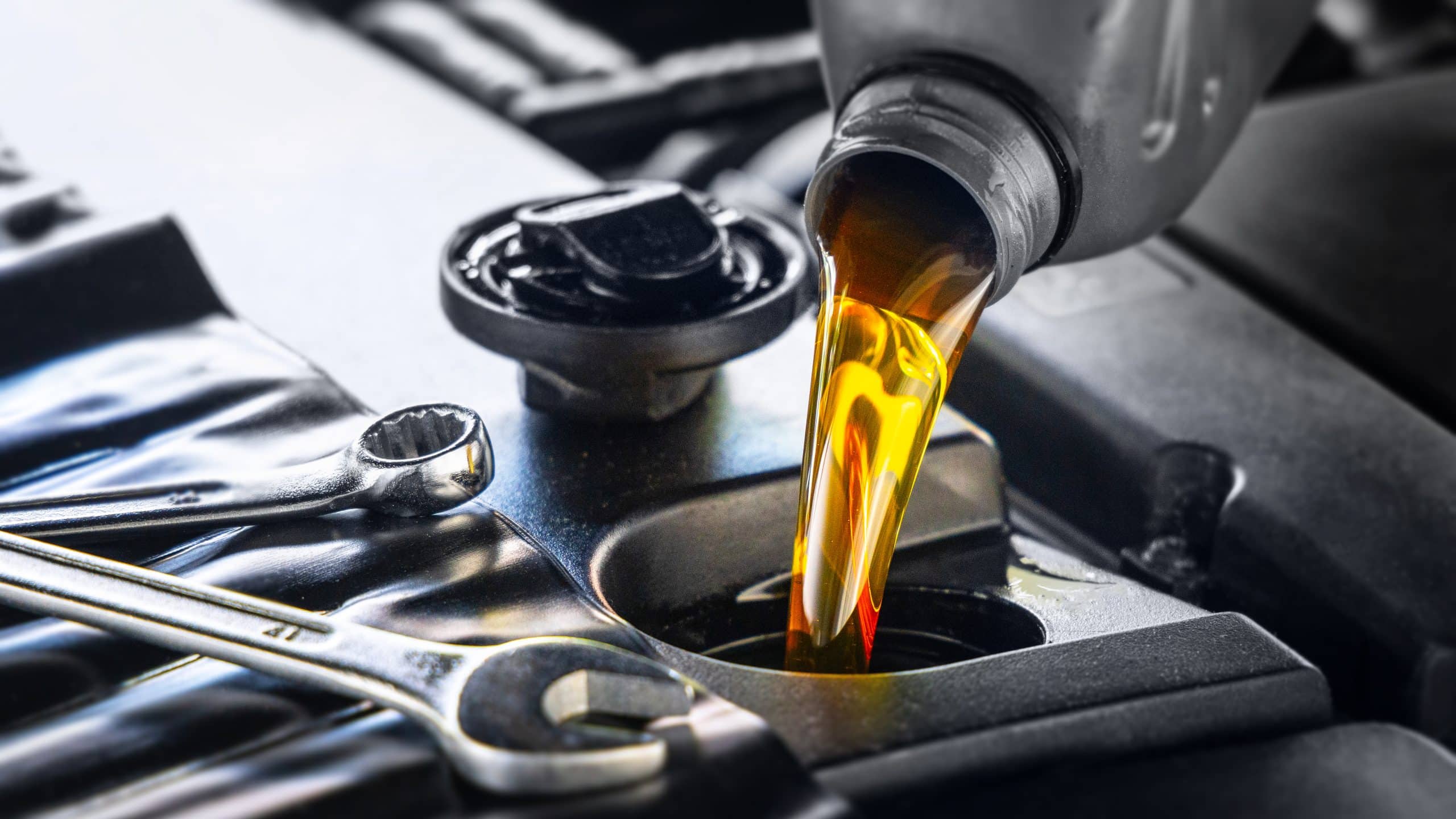
Did you know that those numbers on the oil bottle hold the key to making your engine last longer and consume less? We explain what they mean and which one your car needs
When you come across bottles of engine oil on the workshop shelf or at the dealership with labels such as 20W-50, 15W-40, 10W-40, 5W-30 or 0W-20, it may seem they are just “varieties” of varying price… but in reality those numbers carry a very important technical message for the proper functioning, durability and efficiency of your engine. In this article, we are going to decipher those codes, look at why they matter —and how to choose with both your engine and your climate and driving style in mind.
What does that “20W50, 15W40…” shown in the image tell us?
The image you have shared shows five tubes of engine oils with different classifications: 20W50 → 15W40 → 10W40 → 5W30 → 0W20. The basic idea is to illustrate how viscosity (the “thickness” or fluidity of the oil) changes depending on the type of oil:
-
20W50: the thickest of the five, it flows more slowly.
-
15W40: slightly less thick, it flows with greater ease.
-
10W40: even more fluid, suitable for more modern engines.
-
5W30: much lighter, it facilitates cold starts and protects at normal temperatures.
-
0W20: the thinnest, designed for maximum efficiency in modern engines and low fuel consumption.
Now then: what does each number mean? Why a “W”? Why two numbers? Let’s take a look.
What do the two numbers and the “W” mean?
The viscosity classification of engine oils is governed by the SAE J300 standard of the Society of Automotive Engineers (SAE).
First number + “W” (for “Winter”): indicates how the oil flows when cold, that is, when you start the engine at low temperature. The lower that number, the more fluid the oil is when cold, the faster it can circulate and reach all moving parts, reducing friction wear.
Second number: indicates the oil’s viscosity once the engine has reached its normal operating temperature. The higher that number, the “thicker” the oil is at high temperature, allowing it to better maintain the lubricating film and better protect against wear, heat and load.
For example: a 5W-30 oil flows relatively well when cold (because the “5W” indicates low cold viscosity) and at operating temperature it has the characteristic viscosity of “30”. By contrast, a 20W-50 will start out considerably thicker when cold (20W) and also “heavier” at temperature (50).
In short:
-
Lower first number → better cold fluidity.
-
Higher second number → greater protection at high temperature.
Why does this matter for your engine and your driving?
Cold start and immediate protection
When the engine is switched off and it is cold, on starting the oil must move quickly to lubricate critical parts (cylinder walls, pistons, camshaft, etc.). If the oil is too thick (high first number) it may take time to arrive, increasing wear. That is why in cold climates or for frequent short trips it is better to have a low “W” number.
Protection under load and at high temperatures
Once the engine is hot, and especially if you put it under stress (motorway, towing, hills, high revs, etc.), the oil must maintain a consistent lubricating film. If it is too light (low second number) it may degrade faster, lose thickness and offer less protection. This is where a higher second number is beneficial.
Efficiency and consumption
Lighter oils (low numbers) help reduce the internal friction of the engine, which can translate into lower fuel consumption and lower emissions. That is one of the reasons why many modern manufacturers recommend “0W-20” or “5W-20” oils for new low-friction engines.
Compatibility with the engine
It is not only a matter of climate and driving style: each engine has internal tolerances and manufacturer specifications —which take into account operating temperature, expected load, change intervals, etc.—. Choosing an oil that does not meet the recommended viscosity can shorten the life of the engine, promote oil leaks, deposits or consumption.
How to interpret the image in the context of the oils it shows
The image is very illustrative — five tubes with different types of oil — and we could interpret it as follows:
-
20W50: ideal for hot climates, older engines or those with wide tolerances (for example classics, high-mileage vehicles). High cold viscosity, high hot viscosity → good “cushioning” but more consumption and lower fluidity on start-up.
-
15W40: slightly more fluid when cold than the previous one, a good option for diesel or petrol engines of some age, under heavy use.
-
10W40: a good compromise for modern engines that are perhaps not the most “ultra efficient”. Good start-up, good protection.
-
5W30: aimed at modern engines, where cold fluidity, efficiency and lower consumption are sought, while still protecting at temperature.
-
0W20: the most fluid in the list when cold, designed for very modern, highly efficient engines with low consumption specifications. Less “thickness” when hot, which is fine as long as the engine allows it.
Practical tips for choosing correctly
-
Always check the manufacturer’s manual for your vehicle: it specifies the recommended viscosity grade (for example “SAE 5W-30” or “SAE 0W-20”) depending on the engine, the climate and the conditions of use.
-
Take the climate into account where you drive: if you live in a very cold area, prioritise a low first number (“W”). If your use is intensive, with loads and high temperatures, a higher second number may be advisable.
-
Observe the condition of the engine: in engines with high mileage, or that have suffered wear, a slightly higher viscosity is sometimes chosen to compensate for clearances.
-
Don’t swap for cheaper oil without judgement: using an oil that is too “light” (low numbers) in an engine that does not allow it can cause damage, leaks or oil consumption.
-
Change intervals: although a good oil can cover more, it is no excuse to stretch intervals too far without checking. Viscosity degrades with use, temperature and contaminants.
-
Check it meets other specifications: besides viscosity (SAE), oils carry certifications from the American Petroleum Institute (API), the International Lubricant Standardization and Approval Committee (ILSAC), etc. It is not all about the “W-” number.
That simple sequence of numbers and letters that looks technical (such as 5W-30 or 0W-20) hides a great deal of science and strategy. Correctly selecting engine oil is not just a matter of “putting in oil”, but of making sure it flows well from the start, and that it protects well when the engine is hot and working hard.
The image you show us is a clever visual representation: from “thicker” to “more fluid”, from greater protection to greater efficiency. But what is truly effective is choosing the grade that suits your engine, your conditions of use and the climate where you drive —and keeping up with maintenance.
In short: the numbers do matter, and a great deal. And now that you know them… every time you go to the garage, you will know what you are choosing and why.


 Peugeot E-208 GTi: a battery-powered toy that revives the spirit of the 1980s sports cars
 New Lexus ES: luxury grows and goes electric
 First contact with the Dacia Sandero Hybrid 155: power and efficiency from €19,890
Deja un comentario