Cupra Focus Ford Golf GT León Volkswagen Análisis Compact Rankings
2026 Ranking: the 5 petrol compacts with the most advanced digital instrument cluster and head-up display under €30,000
 Iván Navarro
30 September 2026
7 min.
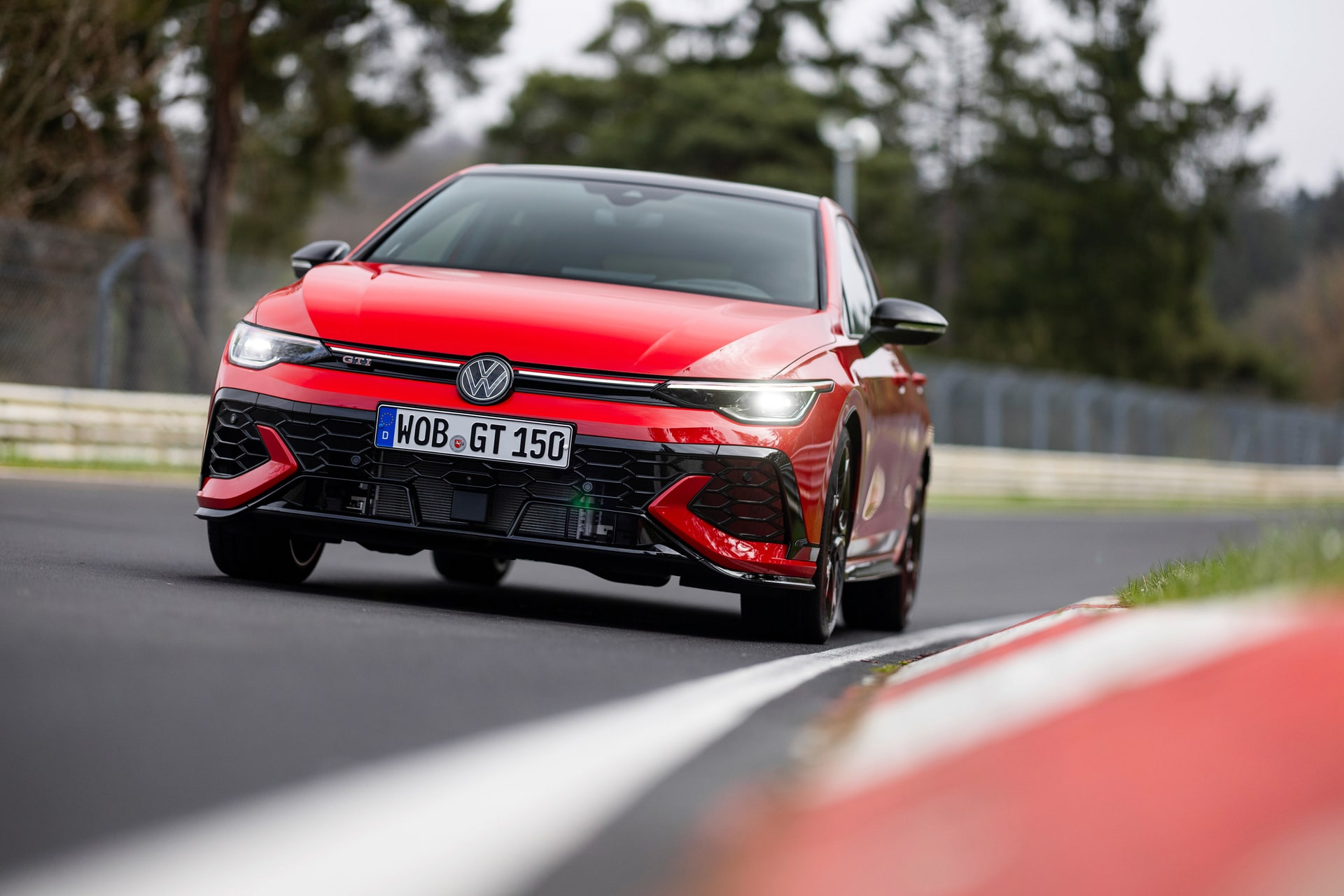
Five petrol compacts under €30,000 analysed for the quality of their digital instrument cluster and head-up display. 2026 editorial ranking with Volkswagen, Peugeot, Mazda, Cupra and Ford.
The petrol compact has spent years refusing to die, and a good part of the credit goes to the cabin. What used to be reserved for premium saloons — fully digital clusters, windscreen projection, widget personalisation — has moved down a couple of segments and is now offered below the psychological €30,000 barrier. The question is no longer whether a compact has a digital cluster; it is how good it is, how much you can read on the windscreen and whether the integration with navigation is worth the price.
This ranking deliberately leaves out the compacts from BYD and Nissan. In our view, none of their petrol compacts currently on sale in Spain reaches the level of digital sophistication this feature demands against leading European rivals of the latest generation; this is not a blanket criticism of the brands, it is an editorial scope decision. With that clarified, we move on to the five we consider essential.
Why the digital cluster and head-up display are now the new luxury of the compact
The interior matters most. A driver covering 50,000 kilometres a year spends more time looking at the instrumentation than at the bodywork, and that is where manufacturers are competing for perceived quality. A good digital cluster is no longer just a large screen: it is refresh speed, legible resolution in direct sunlight, the ability to show full-screen mapping and a visual hierarchy that does not distract. On paper every current compact offers a “digital cluster”; in practice there are chasms between them.
The head-up display adds another layer. Here it is worth distinguishing: a pop-up plastic combiner that reflects a limited image is not the same as direct windscreen projection with colour information, turn-by-turn navigation prompts and ADAS alerts. The difference is noticeable, especially at night.
Windscreen projection versus pop-up combiner
The pop-up combiner — the classic combiner — is cheaper to integrate, but it limits image size and usually stays at speed, speed limit and little else. Windscreen HUDs require specific optics and a prepared windscreen, but they can overlay navigation arrows, blind-spot warnings and even lane-assist information. In 2026, in this segment, the gap between the two systems still separates those playing in the first division from those in the second.
How we evaluated the five compacts
We looked at five variables: HUD type and quality, digital cluster size and resolution, interface personalisation, integration with navigation and ADAS, and equipment-to-price ratio within the €30,000 ceiling. We also demanded real availability at Spanish dealerships today — not announcements or foreign versions.
For those who want to go deeper into the other major technological vector of the segment, the selection of a level 2 ADAS package is essential reading before signing.
1. Volkswagen Golf 1.5 eTSI — from €29,500
The Golf remains the benchmark. Its 10.25-inch Digital Cockpit Pro is among the most polished in the segment: clear menus, legible typography and a full-screen map view that is still the reference. The HUD, windscreen-projected on the upper trims, shows navigation prompts and assistant information with a sharpness that is hard to match for less money. That said, Volkswagen’s options policy remains a headache — you have to configure carefully to get everything under the figure.
| Power kW | Power CV | Fuel | Label |
|---|---|---|---|
| 85 kW | 116 CV | Petrol mild hybrid | ECO |
2. Peugeot 308 PureTech 145 — from €31,387
The 308’s i-Cockpit 3D is probably the most daring approach in the segment. It plays with two superimposed planes that create a sense of depth and prioritise relevant information in the foreground. Whether you like it or not — the low steering wheel still divides opinion — as a visual proposition it has no rival at this price. The 308’s HUD is windscreen-projected on GT trims, and the integration with the brand’s connected navigation works well in daily use.
| Power kW | Power CV | Fuel | Label |
|---|---|---|---|
| 107 kW | 145 CV | Petrol mild hybrid | ECO |
3. Mazda 3 e-Skyactiv G 2.5 — from €27,800
Mazda’s approach is the opposite of Peugeot’s: less artifice, more rationality. The cluster combines a central digital zone with analogue dials flanking it, and the windscreen HUD — with sharp, well-contrasted information — is among the best in its size-to-legibility balance. Mapping is not projected full-screen as in the Golf, but the essential information is where it should be. The interior materials feel a step above the segment average, something that no longer surprises with Mazda.
| Power kW | Power CV | Fuel | Label |
|---|---|---|---|
| 103 kW | 140 CV | Petrol mild hybrid | ECO |
4. Cupra Leon 1.5 eTSI — from €29,200
It shares its technological base with the Golf, but Cupra has taken a different aesthetic approach to the interface: dark backgrounds, copper accents and a sportier layout. The windscreen HUD is available on the VZ trims and projects with the same competence as its German cousin. The difference? A little more visual personality and, generally, better standard equipment at an equivalent price — which offsets the feeling of buying “the same car with a different tie”.
| Power kW | Power CV | Fuel | Label |
|---|---|---|---|
| 110 kW | 150 CV | Petrol mild hybrid | ECO |
5. Ford Focus 1.0 EcoBoost mHEV — from €26,500
The Focus closes the ranking, and it does so because its 12.3-inch digital cluster is larger than many would expect at this price, and its HUD — a pop-up combiner type, it must be said — performs without fanfare but reliably. It is the most affordable proposition on the list and the one with the most room for negotiation at the dealership. It remains to be seen how long the Focus stays in the catalogue, but while it is available it is still a rational purchase for anyone who wants a large cluster without paying a German premium.
| Power kW | Power CV | Fuel | Label |
|---|---|---|---|
| 92 kW | 125 CV | Petrol mild hybrid | ECO |
Verdict: what we would buy and why
If the budget allows, the Golf remains the most well-rounded choice for its overall integration. If you want something more personal — visually and in character — the Peugeot 308 and the Cupra Leon contend for second place depending on aesthetic preference. The Mazda3 is the option for those who value materials and rationality over digital exuberance. And the Focus is the sensible buy for anyone unwilling to pay for the badge.
Frequently asked questions
What is the difference between a windscreen head-up display and a pop-up combiner?
A windscreen HUD projects information directly onto the front glass using specific optics, allowing a larger image, more colours and overlay of navigation and ADAS information. A pop-up combiner uses a small transparent panel that rises from the dashboard; it is cheaper, but limits the size and amount of information it can show.
Is a digital cluster worth it over an analogue one in a petrol compact?
Yes, if you will use integrated navigation and want it displayed full-screen in front of the driver. If your use is mainly urban and with a smartphone, the benefit is more aesthetic than functional. As a resale differentiator three or four years down the line, the digital cluster is already considered practically essential in the segment.
Do petrol compacts with these technologies carry an ECO label?
All five models in the ranking fit 48-volt mild-hybrid systems that earn them the DGT ECO label. This gives them advantages in low-emission zones and access to tax incentives in several Spanish municipalities.
Can a head-up display be added aftermarket if the car does not have one as standard?
Not equivalently. Aftermarket systems sold as HUDs are usually external projectors with quality far below factory units, with no integration with navigation or ADAS. If the HUD matters to you, buy it from the factory — it is one of those options not worth leaving for later.
Technical specifications of the cars in this article
 Peugeot E-208 GTi: a battery-powered toy that revives the spirit of the 1980s sports cars
 New Lexus ES: luxury grows and goes electric
 First contact with the Dacia Sandero Hybrid 155: power and efficiency from €19,890
Deja un comentario