After the engines, it's the turn of the tyres: The EU bans the sale of Group F tyres
 Guillermo Lopez
24 October 2018
3 min.
The European Commission announces that from November onwards, the sale of type F tyres for passenger cars and vans is banned throughout the European Union
Update: the EU clarifies that tyres may continue to be sold for a period of 30 months after the date of entry into force.
From next 1 November, all passenger car and van tyres classified within Group F for rolling resistance, and those intended for commercial vehicles included in group E, whose rolling resistance coefficient is greater than 9 in said classification, may no longer be marketed in the various markets of the European Union, as the European Commission has banned their sale.
The reason the European Commission gives for banning the sale of these tyres centres on the excessive fuel consumption that their use causes in passenger cars and commercial vehicles, due to the high rolling resistance these tyres present.
“European legislation gives low rolling resistance tyres an essential role in reducing greenhouse gas emissions from road traffic,” comments the director of the Tyre Manufacturers’ Commission, José Luís Rodriguez. Hence, in accordance with EC Regulation No. 661/2009, from this coming 1 November onwards, tyres of Class F passenger car and van tyres may no longer be marketed in the various markets that make up the EC, nor may Class E van tyres whose rolling resistance coefficient is greater than 9.
A logical measure, considering that, moreover, far from harming consumers’ interests, it benefits them, since “almost 20 per cent of the fuel consumption of our vehicles is precisely related to this factor, so any improvement in tyres will quickly be noticed in our pockets,” says the director of the Tyre Manufacturers’ Commission, for whom “the ban on marketing inefficient tyres in EU territory will contribute not only to strengthening the role of the consumer, but also to improving the quality of the air we breathe.”
Mandatory European label since 2012
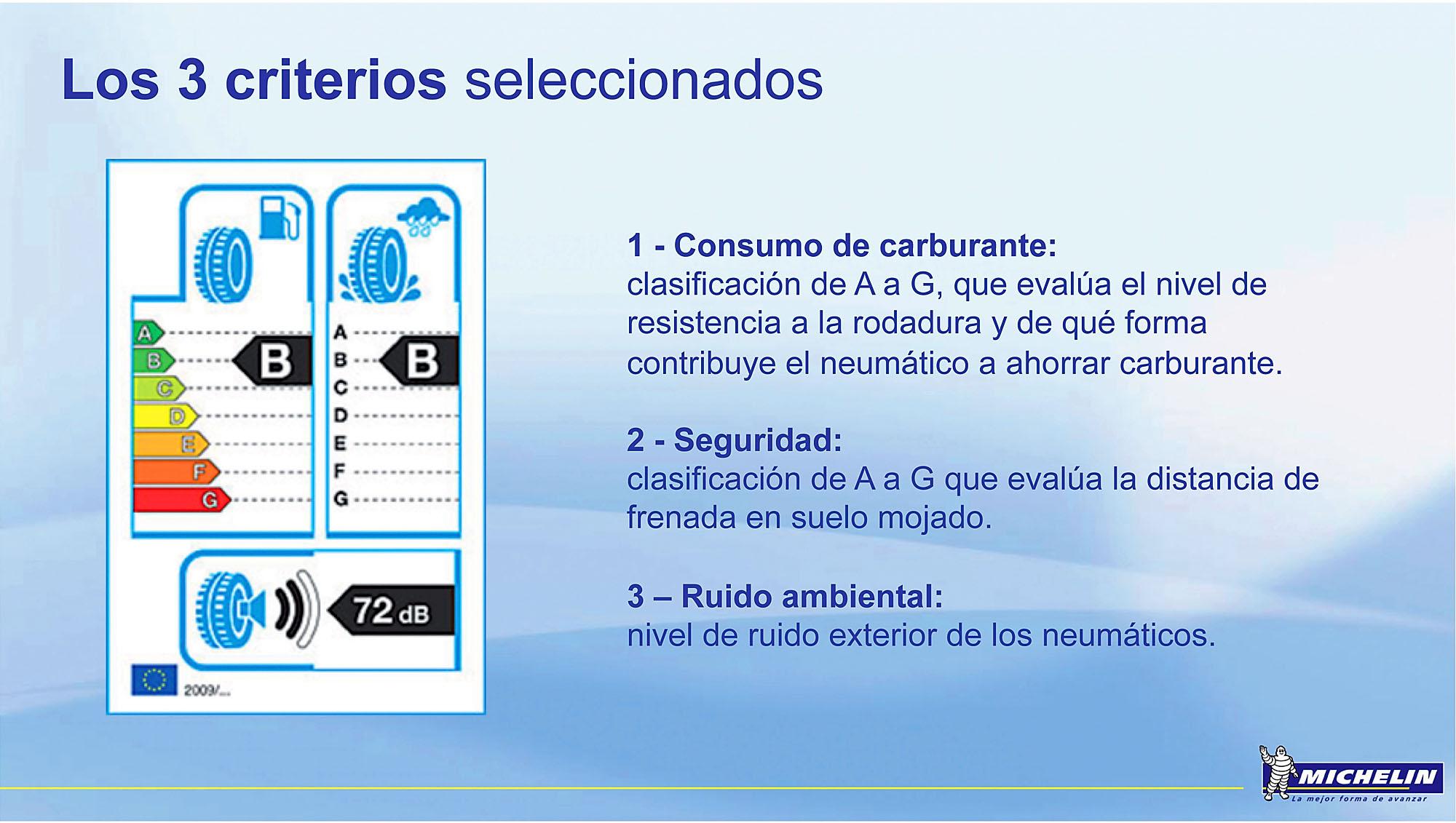
The classification of tyres has facilitated the development of the so-called European label, which all tyres sold in the European Union must carry at the time of sale. The label includes important data on environmental and safety aspects that the different types of tyres provide, allowing comparison between the various models available on the market based on their wet grip performance, the fuel savings they provide, and the rolling noise they produce.
Since November 2012, regulations have required that all tyres carry their label clearly and visibly at the time of purchase. It is a system designed to inform the consumer about the different performance characteristics each tyre offers, so that the buyer can compare between the different models on the market, thereby favouring the purchase of higher-quality, higher-performance tyres over those offering lower performance.


 Peugeot E-208 GTi: a battery-powered toy that revives the spirit of the 1980s sports cars
 New Lexus ES: luxury grows and goes electric
 First contact with the Dacia Sandero Hybrid 155: power and efficiency from €19,890
Deja un comentario