Alfa Romeo Giulia Giulietta MiTo Stelvio Reports
Alfa Romeo celebrates its 110th Anniversary and we look back at some of its most iconic models
 Mónica Redondo @MonicaRedondoD
17 January 2020
14 min.
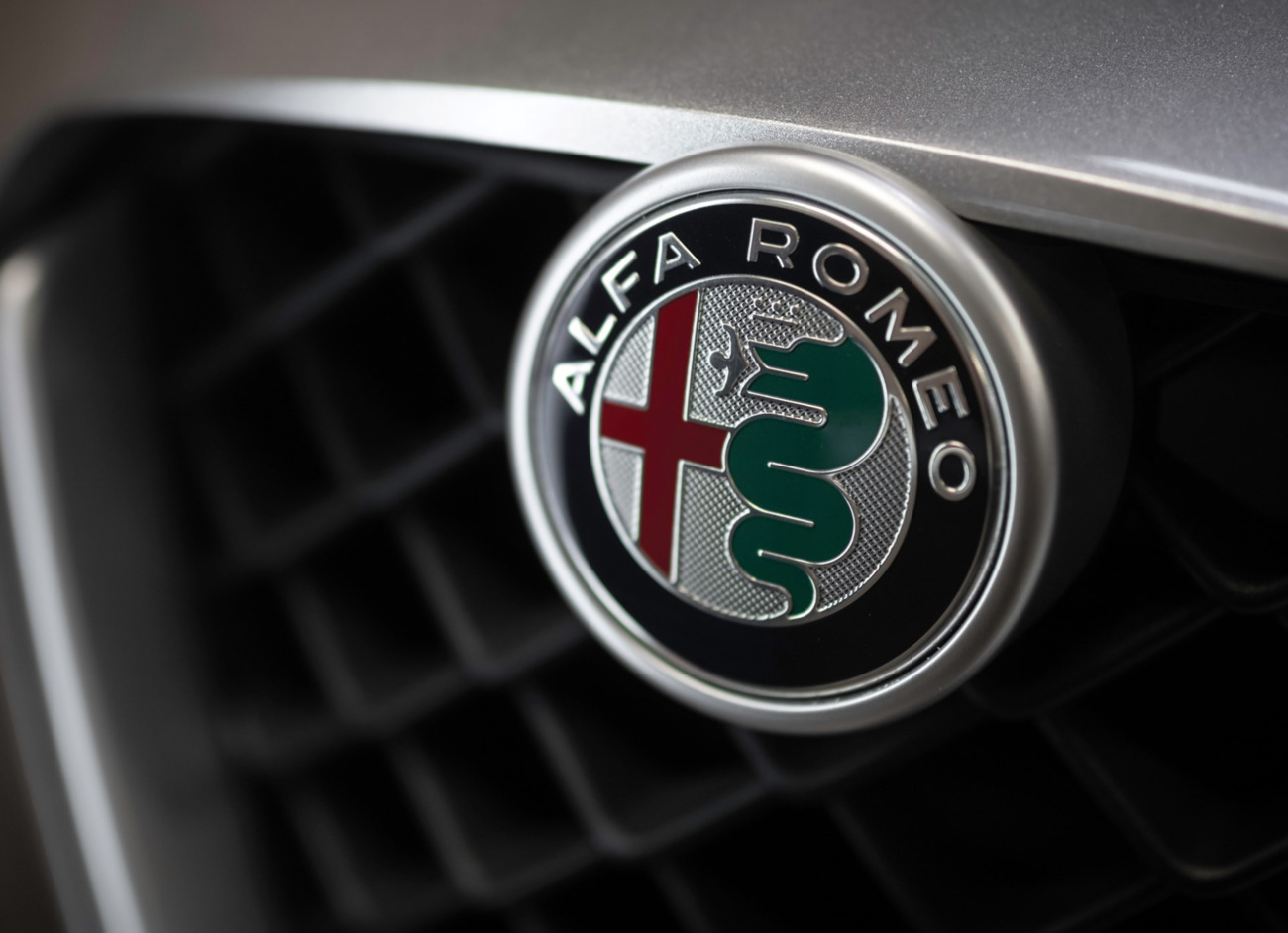
For the 110th Anniversary of Alfa Romeo, we wanted to pay tribute to the maker of the Quadrifoglio Verde by looking back at some of its most legendary models.
The brand of the Coure Sportivo has just celebrated the 110th Anniversary of Alfa Romeo, and we wanted to pay it the tribute it deserves, because any motoring enthusiast has at some point wanted to sit behind the wheel of one of Alfa Romeo’s machines.
If this is true, 2020 is a very significant year for car enthusiasts, as it marks the 110th anniversary of the founding of Alfa Romeo in Milan, less than 200 kilometres from its current home in Turin.
The actual date was 24 June 1910, but as we will see, the history of Alfa Romeo actually began a little earlier. The company we now know as Alfa Romeo emerged from SAID, which was created in 1906 to build French Darracq cars for sale in Italy. By 1909, SAID was in trouble, and its directors decided to try a new approach and build their own cars.
The new organisation was given the descriptive name [Società] Anonima Lombarda Fabbrica Automobili, which translates roughly into English as Lombardy Automobile Factory Limited. For convenience, it was referred to by its initials, ALFA.
What does the Alfa Romeo badge mean?
The Alfa logo was designed by Romano Cattaneo. It has been redesigned several times over the years, but two elements have been kept: a red cross representing Milan and a grass snake taken from the coat of arms of the Visconti family, who ruled the city until 1447.
The Quadrifoglio Verde
Hoping it would bring him luck at the 1923 Targa Florio, Alfa Romeo racing driver Ugo Sivocci painted a four-leaf clover on his RL. It seemed to work. Sivocci won the race, but then died at Monza while practising in another vehicle that did not have the now-famous clover.
The clover, known as the quadrifoglio, has since been added to Alfa Romeo racing cars in Sivocci’s honour. The logo and name began to be used on high-performance production cars in the early 1960s.
Alfa Romeo Giulietta
Alfa Romeo has used the Giulietta name three times. The first model, built from 1954 to 1965, was available as a saloon, coupé and roadster, along with a very rare estate called the Promiscua.
Most of them had the same 1.3-litre twin-cam engine with outputs of up to 99 CV for road use. Competition versions could reach 120 CV. Alfa Romeo celebrated building the 100,001st Giulietta in 1961, and total production is thought to have exceeded 170,000.
Alfa Romeo Giulia
Known as the Tipo 105, the original Giulia saloon, built between 1962 and 1977, had a square body that was far more aerodynamic than it looked.
Nearly all versions had 1.3 or 1.6-litre petrol engines, but a late model introduced in 1976 was Alfa Romeo’s first diesel passenger car.
In 1963 a series of coupés based on a shortened Giulia saloon platform was launched. Engine sizes ranged from 1.3 to 2.0 litres, and the cars had various names, most of which included the letters GT.
The GTAm, built by Autodelta, Alfa Romeo’s motorsport division, was built specifically for racing. Dutch driver Toine Hezemans won the 1970 European Touring Car Championship in one.
https://www.youtube.com/watch?v=TM5g4ACY7h4
Alfa Romeo 33 Stradale
This was the road-legal version of the Alfa Romeo Tipo 33, which was named Stradale. This is the Italian word for road. It had butterfly doors and a 2.0-litre V8 engine with a remarkably high output of 227 CV, only about 40 CV less than it produced in the racing car.
Only 18 were built between late 1967 and early 1969. Surviving examples are estimated to be worth more than €8 million.
Alfa Romeo Montreal
When Alfa showed an unnamed concept car at Expo 67, the public called it the Montreal after the host city. Alfa kept the name for the production model, which differed from the concept in many respects.
For example, the original 1.6-litre four-cylinder engine was abandoned in favour of a larger (2.6-litre) but de-tuned (200 CV) version of the V8 used in the 33 Stradale. The Montreal was produced between 1970 and 1977, but did not sell particularly well, partly due to its high price.
Alfasud
The Alfasud took its name from a government policy to increase manufacturing and employment in the poorest part of southern Italy. This small, radical car, the first Alfa Romeo with front-wheel drive, was built at a factory near Naples from 1972, and unfortunately developed an early reputation for rust.
More happily, it also became known for its excellent handling, helped by the fact that the boxer engine design gave the car a usefully low centre of gravity.
Alfetta, GTV and Giulietta
Launched in the same year as the Alfasud, the Alfetta is named after the Alfetta Grand Prix 159 car of the early 1950s. Unusually, the production car had its engine mounted at the front and its gearbox at the rear in an attempt to make the weight distribution as even as possible.
The Alfetta saloon was the basis for the GT and GTV coupés. More powerful examples had V6 engines, rather than the more common four-cylinder units, in sizes up to 3.0 litres. Another derivative was the second-generation Giulietta, built between 1977 and 1965.
Alfa Romeo 164
Development of the 164 began when Alfa Romeo was still owned by the Institute for Industrial Reconstruction, but it went on sale after Fiat bought the company.
Notable for its wedge shape, created by Pininfarina, the 164 was one of four cars based on the Type Four platform; the others were the Fiat Croma, the Lancia Thema and the Saab 9000. The Alfa was the last to reach the market, in 1988, and ceased production nine years later.
SZ / RZ
The SZ coupé was closely related to the 75 (sold in the US as the Milano), and used the 3.0-litre V6 engine found in the high-performance versions of that car. It was built from 1989 to 1991 and followed by the RZ convertible, produced until 1994.
No other Alfa Romeo has looked quite like these cars before or since. They were nicknamed Il mostro (‘the monster’), but their six headlights arranged in two sets of three would return in the 21st century.
155
Given the new Fiat connection, it was quite reasonable that the 155 front-wheel-drive compact executive car shared a platform with the Fiat Tempra and the Lancia Dedra. Production began in 1992 and ended six years later.
The model was very successful in motorsport. The 155 Silverstone, launched in 1994, was created specifically to give Alfa Romeo an advantage in the British Touring Car Championship that year, which it dominated. Other 155s would go on to win touring car titles in Germany, Italy and Spain. A notable model in Alfa Romeo’s 110th Anniversary.
145/146
Alfa’s small family hatchbacks from the mid to late 1990s were split into two ranges with similar mechanicals but different characters. The 145 was the younger-oriented three-door, while the 146 had five doors and a more conservative style, and was aimed at people who might previously have bought a 33.
Like the 33 and the Alfasud, the 145 / 146 was initially available with boxer engines, although these were discontinued. In hot hatch form, both models were offered with 2.0-litre TwinSpark engines producing around 150 CV, but only the 145 version carried the Quadrifoglio badge. A model to note in Alfa Romeo’s 110th Anniversary.
GTV / Spider
Like the 145 / 146 whose platform they shared, the GTV and the Spider were broadly the same car, respectively a two-seat sports coupé and its convertible equivalent, built from 1993 to 2004.
Alfa Romeo offered several four-cylinder and V6 engines. The most unusual was a 2.0-litre turbocharged V6, which was roughly as powerful as the 3.0-litre version but placed the car in a lower tax bracket for Italian customers. Although the image we see is a render of the future facelift we will see, it could not be missing from the tribute to Alfa Romeo’s 110th Anniversary.
156
The 155 was replaced by the 156, which was in production for ten years from 1997. It was offered in many forms. Engines ranged from a 1.6-litre Twin Spark through a common-rail turbo diesel to a 3.2-litre petrol V6; body styles included saloon, Sportwagon estate and Crosswagon semi-off-roader; and there was a choice of front- or four-wheel drive.
The 156 was very well received. In 1998 it became the first Alfa Romeo to win the European Car of the Year award, easily beating the new Volkswagen Golf and the Audi A6. A milestone to remember in Alfa Romeo’s 110th Anniversary.
166
While Alfa Romeo was doing well with its small and medium models in the late 1990s, the same could be hard to say of its largest model. The 166, which used the same platform as the Lancia Kappa, replaced the 164 in 1996 and staggered on until 2007 before being dropped without a direct successor.
In August 2009, we reported that the 166 was the car with the worst depreciation in the UK, worth just 14.4% of its selling price after three years, but it is part of Alfa Romeo’s 110th Anniversary.
147
On the occasion of Alfa Romeo’s 110th Anniversary we recall this model. The brand rationalised its small hatchback range in 2000, replacing both the 145 and the 146 with the 147, which was available with three or five doors. In 2001, the 147 became the second and so far last Alfa Romeo to be named European Car of the Year, beating the Ford Mondeo by a single point.
For the GTA version of the sporty compact, Alfa Romeo installed a large V6 under the bonnet, just as Volkswagen later did with the Golf R32. The 3.2-litre engine produced 247 CV and gave the car a top speed of 200 km/h and a 0-100 km/h time of 6.3 seconds.
GT
Described by its creator as “a true Gran Turismo sports coupé in the classic Alfa Romeo tradition”, the GT was a more stylish version of the 156 introduced in 2003. A 1.8-litre Twin Spark, a 2.0-litre direct-injection and a 3.2-litre V6 petrol engine were offered, along with a 1.9-litre turbo diesel.
“It is a nice car, the GT,” we reported, speaking of the 2.0, while pointing out that “dynamically, it is still far from being a BMW 3 Series”.
Alfa Romeo 159
The Alfa Romeo 159 replaced the 156 in 2004 and remained on the market for seven years. It was based on a platform developed jointly by Fiat and General Motors, although only Alfa Romeo used it for cars that went into production.
The 159’s standout design feature was its set of six headlights, three on each side of the car. This had last been seen on the SZ / RZ (although the lights were now circular rather than square) and would be used again in the near future.
Alfa Romeo Brera / Spider
The Brera coupé and the Spider convertible were based on the 159 and were in production for five years from 2005. The Brera in particular looked very dramatic (the six-light arrangement certainly helped), but it was criticised for its dull handling, caused by its considerable weight and damped front suspension.
Alfa Romeo commissioned the British company Prodrive to work on it, and the result was the lighter, lower and stiffer Brera S. “This is really the Brera Alfa should have built from day one.” “It is a shame, then, that only 500 were made.”
Alfa Romeo MiTo
The name MiTo refers to the cities where it was designed, Milan, and built, Turin. Launched in 2008, it was based on a General Motors / Fiat platform also used for the Fiat Grande Punto and the Opel Corsa, among others.
The MiTo was one of the first cars to use the MultiAir intake system designed by Fiat Powertrain Technologies and licensed from the German company Schaeffler. Under a different name, the same technology is used in Jaguar Land Rover’s Ingenium engines.
Alfa Romeo 8C
The 8C Competizione and its convertible derivative, the 8C Spider, were produced between 2007 and 2010. Both had a carbon fibre body and used a 450 CV version of the 4.7-litre F136 V8 engine also found in several Ferrari and Maserati models.
Only 500 of each were built. Ninety 8C Competizione were destined for the US, so this is the first Alfa Romeo sold in North America since the 164 was withdrawn from that market in 1995.
Alfa Romeo Giulietta
For Alfa Romeo’s 110th Anniversary, the Giulietta name was revived in 2010 for a new family car that replaced the 147. It was the first model based on the Fiat Compact platform also used by Chrysler, Dodge and Jeep, all of which have been linked to Alfa Romeo since the creation of Fiat Chrysler Automobiles in 2014.
The Giulietta finished second in the 2011 European Car of the Year awards, Alfa’s best result since the 147 won ten years earlier, a result the Giulietta equalled in 2017.
Alfa Romeo 4C
Alfa Romeo showed the 4C as a concept at the 2011 Geneva Motor Show and then in production form at the same event two years later. Like the 8C, much more expensive and exclusive, it has a carbon fibre body that helps keep the kerb weight at almost exactly 1,000 kg.
The 237 CV mid-mounted turbocharged petrol engine is one of many Alfa Romeo units in history with a capacity of around 1750cc; the exact figure in this case is 1742cc. Available in coupé and Spider forms, the 4C was Alfa’s first series production car to go on sale in North America in the 21st century.
Alfa Romeo Giulia
In 2016, Alfa Romeo launched the Giulia, its first saloon since the 159 and first rear-wheel-drive, front-engined model in almost a quarter of a century.
Primarily sold as an executive car, the Giulia is also available in high-performance Quadrifoglio form. The 2.9-litre twin-turbocharged V6 petrol engine in this version produces a maximum output of 503 CV, making the Quadrifoglio almost twice as powerful as any other model in the range.
Alfa Romeo Stelvio
By the mid-2010s, it had become almost impossible for any car maker not to have an SUV in its line-up. Alfa Romeo’s entry into the sector was the Stelvio, named after the famous Italian mountain pass and related to the Giulia, with a similar range of engines.
The Alfa Romeo Stelvio made its public debut at the 2016 Los Angeles Auto Show, and went on sale in the US market, along with the Giulia, the following year. As a result, Alfa Romeo’s annual sales rose from a few hundred to more than 12,000 units.
Technical specifications of the cars in this article


 Peugeot E-208 GTi: a battery-powered toy that revives the spirit of the 1980s sports cars
 New Lexus ES: luxury grows and goes electric
 First contact with the Dacia Sandero Hybrid 155: power and efficiency from €19,890
Comentarios cerrados