Toyota invests 350 million euros in developing flying cars
 Alvaro Avilés
17 January 2020
3 min.
Toyota has made a major capital injection into Joby Aviation to develop its next flying cars
A few days ago we learned that Hyundai has partnered with Uber to develop a new autonomous flying taxi service that would begin operating in 2023. For now, we all see these advances as quite distant, although let’s not forget how fast the industry is evolving. A decade ago, having an electric car was unthinkable, and now we have models as complete as the Hyundai Kona EV that we tested a few months ago.
Well, it seems that Toyota believes air transport is the future, which is why it has decided to make a multimillion-dollar investment to develop its new flying cars. The Japanese brand is one of the giants of the automotive sector, so few companies can see more clearly that mobility is changing at breakneck speed.
Toyota is strongly betting on flying cars
So confident is Toyota of this change that it has announced an investment of more than 350 million euros in Joby Aviation. This company is unknown for the moment, but it is dedicated to developing electric aerial vehicles with vertical takeoff and landing, and it has already accumulated no less than 720 million euros in capital.
Although spending such an amount of money must sting within the brand, §0’s top executive, Akio Toyoda, has stated that the agreement is a necessary step toward the brand’s long-term goal. He also trusted that his partnership with Joby Aviation could “revolutionize with its potential the future of transport and of life.”
However, it is not the only brand devoting a good part of its budget to developing aerial alternatives, and last year BMW claimed it would have a hydrogen flying car in 2021.
It is nothing new that Toyota is an innovative company that intends to offer new mobility services, and it has recently presented Kinto, the new mobility company of Toyota.
In addition, some countries are strongly backing this transport alternative, so we know that the flying taxi business is close to starting operations in Singapore and even in Dubai the police are already using flying motorbikes to patrol.
An electric drone in XL format
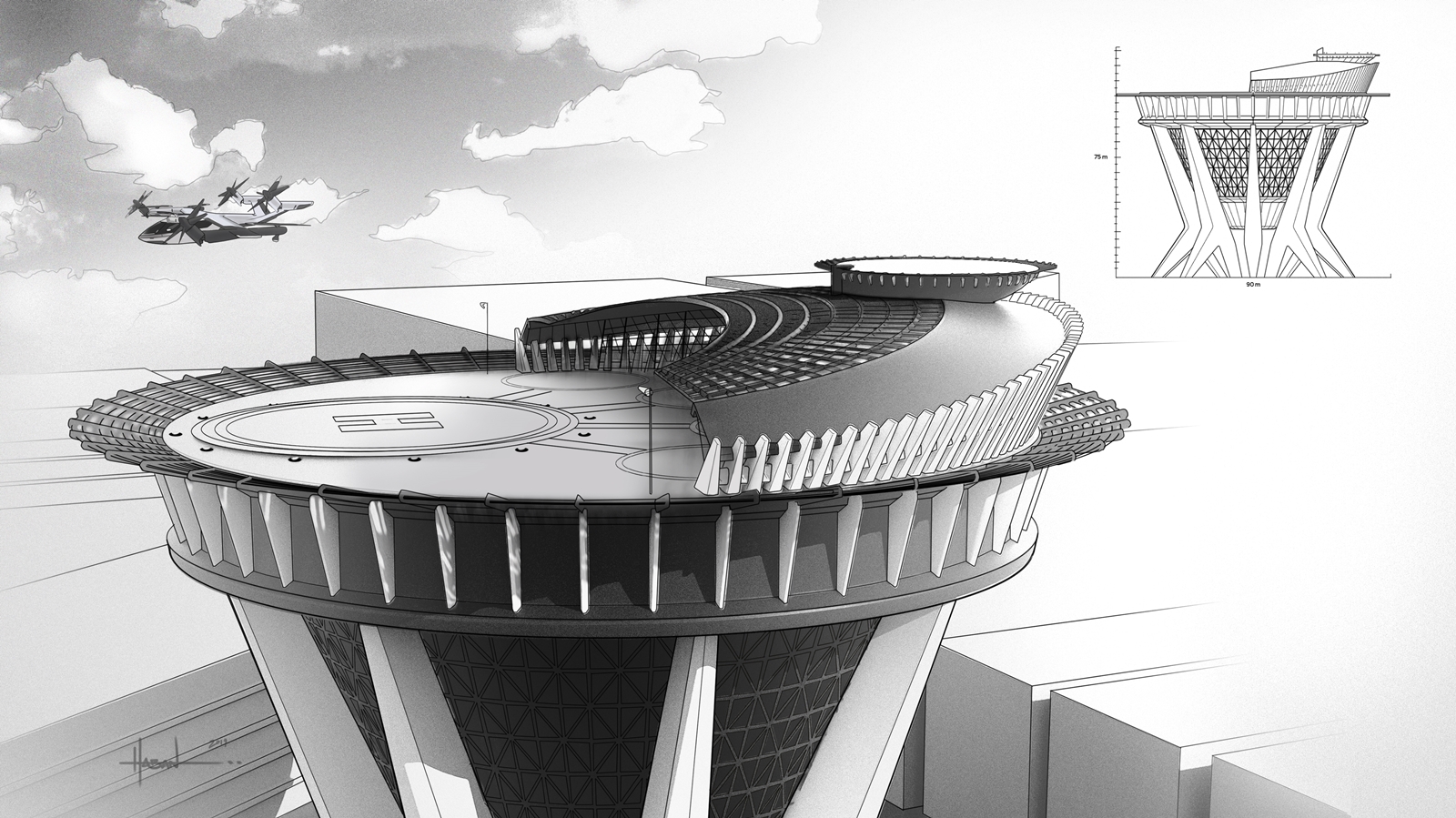
Following this announcement, Joby Aviation has shown an image of the concept from which §0’s flying car would emerge. It is a device with a structure similar to a drone’s, but in XL size. It could accommodate four occupants and the driver (it will not be autonomous), will have six rotors and will be able to reach a top speed of 320 km/h. In case you had any doubts, yes, it will be electric and will have a range of 240 kilometres.
Therefore, it seems that the next step after electric mobility, which has revolutionized the automotive sector, is air mobility. We will have to wait a few years to see whether the most skeptical were right or, on the contrary, we will swap taxis and buses for enormous flying cars that come to pick us up at home.


 Peugeot E-208 GTi: a battery-powered toy that revives the spirit of the 1980s sports cars
 New Lexus ES: luxury grows and goes electric
 First contact with the Dacia Sandero Hybrid 155: power and efficiency from €19,890
Comentarios cerrados