BYD SEAL Electric Cars Range / versions SUV
BYD Seal U: the new promise from BYD with 500 km of range
 Óscar Sanz
24 July 2023
3 min.

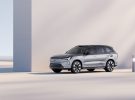
In yet another attempt by the brand to cover all of its customers’ needs, they are launching the BYD Seal U, a model set to compete even with the Model Y
The European market for battery electric and plug-in hybrid vehicles is preparing to welcome a new competitor, and this time it comes from China. The brand BYD, known for its wide range of electric cars in its home market, has confirmed the arrival of a new model that will surprise all of its consumers in Europe. It is the BYD Seal U, a mid-size SUV that promises to rival none other than the popular Tesla Model Y. For now, BYD is entering the market cautiously, as it cannot bring in too many units, and it is focusing on building an online dealership network across the European market.
Over the past few months, specialist media have been speculating about BYD’s upcoming launches in Europe. Although some models had been mentioned, such as the Seagull city car and the Yuan Pro B-SUV, the surprise now comes with the official announcement of the BYD Seal U, also known as the Song Plus EV in China.
The BYD Seal U is a segment D SUV with a length of 4.78 metres, positioning it between the Atto 3 (segment C) and the Tang (segment E), the seven-seat model from the same brand. The vehicle’s styling clearly shares links with the Seal saloon, especially in its light clusters. With a boot capacity of 570 litres, the SUV will be offered exclusively in a five-seat, two-row configuration to differentiate it from the Tang.
The Seal U range will consist of two versions, both equipped with an electric motor producing 218 CV (160 kW). The main difference between them lies in battery capacity. The Comfort version will feature a 71.8 kWh pack, which provides a range of 420 km on the WLTP cycle. This figure is somewhat odd: its bigger sibling, the Atto 3 with a 60 kWh battery, is homologated for the same distance, 420 km WLTP, and the Model Y with 60 kWh achieves a range of 455 km on WLTP. The Design variant, for its part, will be equipped with an 87 kWh battery, offering a greater range of 500 km on the same homologation cycle.
To power this electric SUV, BYD has opted for LFP (lithium iron phosphate) cells in both versions. Added to the rapid improvements the brand is achieving on its platform, and its specialty with Blade cells, we can trust its cutting-edge technology. Although these cells have a lower energy density compared with NCM (nickel, cobalt, manganese) cells, they stand out for being more affordable, longer-lasting and safer, a bet the brand has backed for several years.
In terms of performance, the BYD Seal U Comfort can reach 100 km/h in just 9.3 seconds, while the Seal U Design, due to its greater weight, will do so in 9.6 seconds. Both models will have a top speed limited to 175 km/h. In addition, the Seal U will include as standard the bidirectional V2L (Vehicle-to-Load) charging technology and a heat pump.
With this new model, BYD aims to carve out a place in the European electric vehicle market, going head-to-head with the successful Tesla Model Y, but to do so it will also have to adjust the prices across its range. Its models sit between 30,000 and 40,000 euros, and the Atto 3 is priced at 41,000 euros, so we can expect this car to be positioned above that, at around 45,000 euros.
BYD Seal U image gallery
Technical specifications of this car

 Peugeot E-208 GTi: a battery-powered toy that revives the spirit of the 1980s sports cars
 New Lexus ES: luxury grows and goes electric
 First contact with the Dacia Sandero Hybrid 155: power and efficiency from €19,890
Deja un comentario