Caterham Electric Cars Supercars
Caterham Project V: the union of Caterham and Yamaha to deliver a revolutionary sports car
 Victor Alós Yus @sepelaci
21 October 2024
2 min.
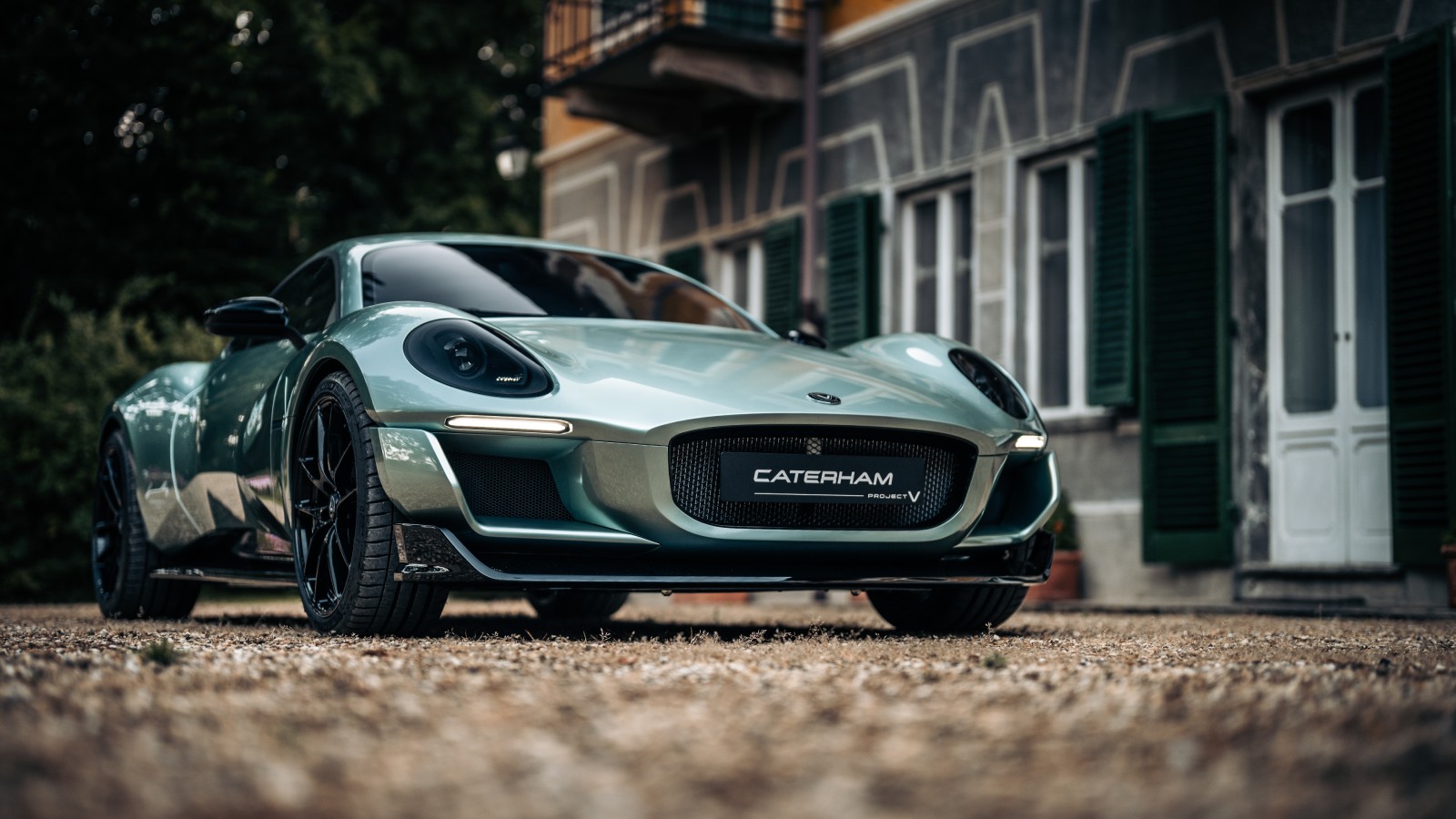
Caterham’s new prototype is nearing the end of its testing phase and may soon move into production, with sales starting in 2025.
When you want to create a car that sets the benchmark among high-performance models, you have to work hard and offer something that makes potential buyers take notice. Caterham is no stranger to this, but it has begun working with Yamaha to create a prototype that stands out and amazes. Its name is Caterham Project V, and it was unveiled as a concept during the 2023 Goodwood Festival of Speed.
In this partnership, Yamaha has taken charge of developing the vehicle’s electric drive system, while Caterham has contributed its experience in lightweight design and the driving experience. The English company insists that this prototype is not just a showcase of a revolutionary car, but is largely what we will see in a future production version.
The model’s development is expected to conclude in 2025, with production starting a few months later. One of the model’s key features is the electric axle developed exclusively for it. This provides the electric boost the vehicle needs, without sacrificing the driving experience expected of a Caterham.
Galería de fotos -
CATERHAM PROJEC V
But Yamaha’s role doesn’t stop at supplying the electric drivetrain. It also collaborates on creating advanced solutions for dynamic control, which will help maintain and improve the model’s driving experience alongside the sustainability that the electric car will offer.
Yamaha is committed to developing sustainable drivetrain systems as part of its strategy to achieve carbon neutrality. For this reason, it has not only worked on this model to supply the drivetrain, but has also presented solutions for Formula E.
Like all Caterham models, it offers lightness, simplicity and an elevated driving experience. The motor is located at the rear and delivers 200 kW of power, equivalent to 268 CV. The car’s kerb weight is 1,190 kg, so performance should be quite appealing. The battery has a capacity of 55 kWh and offers a range of 400 kilometres on the WLTP cycle.
For charging, Caterham says it is possible to go from 20 to 80% of the battery’s capacity in 15 minutes, thanks to a charging capacity of 150 kW. The car’s top speed is 230 km/h and its 0 to 100 km/h acceleration is quoted at 4 seconds.
With these figures, we have a sports car that retains the characteristic traits of a Caterham model, with an electric drivetrain that will mark a new chapter for both brands.


 Kia offers an electric range of 10 models, 50 versions and 400 possible combinations
 The seven finalists for the 2027 European Car of the Year (COTY) are exclusively electric
 Peugeot E-208 GTi: a battery-powered toy that revives the spirit of the 1980s sports cars
Deja un comentario