Bigster Dacia Duster Coches GLP/GNC Hybrid Cars Comparisons Family SUV
Dacia Bigster vs Dacia Duster hybrids: which low-cost family SUV offers more value in 2026
 Iván Navarro
8 November 2026
5 min.
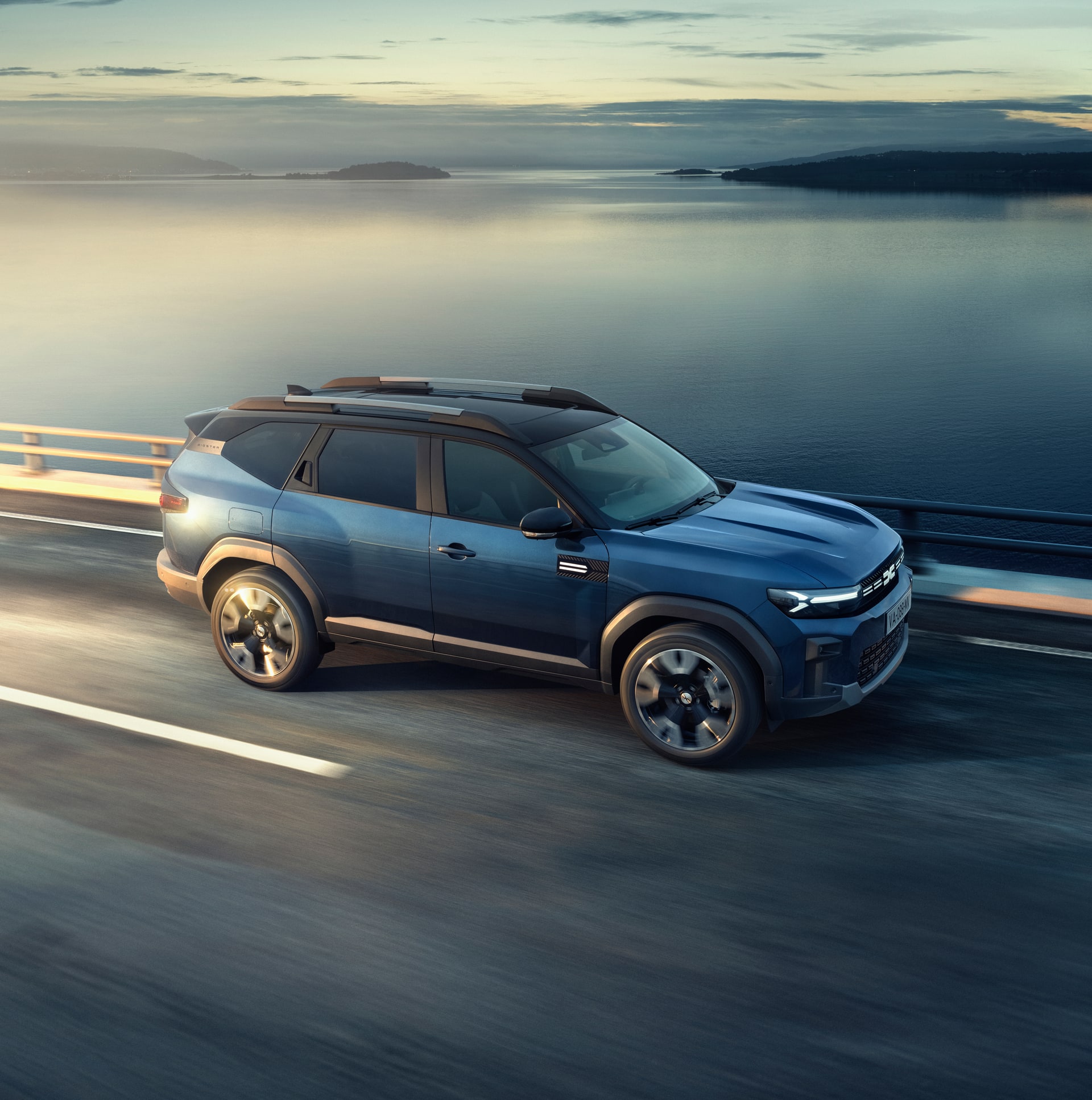
We compare the Dacia Bigster Hybrid-G 140 and the Dacia Duster Eco-G 100 to find out whether the €5,000 difference translates into more family SUV for your money in 2026.
Choosing a low-cost family SUV in 2026 is no longer as straightforward as it was a few years ago. Dacia has achieved something rare in this segment: two models that do not compete with each other by accident, but are designed to cover different budgets within the same customer family. The Bigster and the Duster share mechanics, philosophy and even part of the engine lineup, but the jump in size and price forces buyers to think carefully about what they actually need before signing.
Dacia Bigster Hybrid-G 140, from €25,000: the family SUV with the most space and power
The Bigster is, by far, the largest SUV Dacia has built to date. The Hybrid-G 1.2 TCe 140 48V Essential version fits a mild-hybrid system that combines petrol and LPG, with 140 CV available and on-road behaviour considerably more relaxed than its smaller sibling. For a family that regularly covers motorway kilometres, those extra horses are noticeable, especially when overtaking and under full load.
| Power | Top speed | Consumption | CO₂ emissions | Fuel | Price from |
|---|---|---|---|---|---|
| 140 CV (103 kW) | 180 km/h | 5.7 l/100 km | 130 g/km | Petrol/LPG mild hybrid | ≈€25,000 |
Dacia Duster Eco-G 100, from €20,000: the low-cost reference that never lets you down
In our view, the Duster remains the SUV that best sums up the Dacia proposition: a contained price, simple and reliable mechanics, and a size that fits effortlessly into any urban garage space. The 1.0 Eco-G 100 Essential version delivers 101 CV, enough for everyday family use, and its combined consumption of 4.5 l/100 km makes it one of the cheapest SUVs to run on the Spanish market.
| Power | Top speed | Consumption | CO₂ emissions | Fuel | Price from |
|---|---|---|---|---|---|
| 101 CV (74 kW) | 168 km/h | 4.5 l/100 km | 126 g/km | Petrol/LPG | ≈€20,000 |
Dacia Bigster vs Dacia Duster hybrids head to head: power, consumption and price side by side
Placed side by side, the €5,000 gap between them is not without reason. The Bigster offers about 40 CV more, roughly 12 km/h more top speed and a clearly superior cabin, although it consumes somewhat more — about 1.2 litres more per 100 km. The Duster, meanwhile, holds its ground with tighter consumption and an entry price that remains among the lowest in the SUV segment in Spain.
Space and family practicality
Here there is no contest: the Bigster is designed for large families or for anyone who needs a genuinely big boot. The Duster copes well enough for two adults and two children, but starts to show its limits on long trips with luggage for four.
Consumption and environmental label
Both models are prepared for LPG, which in practice allows their dual-fuel versions to qualify for the DGT ECO label — no small detail for anyone driving daily through low-emission zones. The Duster, with its lower consumption, is somewhat cheaper to refuel in everyday use.
Dacia Bigster 7 seats: do the extra €5,000 pay off?
It is worth clarifying: the 7-seat variant is not available with this specific Hybrid-G 140 Essential engine in every configuration, so before deciding on it you should check the exact specification in the official online configurator. That said, the Bigster is the only one of the two that makes a third row a realistic option, which for families with three or more children can be decisive. If that is your situation, you probably already know that space outweighs price, and there the Bigster wins without question.
Dacia Duster LPG hybrid: the cheapest low-cost family SUV to maintain
For those who prioritise total cost of ownership above all else, the Duster Eco-G 100 remains hard to beat. Its consumption, starting price and maintenance associated with a naturally aspirated engine with little electronics make it the most rational choice if budget comes first. It is not the perfect answer for anyone who needs to tow or load the car to the limit every weekend, but for most uses — city, road and the occasional trip — it does the job well.
Comparison summary table Dacia Bigster vs Dacia Duster 2026
| Model | Power | Consumption | Price from | Space/practicality (1-10) | Efficiency (1-10) | Value for money (1-10) |
|---|---|---|---|---|---|---|
| Dacia Bigster Hybrid-G 140 | 140 CV | 5.7 l/100 km | ≈€25,000 | 9 | 7 | 8 |
| Dacia Duster Eco-G 100 | 101 CV | 4.5 l/100 km | ≈€20,000 | 7 | 8.5 | 9 |
Which Dacia family model to buy in 2026?
If your priority is price
The Duster Eco-G 100 remains the pure low-cost benchmark on the Spanish market. If you are looking for a SUV-B with good equipment-to-price ratio, this model enters that conversation on its own merits.
If your priority is space and seats
The Bigster justifies its premium with more power, a bigger boot and the option of a 7-seat configuration. For families who have already considered MPVs or large SUVs for long journeys, the Bigster is a genuinely low-cost alternative to much pricier proposals.
The prices quoted are the manufacturer’s recommended retail prices, without dealer discounts or special campaigns; if the vehicle is eligible, it is also advisable to check the current conditions of the Plan Auto+ before closing the purchase.
Frequently asked questions
What is the main difference between the Dacia Bigster and the Dacia Duster hybrids?
The Bigster Hybrid-G 140 offers about 40 CV more, more interior space and a 7-seat option, for roughly €5,000 more than the Duster Eco-G 100.
What real consumption does the Dacia Duster Eco-G 100 have?
Its homologated combined consumption is around 4.5 l/100 km, one of the lowest figures in the low-cost SUV segment.
Is it worth paying more for the Dacia Bigster Hybrid-G 140?
If you need more boot space, more power for motorway driving or are considering the 7-seat version, yes. If your use is urban and standard family use, the Duster covers the same ground for less money.
Do both models run on LPG?
Yes, both offer petrol/LPG dual-fuel preparation, which allows them to qualify for the DGT ECO label and reduces refuelling costs in everyday use.
Technical specifications of the cars in this article
 Kia offers an electric range of 10 models, 50 versions and 400 possible combinations
 The seven finalists for the 2027 European Car of the Year (COTY) are exclusively electric
 Peugeot E-208 GTi: a battery-powered toy that revives the spirit of the 1980s sports cars
Deja un comentario