Atto 3 BYD EV3 HAN Hyundai KIA Kona MG ZS Electric Cars Hybrid Cars Comparisons SUV
BYD Atto 3 EVO vs. MG ZS: battle of electric SUV-Bs on equipment-to-price value in 2026
 Iván Navarro
8 November 2026
6 min.
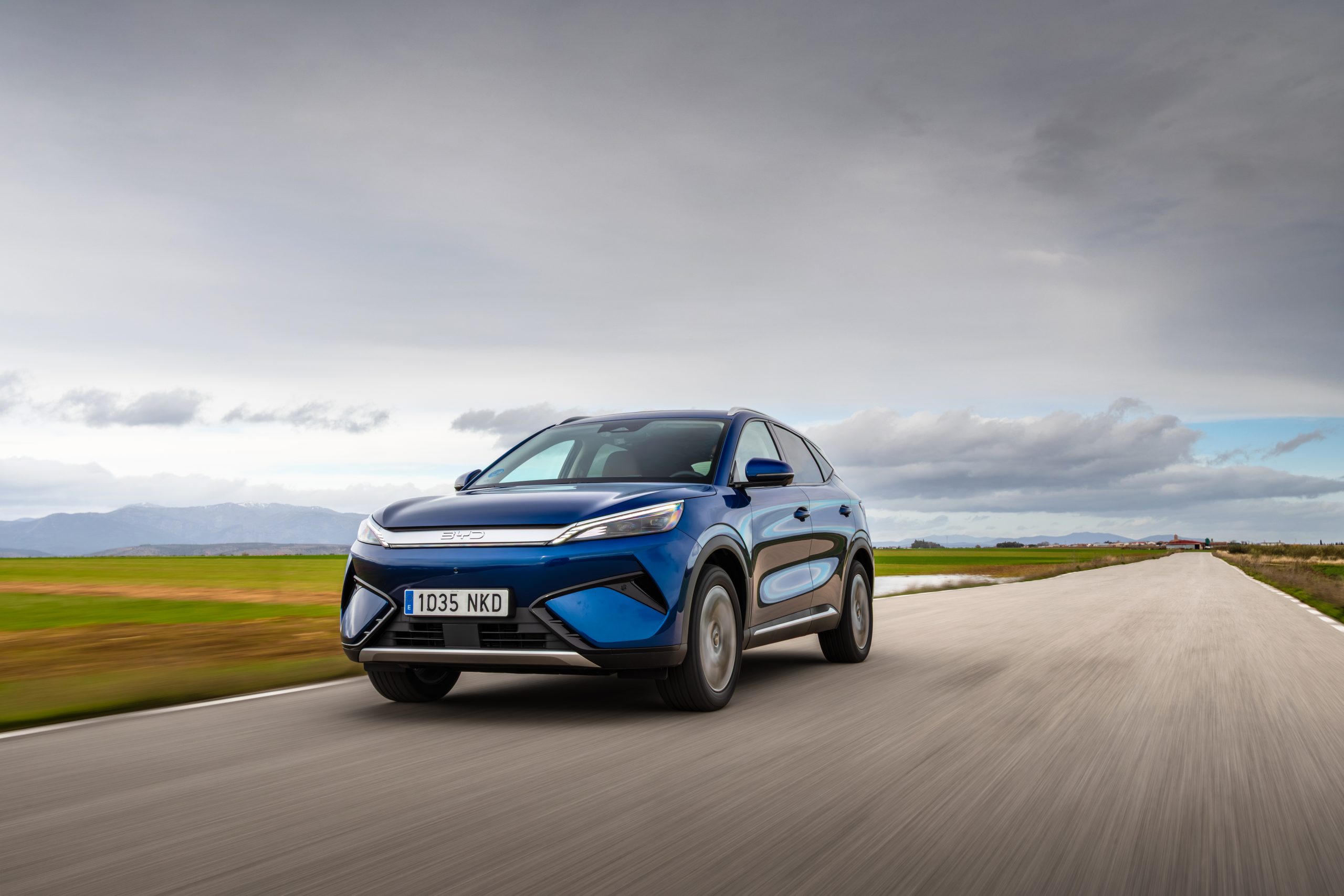
We compare the electric BYD Atto 3 EVO (from ≈€43,000) and the MG ZS Hybrid+ (from ≈€23,300) to find out which SUV-B offers the best equipment-to-price value in Spain in 2026.
There are comparisons that are decided by millimetres, and others that actually pit two different ways of understanding the same segment against each other. This one is of the second kind. The BYD Atto 3 EVO and the MG ZS share the SUV-B body style, family-sized boots and an urban focus, but one bets everything on pure electrification while the other goes for the hybrid route, which is cheaper to get into and free of range anxiety. Which one is the better buy in 2026? It depends, as it almost always does, on what you want it for.
BYD Atto 3 EVO, from approximately €42,990 RRP
The Atto 3 EVO arrives in Spain in its 313 74.8 kWh Design 5-door automatic variant, with a 74.8 kWh battery and 230 kW (313 CV) of power. These figures place it several rungs above what a conventional SUV-B usually offers, and it shows in the engine’s response: instant thrust, with not a hint of turbo lag because, quite simply, there is no turbo.
Top speed is capped at 180 km/h, more than enough for any use on Spanish roads and consistent with a car designed for city and medium-distance journeys rather than devouring motorway miles at German pace. Being 100% electric, it qualifies for the CERO environmental label, with unrestricted access to the low-emission zones of the major cities.
| Power (kW) | Power (CV) | Top speed | Label | Fuel | Price from |
|---|---|---|---|---|---|
| 230 kW | 313 CV | 180 km/h | CERO | Electric | ≈€42,990 |
MG ZS Hybrid+, from approximately €23,300 RRP
The MG ZS plays a different game. In its Hybrid+ 1.5 194 5-door automatic version it has a hybrid setup, petrol and electric with no plug, delivering 143 kW and 194 CV combined, a respectable figure for an SUV-B that needs neither a charger nor route planning. Homologated consumption is around 5 l/100 km, with CO₂ emissions of 115 g/km, and top speed is 168 km/h.
In our view, the ZS’s great argument lies not on the spec sheet but on the final bill: to get in, it costs almost €20,000 less than the Atto 3 EVO. That is a lot of money in any family scenario. As a non-plug-in hybrid, it qualifies for the ECO label, which already grants access to much of the urban restrictions, though not at the same level as a pure electric.
| Power (kW) | Power (CV) | Top speed | Consumption | CO₂ emissions | Label | Fuel | Price from |
|---|---|---|---|---|---|---|---|
| 143 kW | 194 CV | 168 km/h | ≈5 l/100 km | 115 g/km | ECO | Hybrid (petrol/electric) | ≈€23,300 |
Standard equipment: what each one includes
Both manufacturers have understood that in the B segment a large screen and driver-assistance systems are no longer an extra, they are the minimum expected. The Atto 3 EVO comes with a more ambitious technological approach—large-format central screen, wireless charger, extensive driving-aid suite—consistent with its higher price positioning. The ZS Hybrid+, without giving up the essentials, prioritises practicality: automatic climate control, smartphone connectivity and a safety specification sufficient for everyday life, without trying to match a rival that costs almost twice as much feature for feature.
Pure electric vs hybrid: different philosophies
This is where the comparison becomes more interesting than a simple table of figures. The Atto 3 EVO requires a charging routine, access to a home or public point, and in return offers a much lower cost per kilometre and zero local emissions. The ZS Hybrid+ asks for none of that: you refuel it like any traditional car, and the hybrid system takes care of optimising consumption in town, where it recovers energy under braking and pulls away in electric mode. It is not as quiet or as punchy as the BYD, but it creates not the slightest friction in use. For anyone without a garage with a wallbox, this weighs more than it seems on paper.
Price and running costs
It is worth remembering that these figures are the manufacturer’s recommended RRP, without dealer discounts or one-off promotions, and should be checked as an indication only. Anyone who values a public purchase grant should review the current conditions of the Plan Auto+ on the official website, as these can significantly change the final equation, especially in the case of the electric model.
On cost per kilometre, the Atto 3 EVO wins comfortably if charged during off-peak hours or with cheap domestic electricity. The ZS Hybrid+ does not compete on that ground, but its entry price, almost €20,000 cheaper, could take years to be recovered through fuel savings alone, something we already analysed when we looked at choosing a compact electric SUV for the city in 2026.
Summary comparison table
| Model | Power | Fuel | Label | Price from | Equipment-to-price score (1-10) |
|---|---|---|---|---|---|
| BYD Atto 3 EVO | 313 CV | Electric | CERO | ≈€42,990 | 7.5 |
| MG ZS Hybrid+ | 194 CV | Hybrid | ECO | ≈€23,300 | 8.8 |
The score does not measure which is the “better car” in the abstract; it measures equipment-to-price value for the average Spanish buyer, and there the ZS comes out stronger thanks to its entry price. We did a similar exercise when comparing the Hyundai Kona Electric against the Kia EV3, where the price nuance also ended up tipping the balance.
Which to choose based on user profile?
If you drive mainly in the city, have a wallbox or a nearby charging point, and value unrestricted access to any ZBE, the Atto 3 EVO justifies its higher price with more power, more technology and zero local emissions. If your priority is the upfront outlay, you do not depend on charging and you need a reliable SUV-B for everyday use without complications, the ZS Hybrid+ is, in my opinion, the more sensible choice of the pair. There is no absolute winner; there is a winner according to each person’s budget and routine.
Frequently asked questions
How much does the BYD Atto 3 EVO cost in Spain?
It is around €42,990 RRP for the 313 74.8 kWh Design version, excluding dealer discounts and current public grants.
How much does the MG ZS Hybrid+ cost?
It starts at approximately €23,300 RRP in its Hybrid+ 1.5 194 trim, which makes it a noticeably cheaper option than an equivalent electric SUV-B.
Is an electric SUV-B or a non-plug-in hybrid better in 2026?
There is no single answer: the electric wins on cost per kilometre and access to restricted zones, the hybrid wins on entry price and freedom of use without depending on charging.
Does the MG ZS Hybrid+ need plugging in?
No. It is a conventional hybrid, you refuel at any petrol station and it manages the electric power automatically without needing an external charger.
Technical specifications of the cars in this article


 Kia offers an electric range of 10 models, 50 versions and 400 possible combinations
 The seven finalists for the 2027 European Car of the Year (COTY) are exclusively electric
 Peugeot E-208 GTi: a battery-powered toy that revives the spirit of the 1980s sports cars
Deja un comentario