Fiat 500 1.3 Multijet 95 CV, test drive (Engine and performance)
 David Taboada
18 March 2012
4 min.
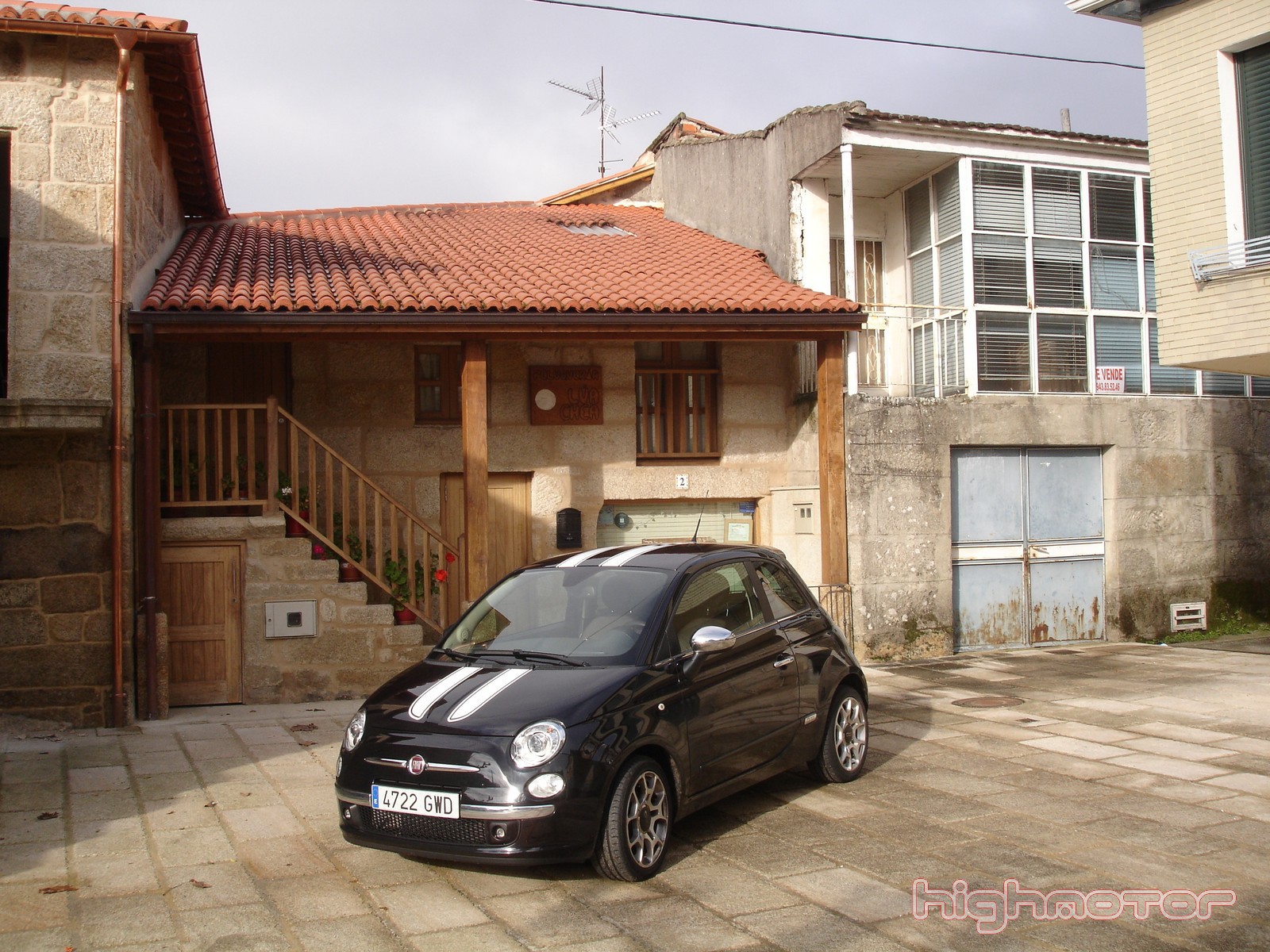
Continuing with city cars in their diesel versions, which Diego began with the test of the Peugeot 207 1.6 HDi 112 CV, today we turn to a slightly more stylish model, the Fiat 500. Our particular unit was fitted with the 1.3 Multijet engine of the second generation, which delivers 95 CV of power.
During this first part we will tell you about the engine and performance of the 500, which has been one of the aspects that caught our attention the most during the test. We will also comment on its behaviour both in town and on the open road and, finally, its consumption on the motorway, in urban use and combined.
Engine and performance
The engine chosen for our test is the 1.3 Multijet with 95 CV, which is the most powerful within the diesel range and is surpassed only by the 1.4 16v petrol unit, which reaches 100 CV. It is the second generation of the previous 1.3 Multijet of 90 CV, to which some modifications have been added in pursuit of greater efficiency, such as the Start&Stop system, which now comes as standard, and other improvements that reduce consumption and CO2 emissions.
It has four cylinders and a displacement of 1,248 cc, which delivers a maximum power of 95 CV at 4,000 rpm and, together with a maximum torque of 200 Nm, moves this small city car, 3.546 metres long, with considerable ease and allows agile and lively driving. Furthermore, its low consumption, as we will see later, makes the Fiat 500 with the 1.3 Multijet engine an interesting option for drivers who look for a city car with more lively performance.
Figures that are quite respectable for this segment also help, with an acceleration from 0 to 100 km/h in about 10.7 seconds, and the accelerator pedal can be pressed fully until reaching 180 km/h. On the other hand, this Fiat 500 came with a five-speed manual gearbox with a fairly precise feel, but a rather high gear lever position for a city car.
Behaviour
As we all know, the natural habitat of the Fiat 500 is the city, which is why it features a suspension designed to make handling more agile in large urban areas. In addition, like a good city dweller, it has a rather light steering which, if we press the City button, becomes even lighter, which will make parking your 500 much easier.
It also features the Start&Stop system, which switches the engine off at traffic lights or whenever you are stationary for any reason, and the engine can be restarted simply by pressing the clutch pedal. The raised driving position sets it apart from many city cars and provides better visibility. In general, in city driving it proves quite smooth, with an engine that responds from 1,600 rpm, allowing us to move the 500 with ease, which is much appreciated when, in town, we have to weave around cars double-parked or overtake a bus.
If we leave its ideal environment and need to make a motorway journey, the Fiat 500 holds its own on short trips thanks to good soundproofing and stability, although over the long run, as is normal in a city car, some discomfort can be noticed, such as with the seats or with steering which, although it firms up, remains light and, at times, a little imprecise.
On the other hand, we were also struck by the great stability it displays through bends, without betraying its dimensions or its weight of just 980 kg. Finally, we should highlight the braking system, with front ventilated discs of 257 mm and rear drum brakes of 180 mm, which kept the Fiat 500 well under control.
Consumption
The last section we will discuss, in this first part of the test of the Fiat 500 with the 95 CV 1.3 Multijet-2 engine, is consumption levels during our test. As we said earlier, we are dealing with the second generation of this engine, which underwent some improvements that allow greater efficiency and reduced emissions and consumption.
Starting with the city, the homologated consumption is 5 litres per 100 km; however, during the test our figures hovered around 6.2. A good result, given that this is an engine that offers quite lively driving. On the open road is where we can achieve very low figures, as it stays around 4.3 litres. Finally, on our usual route on the motorway, which is about 1,200 km, we came close to 4.6 litres per 100 km.
In the second part of the test we will talk about both the exterior and interior design of the cabin. We will also assess the quality of the materials, as well as the price and equipment available for the Fiat 500. Finally, we will give our final verdict on the model.


 Peugeot E-208 GTi: a battery-powered toy that revives the spirit of the 1980s sports cars
 New Lexus ES: luxury grows and goes electric
 First contact with the Dacia Sandero Hybrid 155: power and efficiency from €19,890
Deja un comentario