Geely Starray EM-i: Innovation and technology in a plug-in hybrid with long range
 Iván Navarro
1 May 2026
9 min.
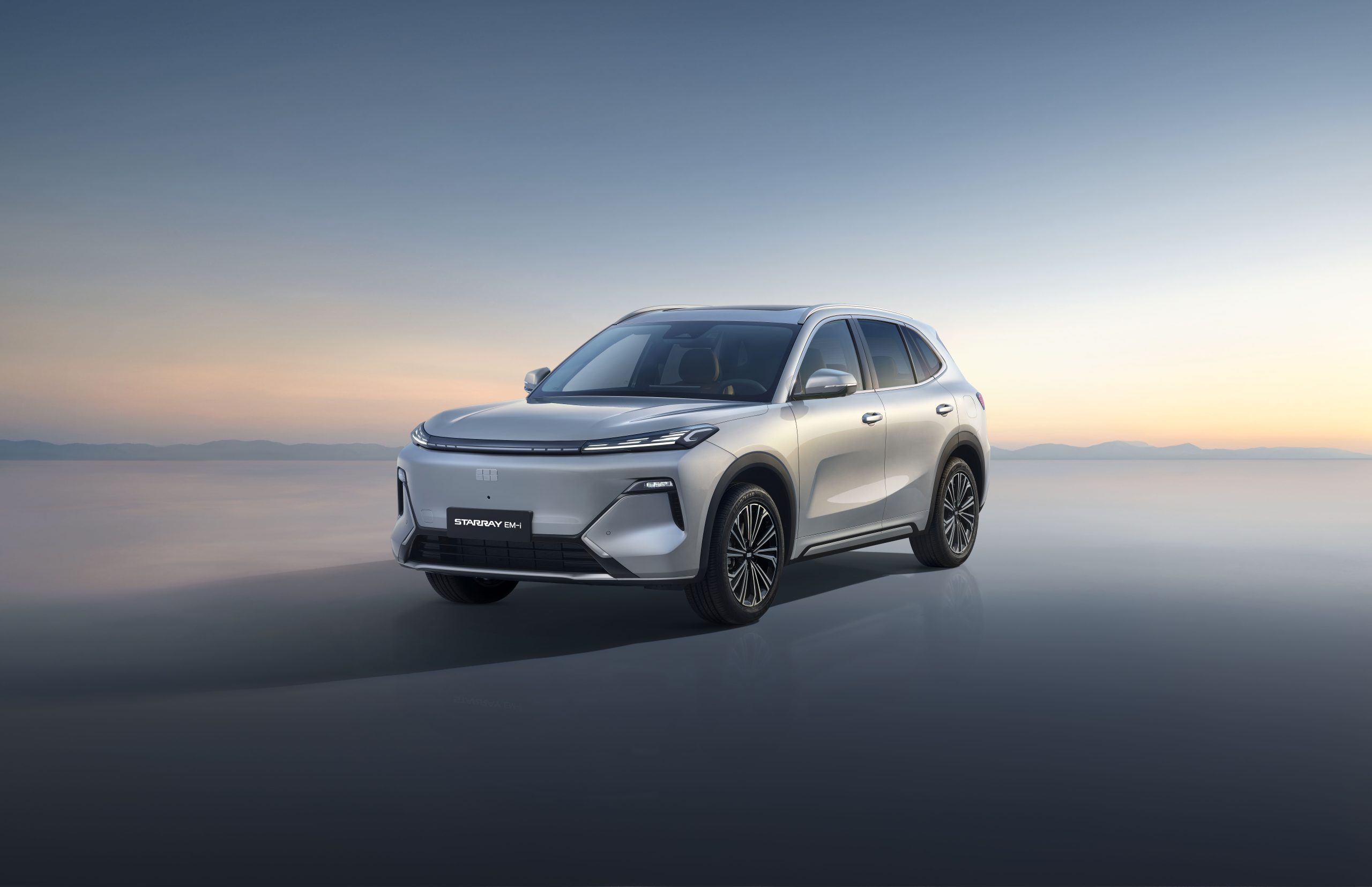
The Geely Starray EM-i is a plug-in hybrid that focuses on notable electric range and an advanced technology package. It is of interest because it combines dynamic performance with efficiency geared to daily use and long urban journeys in electric mode. In this road test we analyse its mechanical offer, consumption and WLTP range, its on-road behaviour, the level of equipment and interior space to assess whether it offers a realistic alternative to other PHEV SUVs on the market in Spain.
What kind of car the Geely Starray EM-i is and where it sits
It is a compact-large SUV with a modern bodywork and aerodynamic lines, aimed at buyers who want technology and low emissions without giving up a certain sportiness. It competes with PHEV alternatives such as the Hyundai Tucson PHEV, the Mitsubishi Outlander PHEV or the Ford Kuga PHEV, positioned in a segment of the market where the balance between electric range and price is key. The model offers a value proposition based on an electric range above the segment average, complete ADAS equipment and a competitive price-to-equipment ratio. The target customer is the driver who covers many urban and suburban kilometres, wants to reduce combustion consumption and demands good interior space and advanced technology.
Geely Starray EM-i in detail: complete technical analysis
The Starray EM-i range is centred on PHEV technology: it combines a small-displacement combustion engine with one or two electric motors and a high-capacity battery to offer an electric range that stands out against its direct rivals. The main versions vary in power and focus; the most relevant one for the Spanish market is the combination delivering around 300 CV of combined maximum power, designed to balance performance and efficiency.
Performance and behaviour: the thermal-electric combination ensures capable acceleration in town and overtaking on the open road. The chassis set-up tends towards a compromise between comfort and control under dynamic load; the steering and suspension are tuned for relaxed use, with predictable reactions in corners and good stability at sustained speed.
Consumption and range: the homologated consumption is around 1.6 l/100 km, while in real use it usually sits near 6.8 l/100 km when the battery is depleted or on long journeys where the combustion engine predominates. In electric mode, the WLTP range is around 120 km, a figure clearly above many PHEVs in the segment; the battery has an approximate capacity of 40 kWh, which allows wide daily journeys in electric mode without resorting to the combustion engine.
Platform and technology: the vehicle rests on a modern platform adapted to plug-in hybrids, with a relatively low centre of gravity thanks to the battery location. Inside, a technology package stands out, with digital screens for instrumentation and multimedia system, full connectivity and latest-generation driver assistance (adaptive cruise control with traffic jam function, lane keeping and automatic emergency braking with pedestrian and cyclist recognition).
Interior and ergonomics: the perceived quality is adequate, with pleasant-to-touch materials on the upper dashboard and harder plastics in the lower areas. The ergonomics are intuitive, with well-distributed controls and comfortable seats on long trips. The multimedia system has logical menus and fluid response; the screens are of good size and visibility.
Space and boot: rear accommodation is ample for the segment, with good legroom and headroom for two adults and an acceptable centre passenger. The boot offers around 520 litres with the battery well integrated, a competitive figure that allows regular family use.
Recommended version: for those seeking a balance between electric range and performance, the mid/high version delivering the large battery and close to 300 CV combined is the most advisable. It offers the best balance between performance, electric range and equipment without skimping on comfort.
The best
- Electric range above average in its category.
- Latest-generation technology equipment and ADAS.
- Competitive value-for-equipment ratio for the Spanish market.
Room for improvement
- Quality of some plastics in the lower areas of the cabin.
- Response of the combustion powertrain once the battery is depleted can be somewhat less economical than expected.
Who is this model for?
It is ideal for drivers who make much of their daily travel in town or on short trips and want to maximise use in electric mode, as well as those who value high technology equipment and a practical boot for the family. It also suits buyers looking for a PHEV with electric range suitable for daily use without constantly depending on public charging.
Main technical data
| Feature | Data | Score |
|---|---|---|
| Power | 300 CV | 9.2 |
| Consumption | 1.6 l/100 km (homologated) / real: 6.8 l/100 km | 8.6 |
| Top speed | 210 km/h (estimated) | 7.8 |
| Electric range | 120 km (WLTP) | 9.6 |
| Battery | 40 kWh | 9.4 |
| Boot | 520 litres | 8.4 |
| Length | 4,650 mm | 8.2 |
| Price from | From €36,900 (Spain) | 8.0 |
score out of 10 based on the criteria analysed in this article
Alternatives to the Geely Starray EM-i
Hyundai Tucson PHEV: the benchmark PHEV version in the segment, with combined power of around 265 CV and lower electric range (approx. 50 km WLTP). Slightly higher price in some versions, with a very balanced set-up and a wide service network in Spain. It is a solid option for those who prioritise after-sales network and dynamic behaviour.
Mitsubishi Outlander PHEV: more oriented towards towing capacity and practicality, it offers a competitive electric range in its new generation (figures that may be around 80-90 km WLTP depending on version) and a large boot. It is a practical alternative for families seeking space and functionality.
Ford Kuga PHEV: combined power close to 225 CV and electric range around 50-60 km WLTP. Attractive positioning for its equipment and driving dynamics; its price usually sits around the Starray depending on trim levels.
Toyota RAV4 PHEV: focused on reliability and controlled consumption, with an electric range that varies by version (generally below 80 km WLTP) and a powertrain known for its robustness. Recommended for those who prioritise reputation and proven efficiency in mixed use.
Technical comparison against its rivals
| Model | Power | Consumption / range | Speed | Price | Score |
|---|---|---|---|---|---|
| Geely Starray EM-i | 300 CV | 120 km (WLTP) | 210 km/h | €36,900 | 9.0 |
| Hyundai Tucson PHEV | 265 CV | ~50 km WLTP | 200 km/h | From ~€38,500 | 8.6 |
| Mitsubishi Outlander PHEV | ~220-240 CV | ~85 km WLTP | 180-200 km/h | From ~€39,000 | 8.4 |
| Ford Kuga PHEV | 225 CV | ~55 km WLTP | 190 km/h | From ~€37,500 | 8.2 |
score out of 10 based on the criteria analysed in this article
In this comparison the most balanced model in terms of electric independence and price-to-equipment ratio is the Starray EM-i; the best buy depends on the buyer: if they prioritise service network and behaviour, the Tucson; if they seek practicality and towing, the Outlander; for dynamism and feel, the Kuga.
Geely Starray sales and position against rivals
Official sales figures by model may vary; the arrival of PHEV models with greater range is driving demand in the plug-in compact SUV segment. The brand’s positioning in Spain depends on the sales network and the perception of the product: a proposition with good electric range and equipment may attract buyers who until now chose Japanese or European alternatives.
Frequently asked questions
What is the real electric range of the Starray EM-i? — The homologated WLTP range is around 120 km; in real use it will depend on driving style and weather, but for urban and suburban journeys it should cover most daily travel.
What consumption does it have in real use? — The homologated consumption is very low due to the PHEV methodology (1.6 l/100 km), but in real use and with a depleted battery it usually sits near 6.8 l/100 km on motorway or long journeys.
Is it practical for a family? — Yes. It offers a boot close to 520 litres and good rear accommodation, sufficient for regular family use and weekend trips with luggage.
Which version should I choose? — To make the most of the electric range, the version with the large battery and combined power (the mid/high one) is the most balanced: it offers sufficient range and performance without disproportionately raising the price.
What is its safety and driver assistance equipment like? — It includes adaptive cruise control, traffic jam assist, lane keeping and automatic emergency braking with pedestrian and cyclist detection, placing it among the most complete in active aids in the segment.
Is it expensive compared with rivals? — The starting price in Spain is from approximately €36,900; against alternatives with lower electric range it can be competitive if you value fuel savings and electric range.
Final verdict: why choose the Geely Starray EM-i?
Reasons to choose it:
- Technical: outstanding electric range (approx. 120 km WLTP) and a high-capacity battery that allow mostly electric use.
- Practical: ample space and boot (c. 520 litres) for family use and daily loads.
- Economic: competitive starting price in Spain and an attractive equipment/price ratio against alternatives in the segment.
All in all, the Starray EM-i is an interesting alternative in the PHEV SUV market: its main argument against rivals is its electric range, which makes it especially suitable for urban drivers and for those wishing to reduce use of the combustion engine without giving up performance. For buyers who prioritise service network or the historical reputation of the brand, other options may be preferable; however, for those seeking technology, electric efficiency and space, it is an option worth considering.

 Peugeot E-208 GTi: a battery-powered toy that revives the spirit of the 1980s sports cars
 New Lexus ES: luxury grows and goes electric
 First contact with the Dacia Sandero Hybrid 155: power and efficiency from €19,890
Deja un comentario