Born Cupra E-308 EV3 ID.3 KIA Megane Peugeot Renault Volkswagen Electric Cars Compact Comparisons Family Buying Guides
How to Choose a Family Electric Compact in 2026 with More Than 450 km of Range: Battery, Consumption and Real Cost
 Dani Montesinos
4 September 2026
8 min.
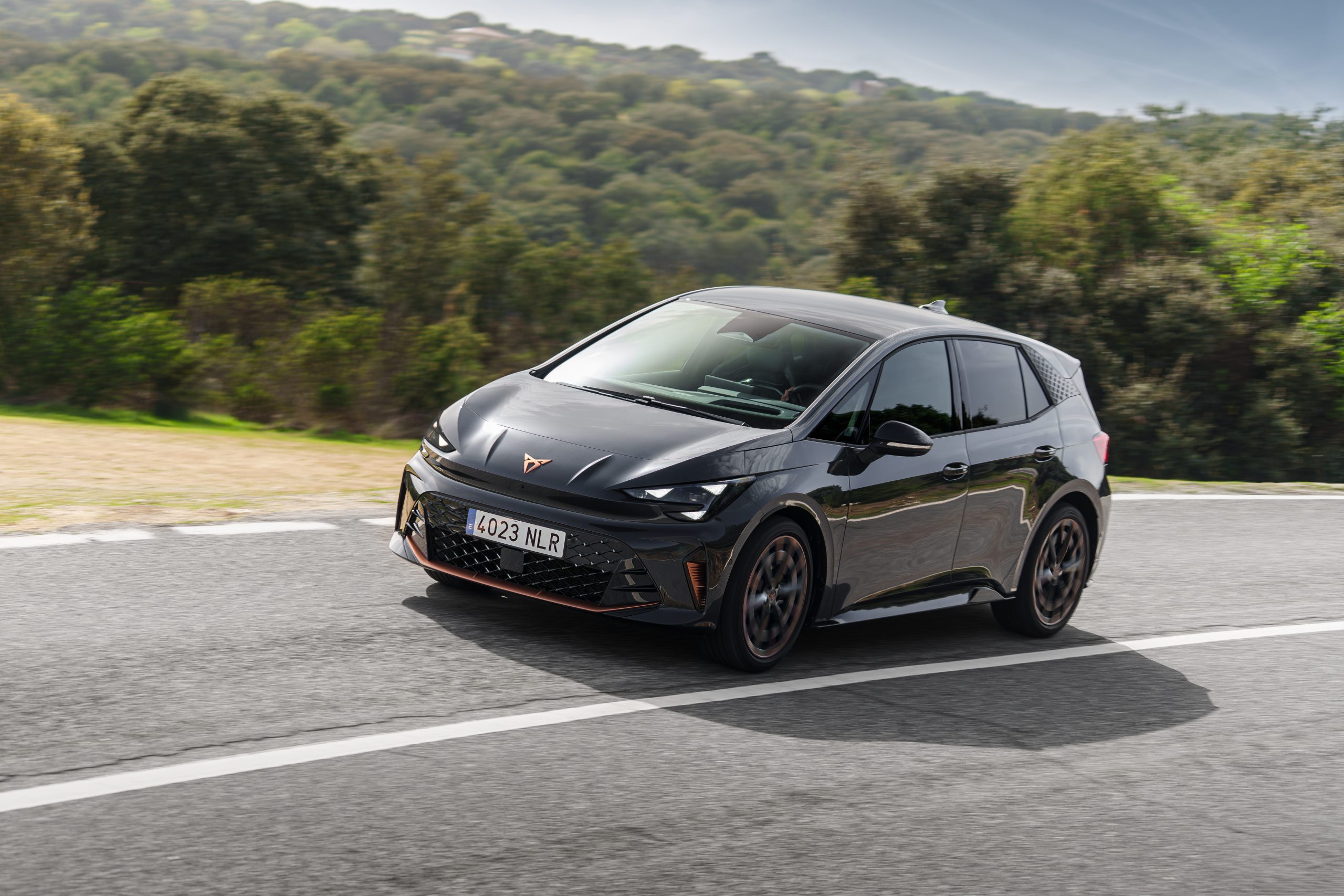
Technical and real-cost guide to choosing an electric compact with more than 450 km WLTP. We analyse battery, consumption and charging curve across the models currently on sale
Choosing a family electric compact 2026 today is no longer about finding the one that advertises the most range, but about cross-referencing three variables that are rarely read together: usable battery capacity, real WLTP consumption and fast-charging curve. From there comes the cost, which is where many purchases go wrong. At Highmotor we have ordered the segment using a clear threshold — more than 450 km homologated — and with a focus on families who will make long journeys several times a year, not just urban trips.
One clarification before the analysis: we have left BYD out of this guide because, in our view, the brand has interesting models but does not fit the exact profile we are looking for here — rather than crowning a single Chinese leader, we want to identify which compacts best suit different family uses. Nissan is also left out: the Leaf paved the way for mass electric driving, but the current generation on the market has raised the bar so high in range, software and digital experience that, according to our editorial criteria, its compact proposition no longer competes head-to-head with what is sold in dealerships today.
What defines a family electric compact today
A compact that wants to be sold as a family car in 2026 has to deliver four things: five usable seats, a boot above 380 litres, WLTP range above 450 km and a fast-charging power that allows 200 km to be recovered in under twenty minutes. Everything else is marketing.
Battery: usable capacity, chemistry and architecture
This is where the fine print matters. A 60 kWh gross battery is not the same as 60 kWh net, and the difference — typically between 4% and 8% — is paid for in real-world range. The LFP (lithium iron phosphate) chemistry tolerates charging to 100% daily better and usually lasts more cycles, although it loses some energy density compared with NMC (nickel manganese cobalt), which remains the standard in long-range versions.
Electrical architecture is the other major filter. 400 V still dominates this segment; 800 V is premium territory and the domain of some Korean outsiders. On paper, 800 V means faster charging and less heat. In practice, if the car does not reach optimal battery temperature, the advantage is diluted.
WLTP consumption in kWh/100 km: the figure nobody looks at
It is the figure. A compact consuming 14.5 kWh/100 km with a 60 kWh usable battery will deliver 414 real km; the same car at 16.5 kWh/100 km drops to 363 km. Below 15 kWh/100 km we are talking about notable efficiency; above 17, something is not well resolved in aerodynamics or thermal management.
Fast charging: peak, curve and useful window
The peak kW is what gets advertised. The curve is what matters. A car that charges at 150 kW peak but holds 120 kW between 10% and 60% is more useful on a journey than another that hits 180 kW for two minutes and then drops to 90 kW.
Real cost: price, charging and maintenance
The total cost of ownership of an electric car is decided on three fronts:
- Purchase price with and without the Plan Auto+ aid (check the current amount on the official website, as it changes with each call).
- Charging: at home on an off-peak tariff, a compact consuming 15 kWh/100 km costs around €1.20–1.50 per 100 km; on the fast public network, between €6 and €9 per 100 km. The difference is enormous.
- Maintenance: between 30% and 40% lower than an equivalent combustion car, according to insurance company data. The Achilles heel remains residual value, which is more volatile than with combustion engines.
The family electric compacts that do enter the analysis
Tesla Model 3 — from €44,990
Yes, it is a saloon, but due to its size, family use and cross-over with compacts, it enters the conversation for any family looking for 450+ km. The Long Range RWD version homologates close to 630 km WLTP with consumption around 14.3 kWh/100 km — the market’s efficiency benchmark. Solid charging curve on the Supercharger network and software that continues to set the pace.
| Power kW | Power CV | Top speed | WLTP range | Consumption | Label | Fuel |
|---|---|---|---|---|---|---|
| 660 kW | 440 CV | 201 km/h | 629 km | 14.3 kWh/100 km | ZERO | Electric |
Renault Mégane E-Tech — from €34,574
The Mégane E-Tech is the compact that best balances European size, perceived quality and reasonable range. The 60 kWh usable version reaches around 470 km WLTP with consumption close to 15 kWh/100 km. Fast charging stays at 130 kW — not class-leading, but the curve is honest. Interior with the OpenR Link system (Google built-in) which, in my view, remains among the best in usability in the segment.
| Power kW | Power CV | Top speed | WLTP range | Consumption | Label | Fuel |
|---|---|---|---|---|---|---|
| 160 kW | 220 CV | 160 km/h | 470 km | 15.0 kWh/100 km | ZERO | Electric |
Volkswagen ID.3 — from €41,920
The Pro S version with a 77 kWh usable battery exceeds 550 km WLTP and is probably the most “classic car” option in the group: quiet, comfortable, with a 385-litre boot that meets the brief. Fast charging at 170 kW is adequate, although it remains to be seen whether the new electronics will correct the historic judder of the infotainment system.
| Power kW | Power CV | Top speed | WLTP range | Consumption | Label | Fuel |
|---|---|---|---|---|---|---|
| 150 kW | 204 CV | 160 km/h | 562 km | 15.8 kWh/100 km | ZERO | Electric |
Peugeot E-308 — from €37,040
The E-308 plays in a different aesthetic and interior-feel league. With 54 kWh usable and a homologated consumption of 12.7 kWh/100 km — among the best in the segment — it just reaches 450 km WLTP. It is quick, yes, but it is not as enjoyable to drive as one might expect for the price. Even so, aerodynamically it is among the most refined on the market.
| Power kW | Power CV | Top speed | WLTP range | Consumption | Label | Fuel |
|---|---|---|---|---|---|---|
| 115 kW | 156 CV | 170 km/h | 450 km | 14.9 kWh/100 km | ZERO | Electric |
Cupra Born — from €42,000
On the same MEB platform as the ID.3, the Born opts for a sharper chassis and a 79 kWh version that reaches around 600 km WLTP. For families with two regular rear passengers and mixed city-motorway use, it is one of the most balanced. The charging curve approaches 175 kW peak.
| Power kW | Power CV | Top speed | WLTP range | Consumption | Label | Fuel |
|---|---|---|---|---|---|---|
| 170 kW | 231 CV | 160 km/h | 625 km | 14.5 kWh/100 km | ZERO | Electric |
Kia EV3 — from €38,590
The EV3 is formally a compact SUV, but its size and purpose place it squarely within this guide. The Long Range version with 81 kWh gross exceeds 600 km WLTP, a figure only Tesla matches here. Fast charging at 128 kW — not the most brilliant — but the overall package is hard to beat for range per euro. We have already covered the segment in detail in our 2026 ranking of electric compacts with the most homologated real range.
| Power kW | Power CV | Top speed | WLTP range | Consumption | Label | Fuel |
|---|---|---|---|---|---|---|
| 150 kW | 204 CV | 170 km/h | 605 km | 14.9 kWh/100 km | ZERO | Electric |
Summary table and editorial score
| Model | Range | Consumption | Fast charging | Price from | Score /10 |
|---|---|---|---|---|---|
| Tesla Model 3 | 702 km | 13.2 kWh/100 km | 250 kW | €44,990 | 9.3 |
| Kia EV3 | 605 km | 14.9 kWh/100 km | 128 kW | €38,590 | 8.8 |
| Cupra Born | 625 km | 14.5 kWh/100 km | 175 kW | €42,000 | 8.4 |
| Volkswagen ID.3 | 562 km | 15.8 kWh/100 km | 170 kW | €41,920 | 8.2 |
| Renault Mégane E-Tech | 470 km | 15.0 kWh/100 km | 130 kW | €34,574 | 7.9 |
| Peugeot E-308 | 450 km | 14.9 kWh/100 km | 100 kW | €37,040 | 7.4 |
If your use mixes frequent long journeys and there is no charging at home, the Tesla and the Kia are the safe bet. If domestic charging is the norm, the Mégane and the ID.3 offer a more “European” experience at a lower cost. Complement this reading with our general guide to usable range and real charging cost to close the decision.
Frequently asked questions
What WLTP range is considered sufficient for family use in 2026?
Above 450 km WLTP comfortably covers a family’s mixed use, including occasional real-world journeys of 300–350 km without a mandatory stop. Below that, planning begins to condition day-to-day life.
Is an LFP or NMC battery better for a family car?
LFP if durability, tolerance to daily 100% charging and cost are the priorities; NMC if maximum range per kilo of battery is sought. For mixed family use, LFP is usually the most rational choice in the long run.
How much does charging at home cost compared with the public network?
On an off-peak tariff, between €1.20 and €1.50 per 100 km. On the public fast network, between €6 and €9 per 100 km. The difference justifies investing in a home charger if you have your own parking space.
Does the Plan Auto+ aid pay off on a family electric compact?
Yes, provided the current requirements are met. It significantly reduces the effective purchase price and shortens the payback period compared with an equivalent combustion car. Check the updated amount and conditions on the official website.
Technical specifications of the cars in this article


 Peugeot E-208 GTi: a battery-powered toy that revives the spirit of the 1980s sports cars
 New Lexus ES: luxury grows and goes electric
 First contact with the Dacia Sandero Hybrid 155: power and efficiency from €19,890
Deja un comentario