C-HR Honda Hyundai KIA Kona Niro Nissan Qashqai Toyota ZR-V Hybrid Cars ECO Buying Guides SUV
How to Choose a Low-Maintenance Compact Hybrid SUV in 2026: Reliability, Servicing and Real-World Fuel Consumption
 Iván Navarro
14 November 2026
6 min.
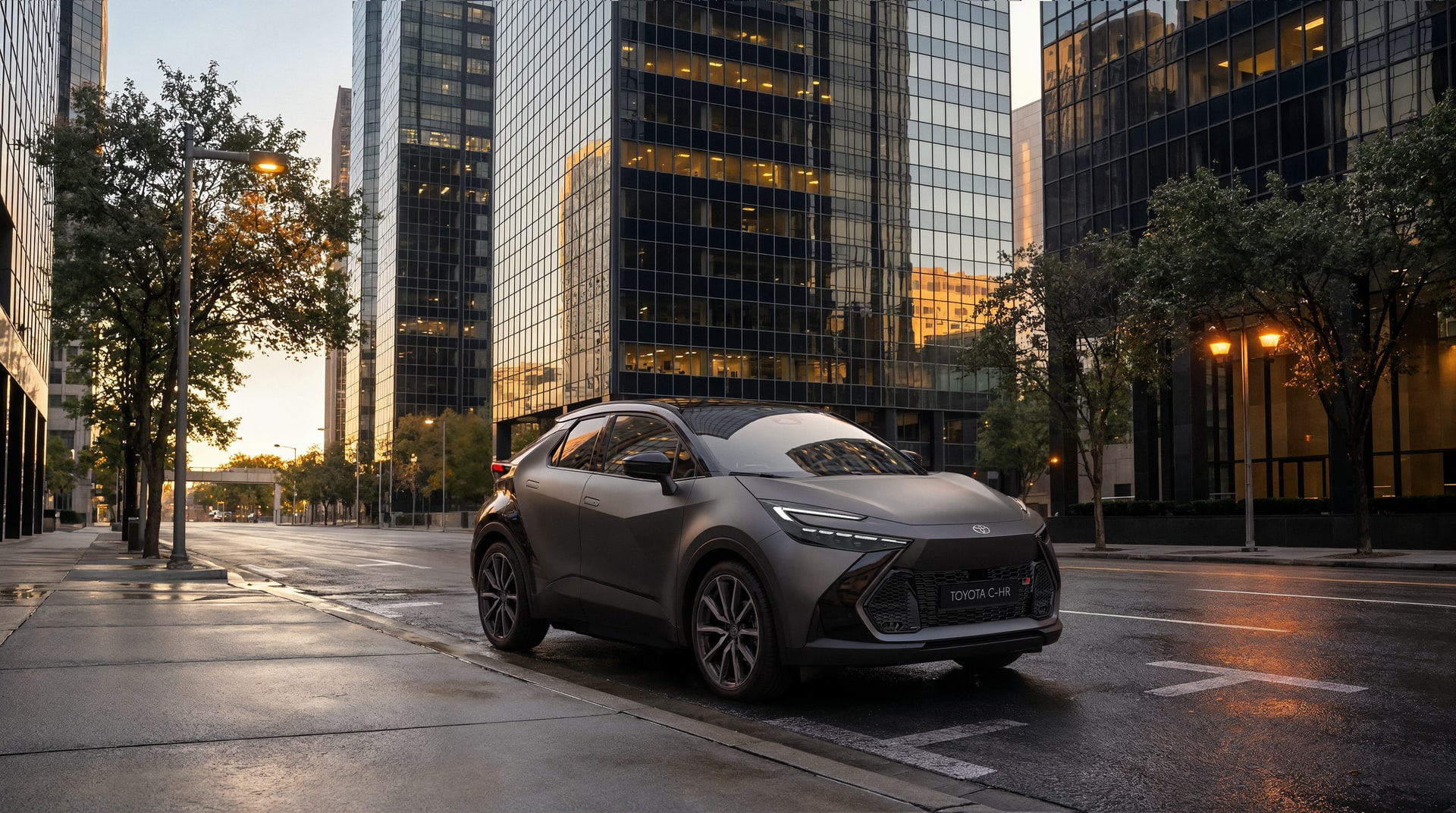
A practical guide to choosing a reliable, affordable-to-maintain compact hybrid SUV in 2026, with a comparison of battery warranties, service intervals and real-world consumption by model.
Buying a compact hybrid SUV in 2026 is no longer a gamble. It is the default choice for anyone who wants to spend little at the workshop and avoid the hassle of cables and plugs. But not all hybrids age the same way, and that is the catch: two cars with the same ECO label can have completely different maintenance bills at 100,000 kilometres.
What “low maintenance” really means in a hybrid in 2026
It is not just about paying little at the annual service. A hybrid with genuinely low maintenance reduces brake wear thanks to regenerative braking, avoids clutch replacement (because many of them don’t have one) and subjects the combustion engine to fewer cycles of strain. The result shows up in brake pads that last twice as long, discs that don’t corrode from lack of use, and a petrol engine that works at its optimum thanks to the Atkinson cycle. That is what you should look at before the list price.
Architecture matters more than the badge
Here is the nuance that almost nobody explains well: low maintenance does not depend on whether the car is Japanese, Korean or European, it depends on how the hybrid system is built. A full hybrid (HEV) with no physical clutch, no conventional gearbox and well-calibrated regenerative braking wears fewer mechanical parts than a mild hybrid or a PHEV with a large battery that requires specific high-voltage system checks. Toyota and Honda have spent more than two decades refining that architecture, and it shows in their reliability records. That does not mean other brands are not close, only that they have fewer accumulated kilometres proving the system holds up.
Battery warranty: the indicator to check before the spec sheet
Before looking at power, read the small print of the hybrid battery warranty. Toyota offers up to 15 years or 250,000 km with annual servicing at official dealers through its Toyota Relax programme and hybrid system check. Honda covers 8 years or 160,000 km as standard. Hyundai and Kia fall in similar ranges, between 7 and 8 years. These are the years during which, if something fails in the high-voltage pack, the cost is borne by the manufacturer and not by the owner’s pocket.
Official service intervals and average cost by brand
| Brand | Service interval | Hybrid battery warranty |
|---|---|---|
| Toyota | 15,000 km / 12 months | Up to 15 years / 250,000 km* |
| Honda | 20,000 km / 12 months | 8 years / 160,000 km |
| Hyundai | 15,000 km / 12 months | 8 years / 160,000 km |
| Kia | 15,000 km / 12 months | 7 years / 150,000 km |
| Suzuki | 15,000 km / 12 months | 5 years / 100,000 km |
| Nissan | 20,000 km / 12 months | 8 years / 160,000 km |
*Subject to annual servicing at official dealers under the manufacturer’s programme.
Real-world consumption: what users measure versus the WLTP figure
WLTP homologation remains optimistic on motorways and fairly accurate in town. On owner forums and in independent measurements, Japanese full hybrids show differences of only 0.3–0.5 l/100 km between the claimed and real figures in urban driving. The gap opens on sustained motorway driving above 120 km/h: there the battery barely intervenes and consumption approaches that of a conventional petrol car. Anyone buying a compact hybrid with motorway driving as the main concern will be less pleasantly surprised than someone buying it to get around town.
The recommended compact hybrid SUVs for 2026
Toyota C-HR (HEV) — from €31,900
The Toyota C-HR versus Honda ZR-V remains the benchmark for proven reliability in the segment.
| Power (CV) | Consumption | Label | Fuel |
|---|---|---|---|
| 140 | 4.8 l/100 km | ECO | Hybrid |
Honda ZR-V e:HEV — from €39,500
More powerful than the C-HR, with 184 CV, but also more expensive at entry level. Its e:HEV system reduces the combustion engine’s involvement even further in town.
| Power (CV) | Consumption | Label | Fuel |
|---|---|---|---|
| 184 | 5.7 l/100 km | ECO | Hybrid |
Hyundai Kona Hybrid — from €29,900
The most economical in real-world consumption in this group, with an efficiency we highlighted when analysing it in depth.
| Power (CV) | Consumption | Label | Fuel |
|---|---|---|---|
| 129 | 4.5 l/100 km | ECO | Hybrid |
Kia Niro HEV — from €31,300
It shares its mechanical platform with the Kona, with a slightly more family-oriented approach to boot space.
| Power (CV) | Consumption | Label | Fuel |
|---|---|---|---|
| 129 | 4.4 l/100 km | ECO | Hybrid |
Suzuki S-Cross Hybrid — from €27,200
The cheapest at entry level, with all-wheel drive available (Allgrip), although its mild hybrid system provides less electric assistance than the full hybrids on this list.
| Power (CV) | Consumption | Label | Fuel |
|---|---|---|---|
| 129 | 5.3 l/100 km | ECO | Hybrid |
Nissan Qashqai e-Power — from €36,200
Its e-Power system works like an electric car with a petrol generator on board, a different solution that offers very smooth driving, although the specific maintenance of the generator has less statistical track record than the classic HEV.
| Power (CV) | Consumption | Label | Fuel |
|---|---|---|---|
| 205 | 4.5 l/100 km | ECO | Hybrid |
Comparison and score by driver profile
Urban profile
For those making short trips with many stops and starts, the Toyota C-HR and the Hyundai Kona Hybrid get the most out of brake regeneration and the low-speed electric motor.
Mixed profile
The Kia Niro and the Honda ZR-V strike a good balance between city and open road, with more power available for overtaking without losing too much fuel economy.
Touring profile
The Nissan Qashqai e-Power offers the most electric-feeling ride on the motorway, although its consumption at high sustained speeds should be monitored.
Summary comparison table
| Model | Price from | Consumption | Battery warranty | Reliability score (1-10) |
|---|---|---|---|---|
| Toyota C-HR | €31,900 | 4.8 l/100 km | Up to 15 years | 9.5 |
| Honda ZR-V | €39,500 | 5.7 l/100 km | 8 years | 9.0 |
| Hyundai Kona Hybrid | €29,900 | 4.5 l/100 km | 8 years | 8.5 |
| Kia Niro HEV | €31,300 | 4.4 l/100 km | 7 years | 8.3 |
| Suzuki S-Cross Hybrid | €27,200 | 5.3 l/100 km | 5 years | 7.5 |
| Nissan Qashqai e-Power | €36,200 | 4.5 l/100 km | 8 years | 7.8 |
Anyone wishing to access public aid when buying can check the current conditions of the regional and municipal vehicle fleet renewal schemes, which usually include incentives for ECO-labelled vehicles in Spain.
Frequently asked questions
Which compact hybrid SUV has the cheapest maintenance in 2026?
The Toyota C-HR and the Hyundai Kona Hybrid lead the list thanks to their clutchless HEV architecture and their proven reliability record on the Spanish market.
Is a full hybrid more reliable than a mild hybrid?
In general yes, because a full hybrid distributes the workload better between the electric and combustion motors, whereas a mild hybrid barely assists and the combustion engine almost always works alone.
How long does the battery warranty last on these models?
It varies between 5 and 15 years depending on the brand, although annual servicing programmes at official dealers, such as the one from Toyota, can extend it up to the maximum of the plan.
Does real-world consumption resemble the homologated figure?
In town, quite closely. On sustained motorway driving, real consumption usually rises more than the WLTP figure indicates, especially in e-Power or mild hybrid systems.
Technical specifications of the cars in this article


 Kia offers an electric range of 10 models, 50 versions and 400 possible combinations
 The seven finalists for the 2027 European Car of the Year (COTY) are exclusively electric
 Peugeot E-208 GTi: a battery-powered toy that revives the spirit of the 1980s sports cars
Deja un comentario