C-HR Hyundai Juke KIA Kona Nissan Stonic Toyota Compact Comparisons SUV
KIA Stonic vs Nissan Juke: which urban SUV-B offers lower daily running costs in 2026
 Iván Navarro
14 November 2026
5 min.
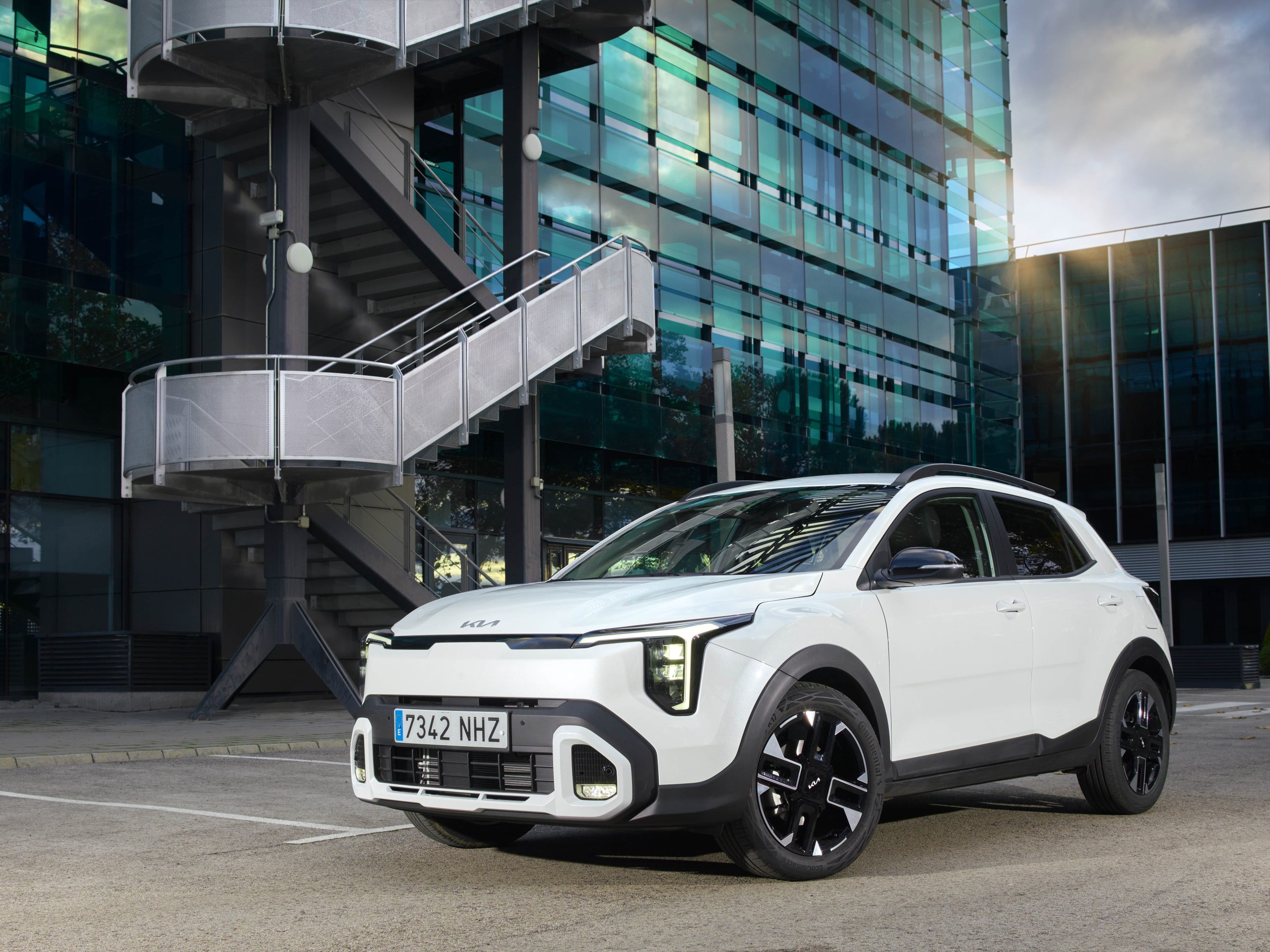
Choosing an urban SUV-B in 2026 is no longer just about design or which badge is on the front. It is about the numbers: how much it costs to fill the tank each month, what service is due at two years and whether the starting price turns into something cheaper in the long run. The Kia Stonic and the Nissan Juke have been competing for years for the urban buyer who wants a raised driving position without giving up reasonable fuel consumption. We have put them face to face in their most representative entry-level petrol versions for 2026.
Kia Stonic 1.0 T-GDi 100, from €21,900: overview and specifications
The Stonic arrives in its 1.0 T-GDi 100 Concept 5-door ISG variant, with a 74 kW (100 CV) turbocharged three-cylinder engine that prioritises flexibility in town over motorway performance. It is a coherent approach: in an urban SUV-B nobody needs more than 183 km/h of top speed, and Kia knows it.
| Model | Power | Top speed | Consumption | Fuel | RRP from |
|---|---|---|---|---|---|
| Kia Stonic 1.0 T-GDi 100 | 74 kW / 100 CV | 183 km/h | 5.5 l/100 km | Petrol | €21,900 |
Nissan Juke 1.0 DIG-T 114, from €25,300: overview and specifications
The Juke responds with its 1.0 DIG-T 114 Acenta 5-door, somewhat more powerful (84 kW / 114 CV) and with a design personality that remains its main commercial weapon. But that extra power is not free: the official consumption rises to 5.8 l/100 km, three tenths above its Korean rival.
| Model | Power | Top speed | Consumption | Fuel | RRP from |
|---|---|---|---|---|---|
| Nissan Juke 1.0 DIG-T 114 | 84 kW / 114 CV | 180 km/h | 5.8 l/100 km | Petrol | €25,300 |
Real-world consumption: what each one costs day to day
On paper the difference looks small, three tenths per 100 km. But multiplied over 15,000 km of urban use a year, those 0.3 l/100 km turn into roughly 45 litres more petrol per year for the Juke. At current fuel prices, that is between €70 and €80 extra each year, in fuel alone. It is not a figure that ruins anyone, but it is the one that separates “a car that is cheap to run” from “a car that simply costs less to buy”.
The KIA Stonic 2026 Review we published a few months ago already pointed in this direction: the Stonic does not stand out in any single category, but its real-world consumption in urban mixed driving consistently stays below rivals with more horsepower.
Maintenance and daily running costs
This is where less visible factors come into play than the sticker price. The maintenance plans for the Kia, backed by its seven-year manufacturer warranty, usually mean more predictable servicing and moderate spare-parts costs, typical of the mainstream Korean range. The Nissan, for its part, offers a well-established dealer network in Spain, although its standard warranty coverage is shorter than the Korean one in years.
For intensive daily use (short trips, many cold starts, battery-draining parking), clutch and brake wear tends to be similar on both turbocharged three-cylinder engines. The real cost difference appears mainly in original parts and labour rates at each dealer network, rather than in the mechanics themselves.
Environmental label and taxation
Both powertrains are latest-generation Euro 6 petrol engines, which in Spanish administrative practice places them in the DGT C label, with no significant restrictions in the main low-emission zones. Neither the Stonic nor the Juke gives the other a tax advantage on this point: the decision rests on consumption and maintenance, not on the environmental badge.
Public aid and indicative RRP
It is worth remembering that these RRPs (€21,900 for the Stonic, €25,300 for the Juke) are manufacturer’s recommended prices, without dealer discounts or one-off campaigns. As both are non-electrified petrol engines, neither falls within the Plan Auto+ aid framework, which targets low-emission vehicles. Anyone looking for that incentive will need to consider hybrid versions of other models in the segment, something we already analysed in our comparison of urban hybrid SUV-Bs.
Summary table: Kia Stonic vs Nissan Juke
| Model | Power | Consumption | RRP from | Annual fuel cost (15,000 km)* | Running cost score (1-10) |
|---|---|---|---|---|---|
| Kia Stonic 1.0 T-GDi 100 | 74 kW / 100 CV | 5.5 l/100 km | €21,900 | Lowest | 8.2 |
| Nissan Juke 1.0 DIG-T 114 | 84 kW / 114 CV | 5.8 l/100 km | €25,300 | Highest | 7.4 |
*Indicative estimate based on the declared official consumption; real consumption varies with driving style and usage profile.
Verdict: which urban SUV-B makes sense in 2026
If the criterion is purely economic, the Stonic wins by a clear margin: it starts €3,400 cheaper in RRP, consumes less and carries a longer warranty that reduces maintenance uncertainty over the medium term. The Juke makes up ground with more power and a design that remains its best selling point, but that personality comes with a monthly cost that is felt in the wallet.
For intensive urban use, where every refill counts, the Kia Stonic stands out as the option with the lowest daily running cost. The Juke remains the SUV-B with the most character in the segment, but for anyone prioritising long-term spending, the Korean car is the more sensible answer.
Frequently asked questions
Which urban SUV-B uses less fuel in 2026, the Kia Stonic or the Nissan Juke?
The Kia Stonic 1.0 T-GDi 100 declares an official consumption of 5.5 l/100 km, compared with 5.8 l/100 km for the Nissan Juke 1.0 DIG-T 114. The difference translates into a noticeable annual saving for anyone who drives urban journeys every day.
What is the starting price of the Kia Stonic and the Nissan Juke in 2026?
The Kia Stonic starts at an indicative RRP of €21,900 in its 1.0 T-GDi 100 Concept version. The Nissan Juke starts from €25,300 in its 1.0 DIG-T 114 Acenta trim. Both figures are manufacturer’s recommended RRPs, without dealer discounts or offers.
Do the Stonic and the Juke have access to low-emission zones?
Yes, both are Euro 6 petrol vehicles with the C environmental label, which allows them to drive without the usual restrictions in the main Spanish low-emission zones.
Are the Kia Stonic or the Nissan Juke eligible for the Plan Auto+?
No. As non-electrified petrol models, neither meets the emissions requirements of the Plan Auto+. To benefit from that aid, you need to opt for hybrid or electrified versions in the segment.
Technical specifications of the cars in this article


 Kia offers an electric range of 10 models, 50 versions and 400 possible combinations
 The seven finalists for the 2027 European Car of the Year (COTY) are exclusively electric
 Peugeot E-208 GTi: a battery-powered toy that revives the spirit of the 1980s sports cars
Deja un comentario