Captur Dacia Duster Hyundai Kona MG Renault S-Cross Suzuki Toyota Vitara Yaris Yaris Cross ZS Hybrid Cars Minivans Tests Rankings
2026 ranking: the 6 most fuel-efficient hybrid city SUVs under €30,000 in real-world consumption
 Iván Navarro
14 November 2026
6 min.
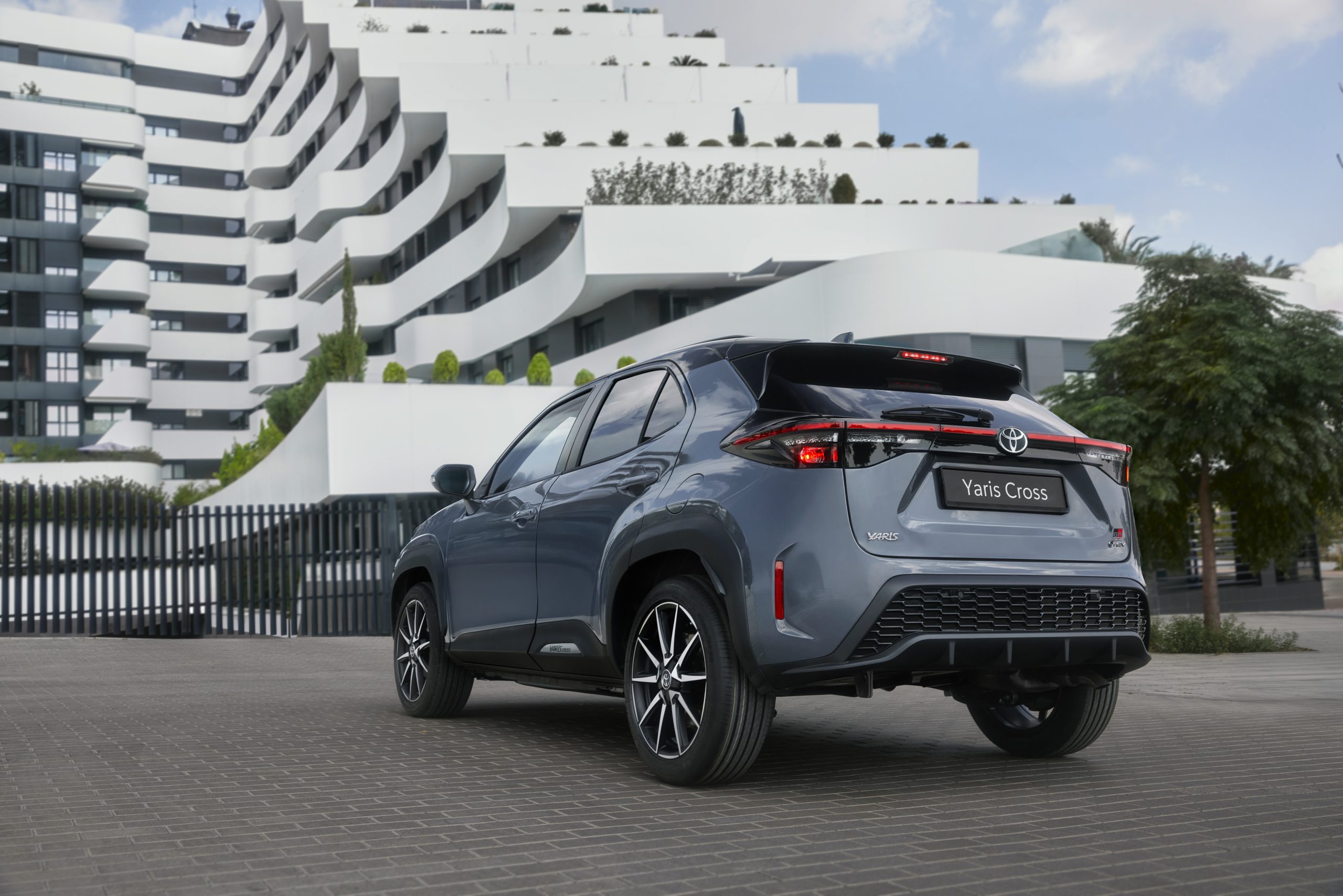
We compare six hybrid city SUVs on sale in Spain for less than €30,000 and rank them by verified real-world consumption, not by the WLTP figure on the brochure. Toyota, Renault, Suzuki, Hyundai, MG and Dacia, head to head.
The figure that really matters when buying a hybrid city SUV is not on the homologated spec sheet. It is what the on-board computer shows after three months of roundabouts, traffic jams and parking in tight spaces. That is why at Highmotor we have once again done our usual exercise: taking six conventional hybrid city SUVs (no plug) sold in Spain for under €30,000 and ranking them not by WLTP, but by what they deliver in everyday use.
The result does not match exactly the order of the commercial catalogues. And that, precisely, is what makes it interesting.
How we measured real consumption
The consumption data we use here come from mixed urban and interurban driving tests, with short trips and cold starts, which is where a full hybrid earns or loses its reputation. It is not the WLTP laboratory cycle: it is the one that replicates a seven-kilometre commute to work with three red lights. The gap between the two figures can exceed 20% in the models least optimised for the city.
2026 ranking: the 6 most efficient hybrid city SUVs under €30,000
1. Toyota Yaris Cross — from €24,450
The Yaris Cross remains the benchmark everyone keeps an eye on. Its hybrid system, with an e-CVT gearbox and very finely tuned electronic management in town, means the combustion engine barely intervenes below 50 km/h. In real urban driving it averages around 4.4 l/100 km, a figure few rivals in the segment match without cheating.
| Power (kW) | Power (CV) | Real consumption | Label | Fuel |
|---|---|---|---|---|
| 85 kW | 116 CV | 4.4 l/100 km | ECO | Hybrid |
2. Renault Captur E-Tech full hybrid — from €27,900
The Captur with the E-Tech full hybrid system (which we have already analysed in depth in our review of the Renault Captur E-Tech) stands out for its architecture of two electric motors and a clutchless gearbox, designed specifically to minimise cold starts of the combustion engine. In town it ranges between 4.9 and 5.1 l/100 km, very close to the Yaris Cross and ahead of almost everything else competing in its price bracket.
| Power (kW) | Power (CV) | Real consumption | Label | Fuel |
|---|---|---|---|---|
| 105 kW | 145 CV | 5.0 l/100 km | ECO | Hybrid |
3. Suzuki Vitara Strong Hybrid — from €28,390
The Vitara plays in a different league in size (more compact than a typical compact SUV) and this favours it in pure urban consumption. We compare it in detail against its sibling in the range in our duel Suzuki S-Cross vs Vitara, and the conclusion holds: the Vitara uses slightly less in town, although it loses ground on motorways to the S-Cross.
| Power (kW) | Power (CV) | Real consumption | Label | Fuel |
|---|---|---|---|---|
| 85 kW | 116 CV | 5.1 l/100 km | ECO | Hybrid |
4. Hyundai Kona Hybrid — from €27,750
The Kona Hybrid balances power and consumption well, but does not reach the levels of the top three. Its strong point is something else: generous standard equipment and a driving feel that is a step more mature. In town it sits around 5.3 l/100 km, a correct but not outstanding figure for the segment.
| Power (kW) | Power (CV) | Real consumption | Label | Fuel |
|---|---|---|---|---|
| 95 kW | 129 CV | 5.3 l/100 km | ECO | Hybrid |
5. MG ZS Hybrid+ — from €23,990
The cheapest of the six, and it shows in consumption: it offsets a very aggressive price with a hybrid system that is still less refined than the rest. Even so, for those who prioritise the initial outlay over long-term savings, it remains a reasonable option.
| Power (kW) | Power (CV) | Real consumption | Label | Fuel |
|---|---|---|---|---|
| 144 kW | 196 CV | 5.6 l/100 km | ECO | Hybrid |
6. Dacia Duster Hybrid 140 — from €26,290
It closes the table, but not for lack of merit: it is the largest and heaviest of the group, and its real consumption logically suffers compared with more compact and lighter rivals. For those who need genuinely spacious boot and interior room without exceeding their budget, it remains the one that offers the most SUV per euro invested.
| Power (kW) | Power (CV) | Real consumption | Label | Fuel |
|---|---|---|---|---|
| 103 kW | 140 CV | 5.8 l/100 km | ECO | Hybrid |
Summary table: the full ranking at a glance
| Position | Model | Real consumption | Price from | Score |
|---|---|---|---|---|
| Toyota Yaris Cross | 4.4 l/100 km | €24,450 | 9.3 | |
| Renault Captur E-Tech | 5.0 l/100 km | €27,900 | 8.8 | |
| Suzuki Vitara Strong Hybrid | 5.1 l/100 km | €28,390 | 8.6 | |
| Hyundai Kona Hybrid | 5.3 l/100 km | €27,750 | 8.0 | |
| MG ZS Hybrid+ | 5.6 l/100 km | €23,990 | 7.9 | |
| 6 | Dacia Duster Hybrid 140 | 5.8 l/100 km | €26,290 | 7.7 |
What a hybrid offers and why it matters in town
A conventional hybrid (full hybrid, no plug) manages on its own when to use the electric motor and when the combustion engine, without the driver having to intervene. On short journeys with many stops, like the typical Spanish urban commute, this means covering kilometres almost in silence and with no fuel spend. The six models in this ranking work this way, which is what sets them apart from a PHEV: they do not need a charging point, but they also offer no pure electric range beyond one or two kilometres.
Public aid and real cost of ownership
In Spain, direct state aid for buying electrified vehicles focuses on models with the CERO label (pure electric and plug-in hybrids), so full hybrids with the ECO label are usually excluded from these national schemes, apart from occasional scrappage incentives or local tax reductions on the IVTM. What is constant is the fuel saving: between the Yaris Cross and the Duster Hybrid, the difference of 1.4 l/100 km amounts to more than €150 a year for someone who drives 15,000 urban kilometres.
Frequently asked questions
Which is the most efficient hybrid city SUV under €30,000 in 2026?
The Toyota Yaris Cross, with an average real consumption of 4.4 l/100 km in urban cycle, leads the ranking ahead of the Renault Captur E-Tech and the Suzuki Vitara Strong Hybrid.
Does a conventional hybrid SUV use less than a PHEV in town?
On very short trips with frequent charging, a PHEV may consume less fuel. Without access to a charging point, a conventional hybrid is usually more efficient and, above all, simpler to use.
Is it worth paying more for a Hyundai Kona Hybrid over a MG ZS Hybrid+?
The price difference is justified by equipment and finish rather than consumption: both are in similar figures, although the Kona offers a somewhat more refined drive.
Do these non-plug-in hybrid SUVs qualify for public purchase aid?
As a general rule, state incentive schemes are reserved for vehicles with the CERO label, so these models with the ECO label do not receive direct subsidies, beyond brand sales discounts or municipal reductions on the circulation tax.
Technical specifications of the cars in this article

 Kia offers an electric range of 10 models, 50 versions and 400 possible combinations
 The seven finalists for the 2027 European Car of the Year (COTY) are exclusively electric
 Peugeot E-208 GTi: a battery-powered toy that revives the spirit of the 1980s sports cars
Deja un comentario