BYD Cupra Formentor Grandland HS KIA MG Opel SEAL Sportage Hybrid Cars Comparisons SUV
How to Choose a Plug-in Hybrid SUV for Under €40,000 in 2026: Electric Range, Consumption and Equipment
 Iván Navarro
26 August 2026
7 min.
A practical guide to buying a plug-in hybrid SUV for less than €40,000 in Spain in 2026, with verifiable criteria on WLTP electric range, real-world consumption and ADAS equipment.
Five years ago, a plug-in hybrid SUV below €40,000 was a rarity and, almost always, a compromise. In 2026 the story is different: the arrival of Chinese brands, the maturing of European platforms and regulatory pressure have pushed the segment towards a broad offer, with electric ranges already approaching 100 km WLTP and ADAS equipment that until recently belonged to the premium sector. From the list of earlier candidates we have ruled out the BYD Seal U DM-i: in our view, the value-for-money advantage the brand once had has been diluted by the arrival of European and Asian rivals with more refined products, and we now consider its proposition to have lost competitive differentiation in this particular market segment.
What a PHEV SUV buyer is looking for in 2026
The profile has changed. It is no longer the early adopter who wanted a zero-emission label as a fashion statement. It is a driver who covers 40-60 km a day, has a plug at home or at work, and wants to avoid the petrol station from Monday to Friday. The right question is not how big the battery is, but how much of that battery can actually be used in their daily routine.
WLTP electric range: why 60 km is the minimum today
A PHEV with 40 km WLTP in 2026 is a car sold on a shoestring. Our editorial recommendation is not to go below 60 km homologated, and to aim for 80-90 km if mixed use justifies it. Why? Because real consumption in winter, with motorway driving and climate control, eats up between 25 and 35% of that figure. On paper, 60 km WLTP translates into roughly 40-45 real km; enough for a typical commute without using the combustion engine.
Consumption with a flat battery: the figure almost nobody checks
A badly designed PHEV with a depleted battery can consume 8 l/100 km on the motorway. A well-engineered one stays at 6-6.5. The difference over 15,000 km a year easily amounts to 250-300 euros. This figure rarely appears in the showroom, but it is what separates an honest PHEV from one that only works well if charged every night.
AC charging: 7.4 kW should be the minimum
Most PHEVs still charge at 3.7 kW on alternating current, which means 4-5 hours to fill a 18-20 kWh battery. Those fitted with a 7.4 kW charger allow a recharge during a lunch break. For intensive use, it is a real qualitative leap.
ADAS equipment: what to demand as standard
In 2026, the reasonable minimum package includes autonomous emergency braking with pedestrian and cyclist detection, adaptive cruise control, active lane keeping and traffic sign recognition. We have already seen in a recent analysis of ADAS use that many drivers switch them off, but that does not exempt the car from arriving with them properly calibrated from the factory.
MG HS PHEV — from €36,990
The HS plug-in is, in my view, the best cost-value argument in the segment today. A 24.7 kWh battery (21.4 kWh usable), a decent AC charger and a cabin that has taken a notable step up from the previous generation. A seven-year warranty that weighs heavily when signing.
| Power kW | Power CV | Top speed | Electric range | Consumption | Label | |
|---|---|---|---|---|---|---|
| 249 kW | 339 CV | 190 km/h | 103 km WLTP | 0.5 l/100 km | ZERO | PHEV |
Jaecoo 7 PHEV — from €36,900
The surprise of the year. The Jaecoo 7 arrives with nearly 90 km of homologated electric range, an interior that feels a step above what is expected at this price and a powertrain that does not quite convince me on refinement, but does the job. A good candidate for anyone who prioritises visible equipment over brand pedigree.
| Power kW | Power CV | Top speed | Electric range | Consumption | Label | |
|---|---|---|---|---|---|---|
| 205 kW | 279 CV | 180 km/h | 90 km WLTP | 1.0 l/100 km | ZERO | PHEV |
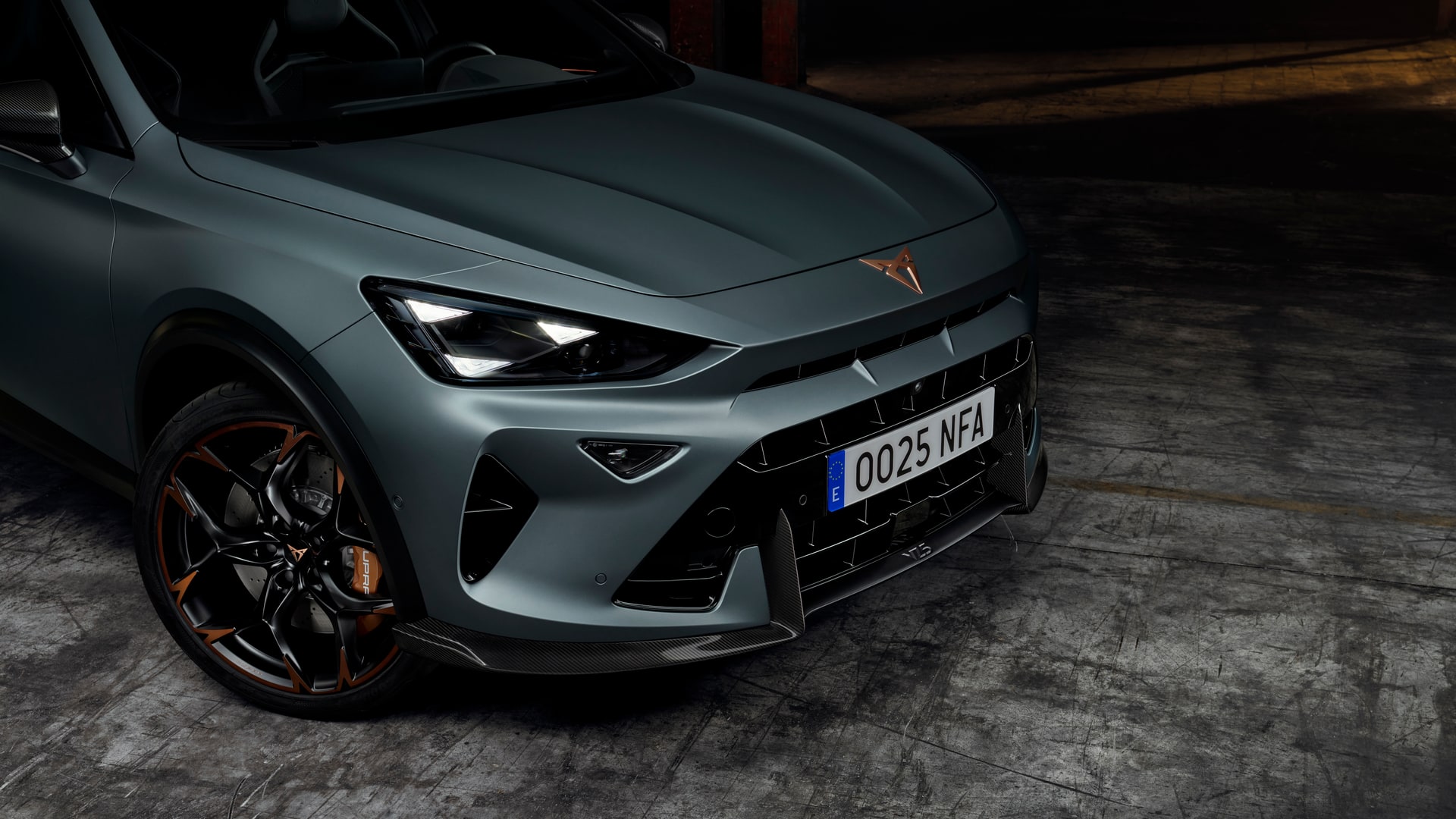
Cupra Formentor e-Hybrid — from €39,500
Here comes the dynamic candidate. The Formentor e-Hybrid, after its usual discount, just squeezes into the budget, and does so with an electric range of up to 125 km WLTP in the large-battery version, a sharp chassis and an image that still sells itself. The boot, however, is modest for the segment.
| Power kW | Power CV | Top speed | Electric range | Consumption | Label | |
|---|---|---|---|---|---|---|
| 150 kW | 204 CV | 210 km/h | 125 km WLTP | 1.4 l/100 km | ZERO | PHEV |
Peugeot 3008 Hybrid Plug-in — from €39,900
The French car plays the card of design and the i-Cockpit. Its electric range is somewhat tight compared with the Chinese rivals, but in practice it offers a very well-resolved package, with above-average finish and a setup oriented towards open road driving.
| Power kW | Power CV | Top speed | Electric range | Consumption | Label | |
|---|---|---|---|---|---|---|
| 165 kW | 225 CV | 220 km/h | 85 km WLTP | 1.2 l/100 km | ZERO | PHEV |
Opel Grandland Plug-in Hybrid — from €39,990
Platform sibling of the 3008, with a more sober approach and a slightly lower price. A good option for anyone looking for a PHEV without frills, with full ADAS equipment as standard and a rational cabin.
| Power kW | Power CV | Top speed | Electric range | Consumption | Label | |
|---|---|---|---|---|---|---|
| 145 kW | 195 CV | 220 km/h | 85 km WLTP | 1.3 l/100 km | ZERO | PHEV |
Kia Sportage PHEV — from €39,900
The plug-in Sportage is the safe bet. Seven years of warranty, a consolidated after-sales network and a product that ages well. Its electric range falls somewhat short of the best, but the overall package is among the most balanced.
| Power kW | Power CV | Top speed | Electric range | Consumption | Label | |
|---|---|---|---|---|---|---|
| 212 kW | 288 CV | 191 km/h | 70 km WLTP | 1.1 l/100 km | ZERO | PHEV |
Recommendation by buyer profile
- Intensive urban use, 30-40 km/day: MG HS PHEV or Jaecoo 7. Maximum electric range per euro.
- Mixed city-road use with weekend trips: Peugeot 3008 or Opel Grandland. More contained consumption with a flat battery.
- Priority on dynamics and design: Cupra Formentor. No question.
- Warranty and long-term peace of mind: Kia Sportage PHEV. Seven years is not negotiable.
Public aid: the Plan Auto+ as framework
The Plan Auto+ remains the reference for accessing direct purchase aid for electrified vehicles in Spain. Amounts and conditions are updated periodically, so we refer you to the official website for the current figure before signing. Applied to these models, it can reduce the final outlay by several thousand euros.
Summary table and editorial score
| Model | Price from | WLTP range | Power | AC charging | Warranty | Score /10 |
|---|---|---|---|---|---|---|
| MG HS PHEV | €36,990 | 103 km | 339 CV | up to 11 kW | 7 years | 9.0 |
| Jaecoo 7 PHEV | €36,900 | 90 km | 279 CV | 6.6 kW | 7 years | 8.3 |
| Cupra Formentor e-Hybrid | €39,500 | 125 km | 204 CV | 7.4 kW | 5 years | 8.5 |
| Peugeot 3008 Hybrid Plug-in | €39,900 | 85 km | 225 CV | 7.4 kW | 3 years | 8.0 |
| Opel Grandland Plug-in Hybrid | €39,990 | 85 km | 195 CV | 7.4 kW | 3 years | 7.8 |
| Kia Sportage PHEV | €39,900 | 70 km | 288 CV | 7.2 kW | 7 years | 8.2 |
If you want to explore the segment further, with more options and price drops, the full ranking of PHEV SUVs below €45,000 is a good complement to this guide.
Frequently asked questions
What minimum WLTP electric range should a PHEV SUV have in 2026?
Our editorial recommendation is not to go below 60 km homologated. In real conditions that figure translates into roughly 40-45 effective km, enough for a daily urban-metropolitan commute without starting the combustion engine.
What is the best plug-in hybrid SUV under €40,000 in 2026?
For pure cost-value, the MG HS PHEV leads our selection: 103 km WLTP, seven years of warranty and complete equipment for €36,990. For dynamic profiles, the Cupra Formentor e-Hybrid; for long-term peace of mind, the Kia Sportage PHEV.
Is a PHEV worthwhile if I can’t charge it at home?
In practice, no. Without a private or workplace charging point, a PHEV becomes a heavy conventional hybrid with consumption above 6-7 l/100 km. Before signing, make sure you have the charging infrastructure.
Can I access Plan Auto+ aid with these models?
Yes, PHEV SUVs with the ZERO label are eligible under the Plan Auto+ framework. Amounts are updated periodically, so it is worth checking the official website for the current figure before closing the deal.
Technical specifications of the cars in this article

 Peugeot E-208 GTi: a battery-powered toy that revives the spirit of the 1980s sports cars
 New Lexus ES: luxury grows and goes electric
 First contact with the Dacia Sandero Hybrid 155: power and efficiency from €19,890
Deja un comentario