Astra Hyundai ID.3 Kona Megane Model 3 Opel Renault Tesla Volkswagen Electric Cars Compact Buying Guides
How to Choose a Compact Electric Car with Around 500 km of Range in 2026: Real-World Consumption, Charging Curve and Budget
 Dani Montesinos
26 August 2026
6 min.
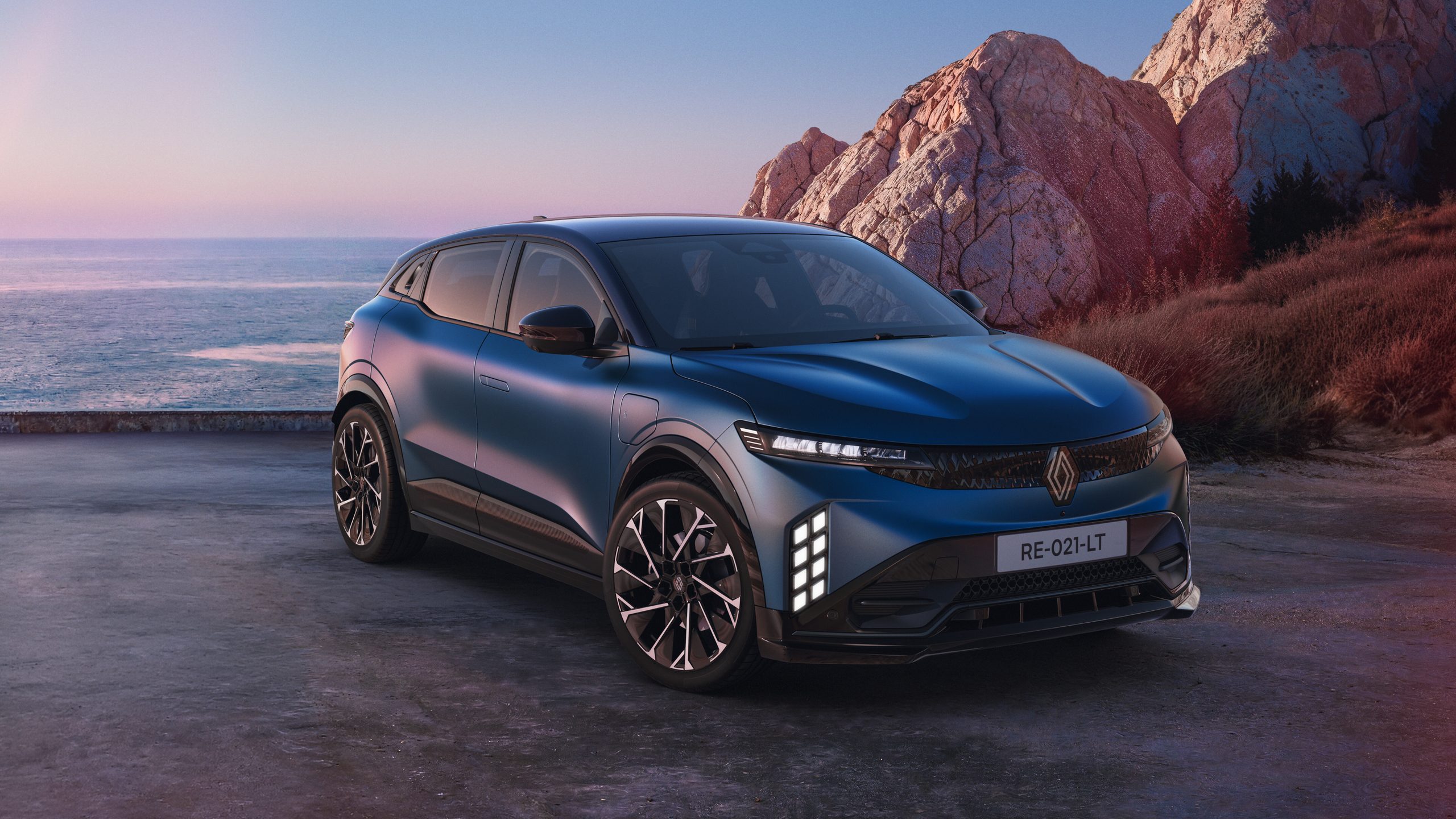
Technical guide to choosing a compact electric car with roughly 500 km WLTP combined range, with model-by-model analysis and an actionable final checklist.
Choosing a compact electric car with more than 500 km of range in 2026 is no longer an act of faith. There is supply, there is data, and there is real competition for the same customer. What has changed compared with two years ago is that the WLTP benchmark has become almost an entry requirement in the mid-size segment, and that forces us to look beyond the brochure.
From the initial list of candidates we have ruled out the offer from BYD: in our view, and without detracting from its technical proposal, there are rivals in this segment that offer a perceived cabin quality and a driving experience one step above. It is an editorial decision. Let us move on to those that do qualify.
Why WLTP is no longer enough
The WLTP cycle serves to compare, not to plan a journey. On the motorway at a real 120 km/h, almost any compact electric car loses between 25% and 35% of its homologated figure. A car with 550 km WLTP ends up, in practice, at 380-420 km real between charges if the trip is sustained motorway driving. And that is in spring. In January, with cold and heating, it loses another 10-15%.
That is why the useful question is not “how many kilometres does it homologate?” but three:
- How much does it really consume at 120 km/h?
- What charging curve does it sustain on DC between 10% and 80%?
- How much does it cost to own over four years, with Plan Auto+ included?
Real consumption: the variable nobody looks at in the dealership
In calm mixed driving, the best compact electric cars hover around 14-15 kWh/100 km. On sustained motorway driving at 120, that figure jumps to 18-22 kWh/100 km depending on aerodynamics, weight and tyres. One data point: the difference between a well-resolved compact (low Cd, 19-inch wheels) and one with a tall SUV body and large wheels can exceed 4 kWh/100 km. On a Madrid-Valencia trip, that means 40 minutes of extra stops.
Charging curve: it is not the peak power, it is what it sustains
Marketing sells “up to 175 kW”. The reality is how many minutes that figure is held before the BMS starts cutting back. A car that charges at 150 kW for fifteen seconds and then settles at 70 kW is not a fast-charging car. One that holds 120 kW sustained from 10% to 60% is.
The candidates that do exceed 500 km WLTP
Renault Mégane E-Tech — from €34,574
The French compact comes close to 470 km WLTP in its 60 kWh version, falling just short of the strict threshold — we include it as a reference for cabin and dynamics, although its more capable version is the one that interests anyone looking for 500 km. Well-resolved design, interior with character and driving that is enjoyable through corners.
| Power kW | Power hp | Top speed | Range | Consumption | Label | Fuel |
|---|---|---|---|---|---|---|
| 160 kW | 220 hp | 160 km/h | 470 km WLTP | 15.0 kWh/100 km | ZERO | Electric |
Tesla Model 3 Long Range — from €44,990
It remains the efficiency benchmark. 629 km WLTP in the Long Range version, stable charging curve at the Supercharger and a real motorway consumption of around 17 kWh/100 km. Minimalist interior that people either like or don’t — to my taste, it works better than it looks in photos.
| Power kW | Power hp | Top speed | Range | Consumption | Label | Fuel |
|---|---|---|---|---|---|---|
| 660kW | 440 hp | 201 km/h | 629 km WLTP | 14.3 kWh/100 km | ZERO | Electric |
Volkswagen ID.3 Pro S — from €41,920
With the 77 kWh battery it reaches 559 km WLTP. DC charging up to 175 kW peak, but what is interesting is that it sustains above 120 kW well past 50%. European driving feel, notable soundproofing.
| Power kW | Power hp | Top speed | Range | Consumption | Label | Fuel |
|---|---|---|---|---|---|---|
| 150 kW | 204 hp | 160 km/h | 562 km WLTP | 15.8 kWh/100 km | ZERO | Electric |
Kia EV3 Long Range — from €38,590
The new Korean compact arrives with 605 km WLTP in its 81.4 kWh version. Low homologated consumption, a cabin very well resolved for the price, and a range-to-euro ratio that is hard to match today.
| Power kW | Power hp | Top speed | Range | Consumption | Label | Fuel |
|---|---|---|---|---|---|---|
| 150 kW | 204 hp | 170 km/h | 605 km WLTP | 14.9 kWh/100 km | ZERO | Electric |
Hyundai Kona Electric 65 kWh — from €42,450
514 km WLTP, a proven platform and dense equipment from the mid-level trim. It is not the fastest charger on DC (102 kW peak), but it offers a very polished product for urban and interurban use.
| Power kW | Power hp | Top speed | Range | Consumption | Label | Fuel |
|---|---|---|---|---|---|---|
| 150 kW | 204 hp | 172 km/h | 510 km WLTP | 14.7 kWh/100 km | ZERO | Electric |
Peugeot e-3008 — from €42,650
With the 73 kWh battery it homologates 525 km WLTP. Daring interior design, good real-world consumption and a particular ergonomics with the low steering wheel and high instrument cluster that should be tested before signing.
| Power kW | Power hp | Top speed | Range | Consumption | Label | Fuel |
|---|---|---|---|---|---|---|
| 157 kW | 210 hp | 170 km/h | 525 km WLTP | 16.8 kWh/100 km | ZERO | Electric |
Opel Astra Electric — from €39,900
It stays close to the 500 km WLTP barrier thanks to the 74 kWh battery. It is a rational product, without flourishes, with German hallmarks in feel and finish.
| Power kW | Power hp | Top speed | Range | Consumption | Label | Fuel |
|---|---|---|---|---|---|---|
| 115 kW | 156 hp | 170 km/h | 454 km WLTP | 14.4 kWh/100 km | ZERO | Electric |
Total cost: Plan Auto+ and the four-year calculation
The Plan Auto+ incentives remain a decisive factor in TCO. Without going into specific amounts — which should be checked on the official website before signing — the aid can shift the final price by between €4,500 and €7,000 if an old vehicle is scrapped. Added to a consumption of 15 kWh/100 km charging at home at €0.10/kWh, that comes to €1.50 per 100 km. An equivalent diesel comes to around €7-8. At 15,000 km/year that is roughly €900 of difference every year, not counting maintenance.
Summary table and rating
| Model | Range | Consumption | Charging curve | Price from | Score |
|---|---|---|---|---|---|
| Tesla Model 3 LR | 629 km | 14.3 kWh | 9/10 | €44,990 | 9.3 |
| Kia EV3 LR | 605 km | 14.9 kWh | 7.5/10 | €38,590 | 9.0 |
| VW ID.3 Pro S | 562 km | 15.8 kWh | 8/10 | €41,920 | 8.3 |
| Peugeot e-3008 | 525 km | 16.8 kWh | 7/10 | €42,650 | 7.8 |
| Opel Astra Electric | 454 km | 14.4 kWh | 7/10 | €39,900 | 7.7 |
| Hyundai Kona 65 kWh | 510 km | 14.7 kWh | 6/10 | €42,450 | 7.5 |
| Renault Mégane E-Tech | 470 km | 15.0 kWh | 6.5/10 | €34,574 | 7.3 |
Checklist before signing
- Check the homologated consumption, not just the range.
- Ask for the real 10-80% charging curve, not the peak.
- Calculate the 4-year TCO with Plan Auto+ and your mileage.
- Test the car on the motorway, not just in the city.
- Verify the battery warranty (minimum 8 years/160,000 km).
Frequently asked questions
Does a compact electric car with 500 km WLTP really make Madrid-Barcelona without stopping?
No. On the motorway at 120 km/h the real range drops to 350-400 km. You will need a DC charging stop of 20-25 minutes in an efficient compact.
Which matters more, WLTP range or the charging curve?
For mixed use, the charging curve. A car with 500 km WLTP and stable charging at 130 kW is more practical on a trip than one with 600 km and irregular charging.
Is Plan Auto+ worth it compared with waiting for manufacturer promotions?
Almost always yes, if it can be combined with a commercial discount. Check the current amount before signing.
How long does the battery of a current compact electric car last?
The most recent studies point to less than 10% degradation after 200,000 km in models with active thermal management, which is practically all those in this analysis.
Technical specifications of the cars in this article


 Kia offers an electric range of 10 models, 50 versions and 400 possible combinations
 The seven finalists for the 2027 European Car of the Year (COTY) are exclusively electric
 Peugeot E-208 GTi: a battery-powered toy that revives the spirit of the 1980s sports cars
Deja un comentario