Audi BMW e-tron EQA EX30 i4 Mercedes Model 3 Tesla Volvo Electric Cars Compact Buying Guides
How to Choose a Premium Electric Car in 2026 Without Exceeding 50,000 euros: Performance, Technology and Warranty
 Iván Navarro
27 August 2026
7 min.
Editorial guide to choosing a premium compact electric car for under 50,000 euros in Spain: WLTP range, fast charging, standard ADAS and warranty compared across BMW, Audi, Mercedes, Volvo and Tesla.
The 50,000 euro ceiling is no longer a symbolic frontier in the premium electric segment. It is the line that separates the aspirational whim from the compact that can reasonably fit into a family renting deal, a financed private purchase or a transaction with Plan Auto+ aid. And in 2026, that line has become surprisingly passable.
From the earlier list of candidates we have deliberately discarded the proposal from BYD. It is not a question of price or figures — on paper it competes —, but of editorial judgement: we believe that, within this premium bracket, the cabin and driving experience of the Chinese manufacturer still feel a step below European and American rivals with a longer track record in perceived quality. With that clarified, let us move on to those that do qualify.
What defines a premium compact electric car under 50,000 euros today
Three years ago, premium electric and 50,000 euros were almost contradictory terms. Today they are not. The required combination has stabilised: WLTP range above 400 real homologated km, DC charging from 100 kW, a well-executed 400V architecture (800V remains the territory of the upper range), standard Level 2 ADAS and an eight-year or 160,000 km battery warranty, which is the de facto standard of the segment.
What is interesting is that none of these parameters, on its own, defines the car any longer. The difference lies in the nuances: how the chassis filters bumps, which software governs the infotainment, how much noise enters on the motorway at 120 km/h. That is where premium justifies itself against a well-equipped generalist.
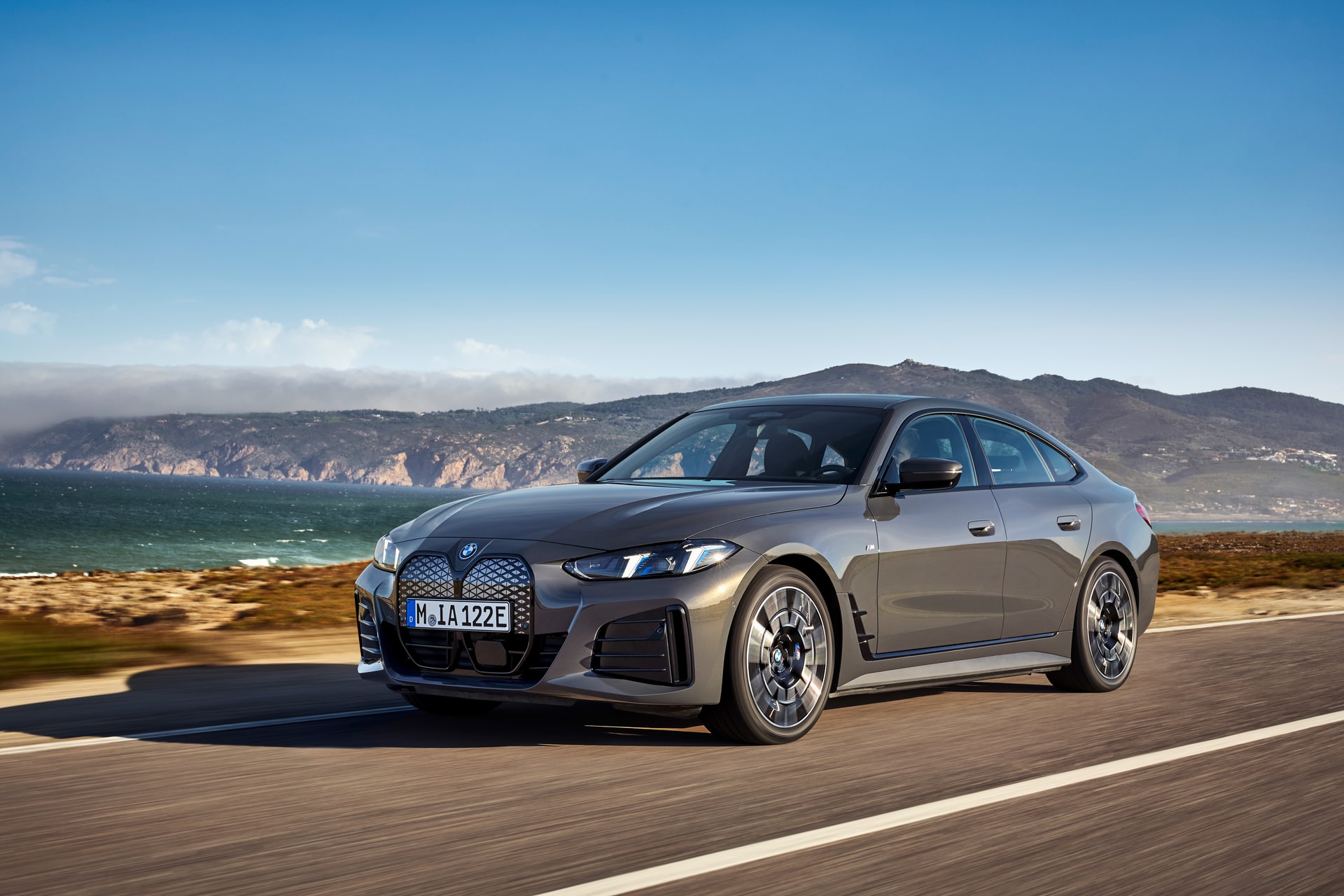
BMW i4 eDrive35 — from 49,900 €
The i4 is, to my taste, the premium compact that best understands what driving means. Its entry version, the eDrive35, brushes the budget ceiling but fits: 286 CV, rear-wheel drive, 499 km WLTP and DC charging of up to 180 kW. The steering retains that characteristic Munich feel that the weight of the battery has not quite managed to dilute.
That said, the 470-litre boot is adequate without being outstanding, and rear visibility requires some getting used to. On the motorway is where it shines: notable acoustic insulation and high-speed stability that recalls why the brand still sells the idea of driving pleasure.
| Power kW | Power CV | Top speed | WLTP range | Consumption | Label | Fuel |
|---|---|---|---|---|---|---|
| 210 kW | 286 CV | 190 km/h | 499 km | 16.1 kWh/100 km | Zero | Electric |
Audi Q4 e-tron 45 — from 48,500 €
The Q4 e-tron plays a different card: that of the rational premium compact SUV. It shares the MEB platform with half the group Volkswagen, and that shows in a spacious cabin, well-resolved ergonomics and a build quality that holds its own against larger siblings. The 45 version delivers 286 CV, around 550 km WLTP in its optimal configuration and charges at up to 175 kW DC.
It is not the most agile of this group, and its MMI software has improved but still is not quite as fluid as that of Tesla. In exchange, it offers the most “complete car” feeling of the comparison: the one that demands least adaptation from a buyer arriving from a premium combustion car. A approach similar to the one we already saw in the comparison between the Volvo EX60, the BMW iX3 and the Audi Q6 e-tron, although one step below in size and price.
| Power kW | Power CV | Top speed | WLTP range | Consumption | Label | Fuel |
|---|---|---|---|---|---|---|
| 210 kW | 286 CV | 180 km/h | 550 km | 16.8 kWh/100 km | Zero | Electric |
Mercedes EQA 250+ — from 49,200 €
The EQA is the most discreet of the group. A compact SUV derived from the GLA platform, with the evident limitation of not having been born electric. But it also has virtues: on-board refinement, MBUX as one of the best interfaces on the market and impeccable acoustic insulation. The 250+ version offers 190 CV, 560 km WLTP and a modest DC charging rate, around 100 kW.
Here is the honest nuance: it is the least dynamic of the five. High weight, front-wheel drive and a delivery that prioritises smoothness over response. If the purchase criterion is comfort and the star badge, it fits. If it is driving pleasure, there are better options on this list.
| Power kW | Power CV | Top speed | WLTP range | Consumption | Label | Fuel |
|---|---|---|---|---|---|---|
| 140 kW | 190 CV | 160 km/h | 560 km | 14.5 kWh/100 km | Zero | Electric |
Volvo EX30 Single Motor Extended Range — from 41,790 €
The EX30 is the budgetary surprise of the selection. On price it should not be in a 50,000-euro premium comparison — in fact, it leaves nearly 10,000 euros of margin —, but on approach, sustainable materials and Scandinavian character, it does. The Single Motor Extended Range version produces 272 CV, homologates 476 km WLTP and charges at 153 kW.
The interior is minimalist to the extreme: a single central screen, with no instrument cluster behind the steering wheel. Some will love it, others will find it uncomfortable. The dynamics are surprisingly agile thanks to contained weight and short overhangs.
| Power kW | Power CV | Top speed | WLTP range | Consumption | Label | Fuel |
|---|---|---|---|---|---|---|
| 200 kW | 272 CV | 180 km/h | 476 km | 16.7 kWh/100 km | Zero | Electric |
Tesla Model 3 RWD — from 36,990 €
The Model 3 remains the technical benchmark of the segment for real-world range per euro. Its entry version, the RWD, offers 513 km WLTP, 283 CV and access to the Supercharger network — an argument no rival can match in practice today. The Highland renewal refined materials, acoustic insulation and ride comfort.
It is quick, yes, but it is not enjoyed like an i4. The feel is more digital, flatter. In exchange, the software is the best on the market and OTA updates keep adding features years after purchase.
| Power kW | Power CV | Top speed | WLTP range | Consumption | Label | Fuel |
|---|---|---|---|---|---|---|
| 208 kW | 283 CV | 201 km/h | 513 km | 13.2 kWh/100 km | Zero | Electric |
Summary comparison and editorial score
| Model | Price from | Range | DC charging | CV | Dynamics | Interior | Software | Overall score |
|---|---|---|---|---|---|---|---|---|
| BMW i4 eDrive35 | 49,900 € | 499 km | 180 kW | 286 | 9 | 8 | 7 | 8.5 |
| Audi Q4 e-tron 45 | 48,500 € | 550 km | 175 kW | 286 | 7 | 9 | 7 | 8.3 |
| Mercedes EQA 250+ | 49,200 € | 560 km | 100 kW | 190 | 8 | 8 | 7.5 | |
| Volvo EX30 SM ER | 41,790 € | 476 km | 153 kW | 272 | 8 | 8 | 7 | 8.4 |
| Tesla Model 3 RWD | 36,990 € | 513 km | 175 kW | 283 | 7 | 7 | 10 | 8.6 |
Warranty, maintenance and aid: the fine print that really matters
All five manufacturers offer an 8-year or 160,000 km battery warranty with a minimum retention of 70% of capacity. This is the floor of the segment and none falls short. Nor are there fundamental differences in the general vehicle warranty: three years with no mileage limit.
As for aid, Plan Auto+ remains the reference framework for buying electric cars in Spain. The specific conditions should be checked on the official website before signing, because amounts and requirements are updated periodically.
Our recommendation
If the dominant criterion is driving, the i4. If it is balance and functionality, the Q4 e-tron. If it is refined comfort, the EQA. If it is software and cost per kilometre, the Model 3. And if it is distinctive design with budget to spare, the EX30. There is no single answer — there is a correct answer for each profile.
Frequently asked questions
What real range can be expected from a premium compact electric car under 50,000 euros?
In real mixed use (a blend of city and motorway), the models analysed deliver between 15% and 20% below the WLTP figure. In practice, we are talking about 380–450 real km for the best cases, with larger drops on the motorway at 120 km/h and an advantage for the Tesla Model 3 thanks to its efficiency.
How long does it take to charge a premium compact electric car at a fast charger?
With charging powers between 100 and 180 kW DC, going from 10% to 80% battery takes between 25 and 35 minutes in optimal conditions. The EQA, more limited in charging, needs around 40 minutes; the i4 and the Model 3 are the fastest of the group.
What exactly does the eight-year battery warranty cover?
It covers manufacturing defects and a capacity loss of more than 30% (that is, it guarantees at least 70% usable capacity at the end of the period or 160,000 km). It does not cover damage from misuse, charging at non-approved installations or modifications not authorised by the manufacturer.
Is a premium electric car worth it over a well-equipped generalist at the same price?
It depends on use. A well-equipped generalist today offers very similar performance and range. The premium difference is paid for in perceived quality, acoustic refinement, more refined ADAS and residual value — this last one is where the difference is partly recovered after three or four years.
Technical specifications of the cars in this article


 Peugeot E-208 GTi: a battery-powered toy that revives the spirit of the 1980s sports cars
 New Lexus ES: luxury grows and goes electric
 First contact with the Dacia Sandero Hybrid 155: power and efficiency from €19,890
Deja un comentario