Citroen Expert Ford Jumpy Mercedes Opel Peugeot Transit Vito Vivaro Comparisons Furgonetas Buying Guides
How to Choose a Van for a Self-Employed Professional in 2026: Payload, Real-World Consumption and Total Cost of Ownership
 Iván Navarro
28 November 2026
7 min.
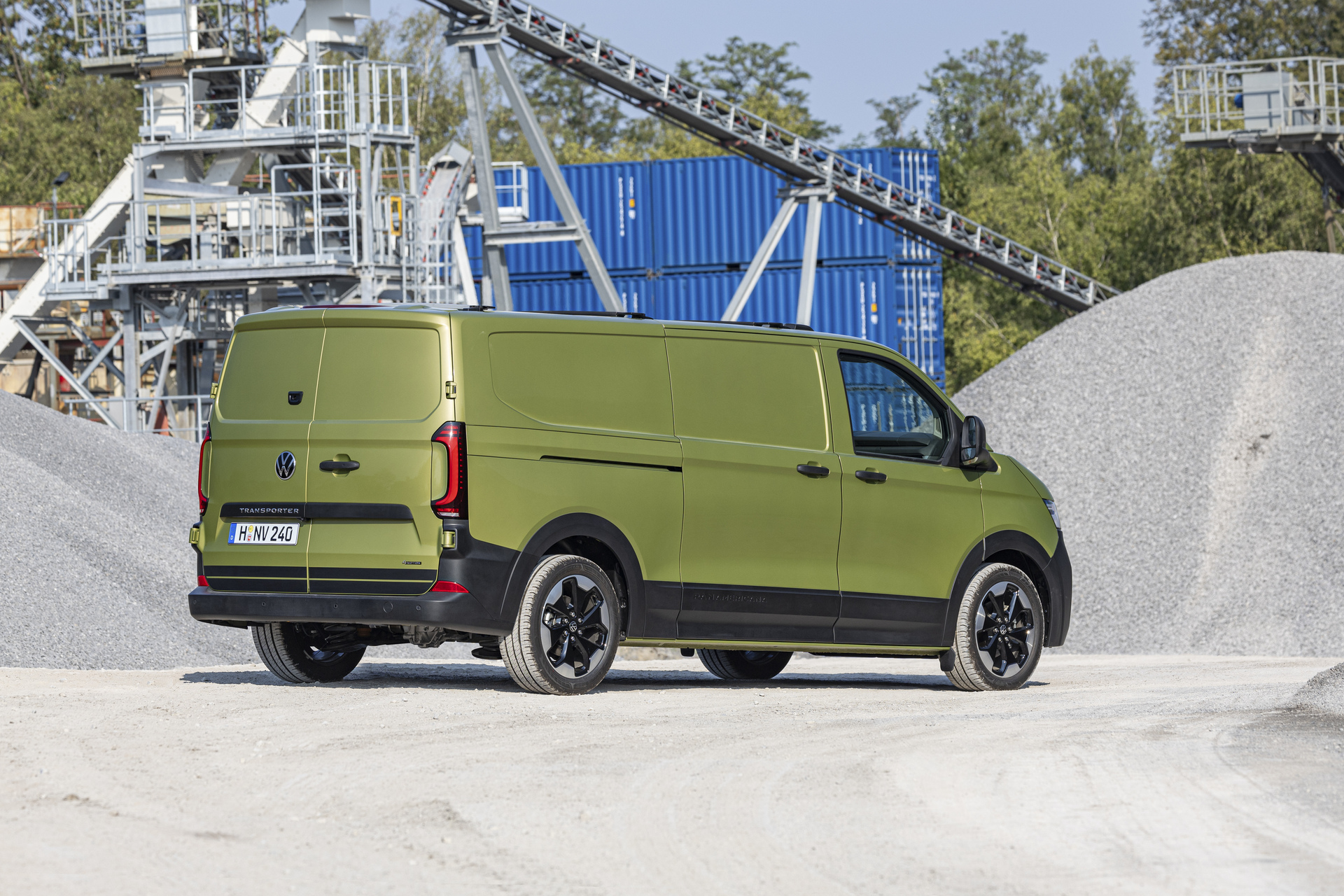
A practical guide to choosing the best van for a self-employed professional in 2026, comparing homologated payload, real-world consumption and four-year total cost of ownership across the nine best-selling mid-size vans in Spain.
Buying a van as a self-employed professional is not like buying a car. Here, every kilo of payload, every litre of diesel and every visit to the workshop comes straight out of your profit and loss account. Yet we still see decisions driven by looks or by what the neighbour drives, when the calculation should rest on three objective variables: homologated payload, real-world consumption in mixed use and total cost of ownership over four years. In this guide we cross-check them against the nine best-selling mid-size vans in Spain for 2026.
What choosing the right van as a self-employed professional means in 2026
The mid-size van market has been practically frozen on shared platforms for a decade —Stellantis dominates the mid-range with four almost identical brands— but 2026 brings important nuances: more restrictive ZBE low-emission zones in large cities, the Plan Auto+ as a lever for purchase aid for commercial vehicles with an ECO or CERO label, and a tax system that increasingly rewards those who declare genuine professional use. Choosing well is no longer just “which van do I like”, it is which van leaves you the greater net margin after four years.
Payload: the figure that really matters
Marketing datasheets talk about cargo volume in cubic metres. The figure that pays the bills is the homologated payload, that is, what you can load without exceeding the MMA (maximum authorised mass). In mid-size vans that figure ranges between 1,000 and 1,400 kg depending on engine and wheelbase, and there are surprises here: two twin vans sharing the same chassis can differ by 80-100 kg of payload just because of the added weight of a bigger battery or engine. If you work with heavy material —plumbing, air conditioning, building tools— that difference decides the model, not the other way round.
Real-world consumption in mixed use: city, motorway, loaded
Homologated WLTP consumption figures are useful for comparing vehicles with each other, but in practice a self-employed professional who splits their time between industrial estates and the city centre with the van loaded will see figures between 15% and 25% above the official data. That is the norm, not the exception: the heavier the load, the higher the consumption, and mid-size vans are not exactly light. It is wise to look at real-world consumption measured in mixed use, not laboratory figures, and to apply a prudent margin before making any profitability calculation.
Total cost of ownership over 4 years: taxation, Plan Auto+, ZBE and residual value
Taxation and deductible VAT
For the self-employed, a van used in the business allows VAT and income tax deductions with more room than a passenger car, provided the tax authority understands that its use is predominantly professional. This point, although it does not depend on the model, conditions the total cost of ownership almost as much as the purchase price.
Plan Auto+ and aid
Versions with an ECO or CERO label —basically electric vehicles and some light hybrids— may benefit from the Plan Auto+, the current aid framework for buying low-emission vehicles. The exact amount changes over time, so the prudent course is to check the official website before closing the deal, but it is worth keeping in mind when comparing quotes.
Low Emission Zones (ZBE)
If you deliver in central Madrid, Barcelona or any provincial capital with an active ZBE, the environmental label is no longer a minor detail: it is either access or no access. A diesel van without an ECO label may leave you locked out of certain streets at certain times of day.
Residual value
After four years, Stellantis vans (Peugeot, Citroën, Opel, Fiat) tend to depreciate somewhat faster than Volkswagen or Mercedes-Benz, which hold their resale price better in the professional used market. It is not a huge difference, but it shows up in the overall cost of use.
Comparison: the best-selling mid-size vans in Spain
Ford Transit Custom, from 32,300 €
| Power | Consumption | Label | Fuel |
|---|---|---|---|
| 81-125 kW (110-170 CV) | ~7.2 l/100km | C | Diesel |
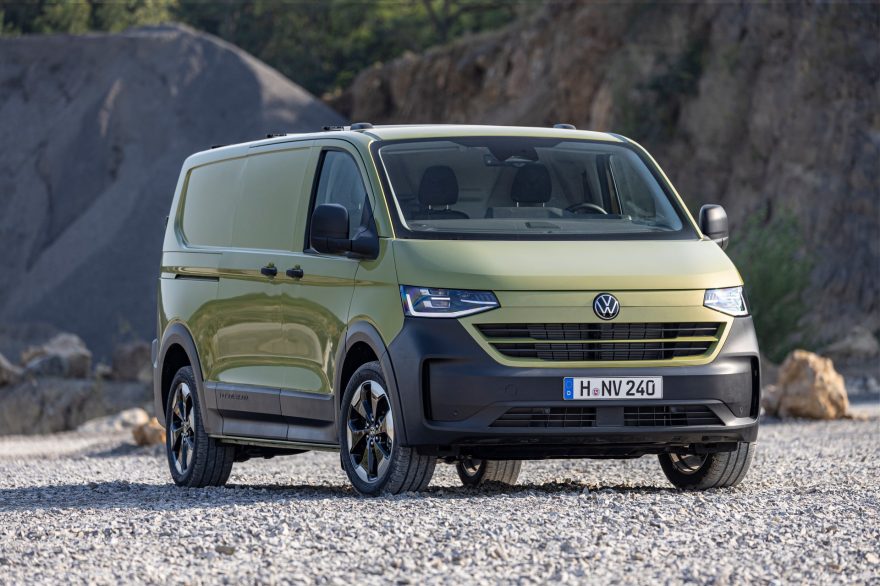
Volkswagen Transporter (T7), from 32,150 €
| Power | Consumption | Label | Fuel |
|---|---|---|---|
| 81-125 kW (110-170 CV) | ~7.5 l/100km | C | Diesel |
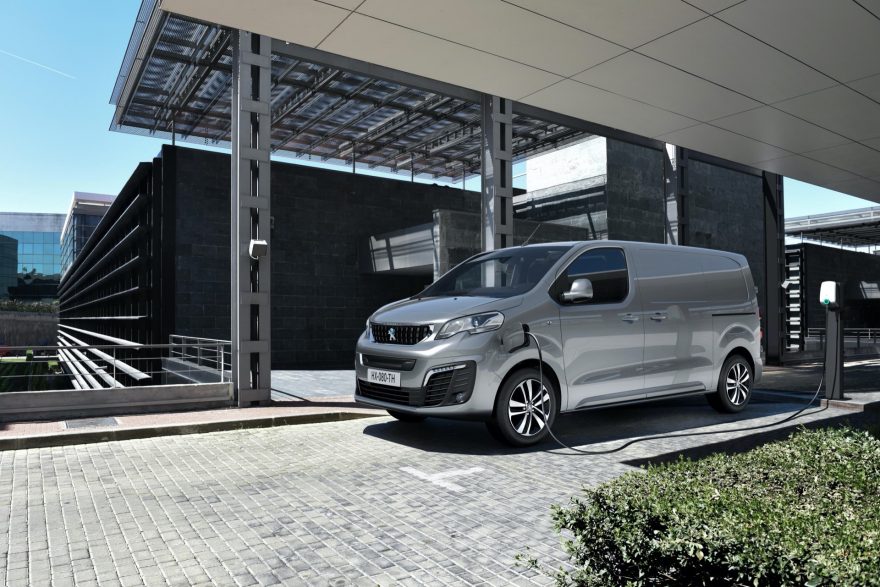
Peugeot Expert, from 31,200 €
| Power | Consumption | Label | Fuel |
|---|---|---|---|
| 88-132 kW (120-180 CV) | ~6.9 l/100km | C | Diesel |
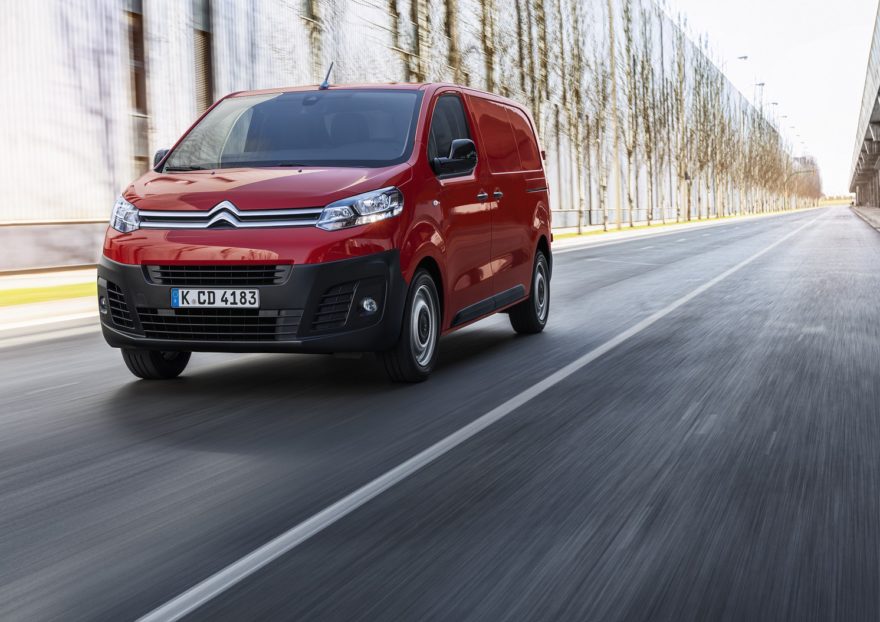
Citroën Jumpy, from 30,500 €
| Power | Consumption | Label | Fuel |
|---|---|---|---|
| 88-132 kW (120-180 CV) | ~7.0 l/100km | C | Diesel |
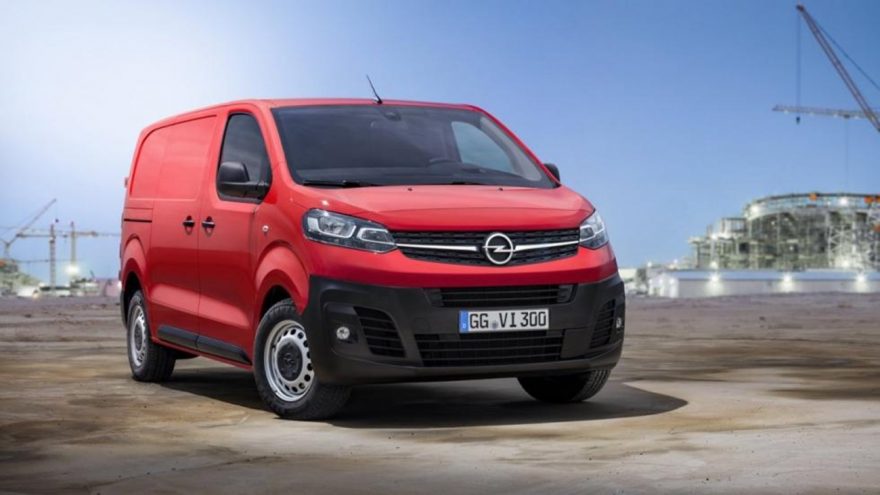
Opel Vivaro, from 31,800 €
| Power | Consumption | Label | Fuel |
|---|---|---|---|
| 100 kW (136 CV) | ~21 kWh/100km | CERO | Electric |
The Vivaro Electric is the group’s electric route, with a homologated range of up to 352 km with the 75 kWh battery (224 km in the 50 kWh entry version), interesting for short, repeated urban routes.
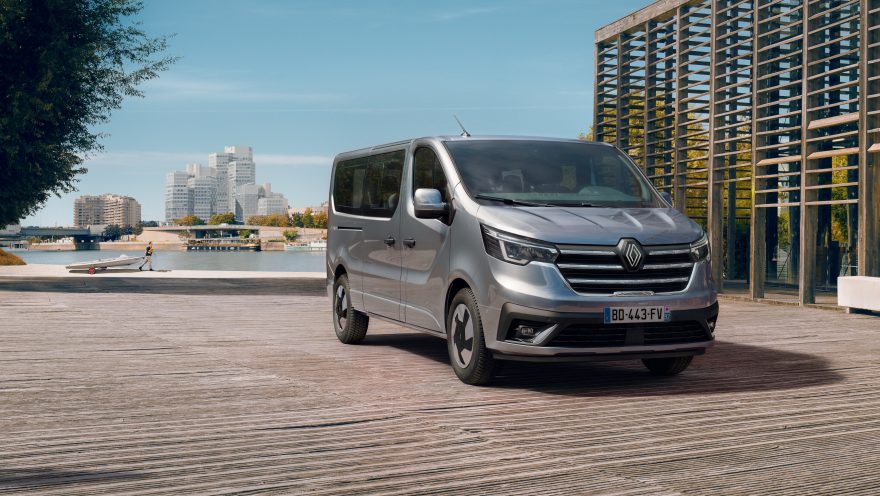
Renault Trafic, from 29,400 €
| Power | Consumption | Label | Fuel |
|---|---|---|---|
| 81-125 kW (110-170 CV) | ~7.3 l/100km | C | Diesel |
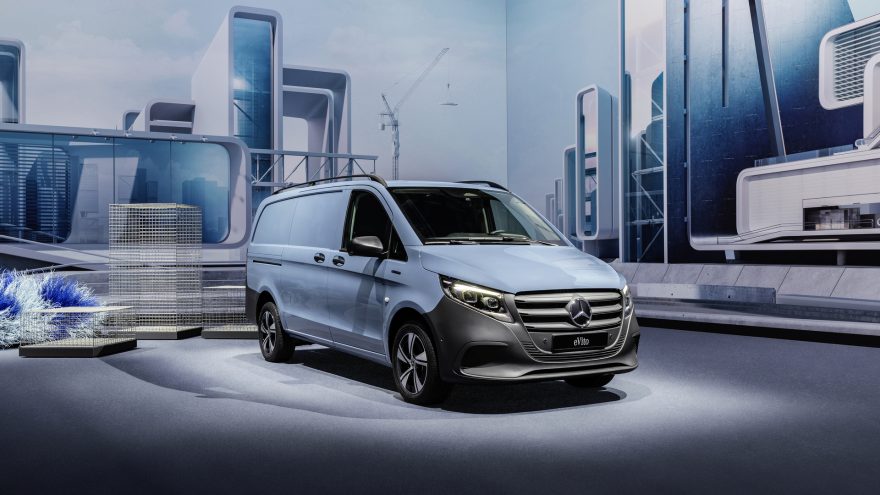
Mercedes-Benz Vito, from 36,500 €
| Power | Consumption | Label | Fuel |
|---|---|---|---|
| 75-140 kW (102-190 CV) | ~6.8 l/100km | C | Diesel |

Fiat Scudo, from 29,700 €
| Power | Consumption | Label | Fuel |
|---|---|---|---|
| 88-132 kW (120-180 CV) | ~7.0 l/100km | C | Diesel |
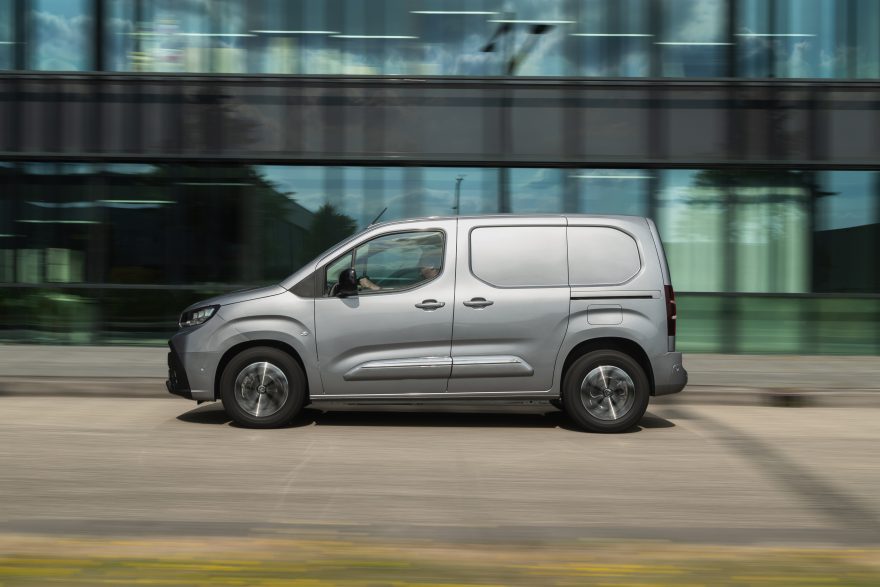
Toyota Proace, from 26,000 €
| Power | Consumption | Label | Fuel |
|---|---|---|---|
| 100 kW (136 CV) | ~22 kWh/100km | CERO | Electric |
The Proace Electric shares its platform with the Vivaro Electric and other group siblings, with a similar range of up to 350 km with the 75 kWh battery (220 km with the 50 kWh one), a point worth considering if your daily route falls within a ZBE and does not exceed that distance.
Summary table: final comparison
| Model | From | Payload | Real consumption | Score |
|---|---|---|---|---|
| Ford Transit Custom | 32,300 € | High | 7.5-8.5 l/100km | 8.5 |
| Volkswagen Transporter | 32,150 € | High | 7.8-8.8 l/100km | |
| Peugeot Expert | 31,200 € | Medium-high | 7.2-8.1 l/100km | |
| Citroën Jumpy | 30,500 € | Medium-high | 7.3-8.2 l/100km | 7.8 |
| Opel Vivaro Electric | 31,800 € | Medium | 21-24 kWh/100km | 7.5 |
| Renault Trafic | 29,400 € | Medium-high | 7.6-8.5 l/100km | 7.7 |
| Mercedes-Benz Vito | 36,500 € | High | 7.9-8.9 l/100km | 8.2 |
| Fiat Scudo | 29,700 € | Medium-high | 7.3-8.2 l/100km | 7.6 |
| Toyota Proace Electric | 26,000 € | Medium | 22-25 kWh/100km | 7.9 |
Which van to choose according to your professional profile
For the installer or renovator who carries heavy material every day, the Ford Transit Custom and the Mercedes-Benz Vito offer the best payload margin and proven mechanical reliability, although the Vito shows in the price. For the urban courier with short, repeated routes within a ZBE, the Opel Vivaro Electric or the Toyota Proace Electric make up for their limited range with guaranteed access to the centre and a very low cost per kilometre. And if you are after the best balance between entry price and versatility, the Peugeot Expert, Citroën Jumpy and Fiat Scudo —platform siblings— remain the most sensible bet to start with. It is not the most eye-catching decision, but it is the one most self-employed professionals recognise when they do their accounts at the end of the year.
For those who also need passenger seats combined with occasional deliveries, it is also worth looking at options such as the Hyundai Staria Electric, which extends the range towards larger vans with significant electric range.
Frequently asked questions
What is the best van for a self-employed professional in 2026?
There is no single valid answer for every profile. For heavy loads, the Ford Transit Custom and Mercedes-Benz Vito stand out in payload. For urban deliveries in ZBE zones, the Opel Vivaro Electric and Toyota Proace Electric make up for their shorter range with guaranteed access to the centre.
What payload do I really need as a self-employed professional?
It depends on the trade: an electrician or plumber rarely exceeds 600-700 kg per working day, whereas a construction haulier may come close to the 1,200-1,400 kg limit. Always check the homologated datasheet, not the cubic metre volume.
Is an electric van worthwhile for a self-employed professional in 2026?
If your daily route does not exceed 250-300 km and you work within a ZBE, yes, it pays off in the medium term thanks to the Plan Auto+, lower energy costs and unrestricted access. If you make long inter-urban journeys, diesel is still more practical.
How do ZBE zones affect the choice of van?
Low Emission Zones restrict access for vehicles without an ECO or CERO label during set time slots. If your activity is in large cities, prioritise electric vans or vans with an ECO label to avoid future restrictions.
Technical specifications of the cars in this article

 Kia offers an electric range of 10 models, 50 versions and 400 possible combinations
 The seven finalists for the 2027 European Car of the Year (COTY) are exclusively electric
 Peugeot E-208 GTi: a battery-powered toy that revives the spirit of the 1980s sports cars
Deja un comentario