Bayon Ford Hyundai Puma Comparisons Tests SUV Urban
Hyundai BAYON vs Ford Puma hybrid: which urban SUV-B offers better efficiency under €25,000
 Iván Navarro
8 November 2026
7 min.
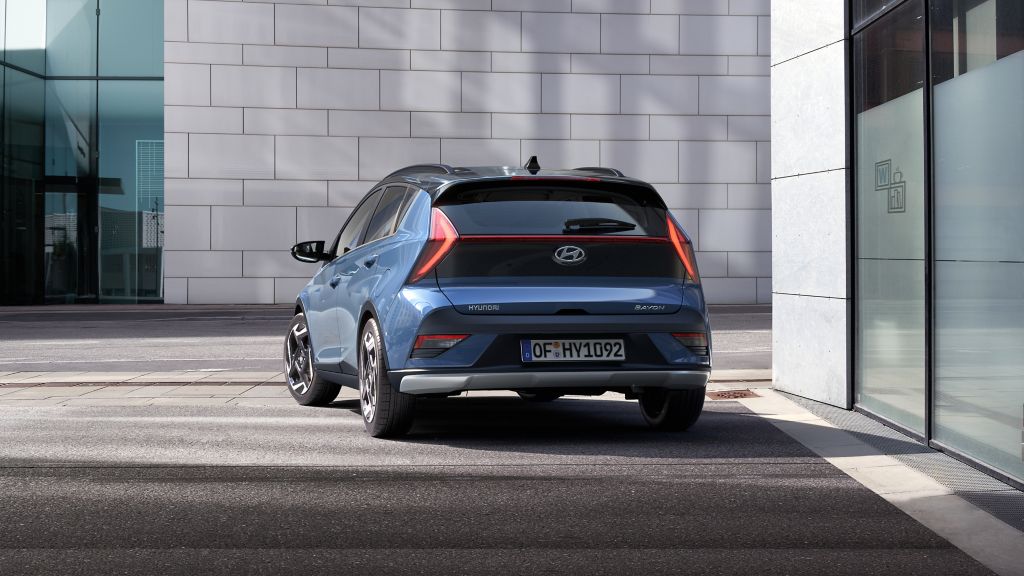
We compare the Hyundai Bayon 1.0 TGDi 90 CV with the Ford Puma electric to see which one really meets the €25,000 limit. Spoiler: only one of the two manages it.
Anyone looking for an urban SUV-B with a €25,000 ceiling sooner or later runs into this question: Bayon or Puma? They are two of the most frequently mentioned names in the segment in Spain, but it’s worth clearing something up from the first paragraph, because there’s a catch. The Ford Puma currently on sale in its most efficient variant—the electric one—starts above that threshold. The Hyundai Bayon, on the other hand, does fit within the budget. Let’s look at the data without taking anything for granted.
Hyundai Bayon 1.0 TGDi 90 CV: the accessible petrol route from €25,060
The Bayon has for some years been Hyundai’s proposal for those who want SUV ride height without giving up a supermini-level price. The 1.0 TGDi 90 CV version, with Start&Stop system, is the real entry point to the range and the one that truly competes in this price bracket.
It’s not a spectacular engine on paper—90 CV won’t surprise anyone on a spec sheet—but in town it moves with ease, and its homologated consumption is around 5.8–5.9 l/100 km, a reasonable figure for a turbocharged petrol of this size. In our view, it’s precisely in everyday urban driving that the Bayon feels at home: manoeuvrable, with an elevated driving position that’s appreciated in dense traffic, and without the weight penalty dragged by larger SUVs.
| Model | Fuel | Power | Top speed | Consumption | CO₂ emissions | Price from |
|---|---|---|---|---|---|---|
| Hyundai Bayon 1.0 TGDi 90 Essence | Petrol | 66 kW / 90 CV | 174 km/h | 5.8–5.9 l/100 km | 131–132 g/km | €25,060 |
Ford Puma electric: real efficiency, but outside the €25,000 threshold
Here comes the part that really matters for the headline of this article. The Ford Puma, in its most efficient configuration currently on sale in Spain—the 100% electric Gen-E version of 168 CV with a 46.8 kWh usable battery (53 kWh gross) and up to 417 km of homologated range—starts from around €28,804 RRP (official starting price; without discounts or aid the RRP is higher). In other words: clearly above the limit set by the premise of this comparison.
This is no minor detail. The electric Puma is, on paper, a genuinely competent car: 124 kW of power, a range of up to 417 km that is more than sufficient for urban and suburban use, and a dynamic approach that Ford has always cared for in this model. But the price takes it straight out of the bracket we are analysing. And there is no light hybrid or mild-hybrid version of the Puma sold in Spain today that drops below €25,000 real RRP without discounts.
| Model | Fuel | Range | Battery | |||
|---|---|---|---|---|---|---|
| Ford Puma Gen-E 168 46.8kWh Auto. | Electric | 124 kW / 168 CV | 160 km/h | up to 417 km | 46.8 kWh usable |
Why no Puma hybrid or electric drops below €25,000 today
It’s worth being clear about this, because ambiguous headlines are easy to find elsewhere. Neither the electric variant nor any hybridisation available for the Puma on the Spanish market sits below €25,000 official RRP. The price jump over the Bayon is not cosmetic:
it’s several thousand euros of difference
, an amount that for many buyers decides the purchase even before testing the car.
This doesn’t mean the Puma is a “worse” car. In my view, in fact, it’s more complete in dynamics and on-board technology. But the article starts from a specific price filter, and only the Bayon meets it today in Spain.
Consumption and efficiency: turbo petrol versus electric
Comparing the consumption of a petrol with that of an electric is comparing different magnitudes, and here we won’t force the equivalence. The Bayon consumes around 5.8–5.9 l/100 km homologated, with 131–132 g/km of CO₂, a correct figure but far from the ZERO label. The electric Puma, on the other hand, emits nothing in use and its cost per kilometre when charging during off-peak hours is noticeably lower than any petrol.
It is debatable whether it is worth paying several thousand euros more solely for that fuel saving, unless the user covers many kilometres a year or has access to cheap home charging. On short urban trips, the difference in running cost takes years to offset the difference in entry price.
Price and equipment: what you get under €25,000
With the Bayon, the buyer gets a complete SUV-B, with the reliability and warranty that characterise Hyundai in Spain, plus active safety equipment that a few years ago would have been unthinkable in this range. It is not a luxury car, nor does it aim to be. It is, in practice,
the sensible choice for anyone who needs an urban SUV that is reliable and cheap to maintain
.
Please note that these prices are the manufacturer’s recommended RRP, without dealer discounts, one-off campaigns or public aid applied. Anyone wishing to reduce the initial outlay can check the current conditions of the Plan Auto+ on the official website, although the exact amount varies by autonomous community and call for applications.
If budget is the deciding variable, it is also worth reviewing our
guide to choosing a small SUV for the city
, which details other factors—manoeuvrability, visibility, fuel cost—that come into play beyond the sticker price.
| Model | Fuel | |||
|---|---|---|---|---|
The Bayon’s score reflects its compliance with the price filter and a reasonable consumption for its category. The Puma scores somewhat lower in this particular comparison not because it is a worse car, but because it falls outside the proposed budget, penalising its efficiency-to-price ratio under this specific criterion.
Verdict: which SUV-B to choose for the city?
If the €25,000 limit is non-negotiable, the answer is straightforward:
the Hyundai Bayon is the only one of the two options that fits the budget in Spain today. The Ford electric Puma, despite its efficiency and more resolved character behind the wheel, requires a larger outlay.
It is not a universal panacea either. Anyone who can stretch the budget will find in the electric Puma a real step forward in range and cost per kilometre. But for the buyer strictly looking for an urban SUV under €25,000, the Bayon wins this round for lack of a direct rival within that range. Anyone who also wants to compare with hybrid alternatives of similar real-world consumption can review our overview of
urban hybrid superminis with the best consumption under €25,000
.
Frequently asked questions
Is there any Ford Puma under €25,000 in Spain?
Not currently at official RRP without discounts or aid. The electric Gen-E version, the most efficient in the range, starts from around €28,804 official RRP.
How much does the Hyundai Bayon 1.0 TGDi 90 CV consume?
Its homologated consumption is around 5.8–5.9 l/100 km, with emissions of approximately 131–132 g/km of CO₂.
What is the range of the Ford electric Puma?
Up to 417 km homologated, with a 46.8 kWh usable battery (53 kWh gross).
§h200§Which urban SUV-B should I choose if the budget is strictly €25,000?§h201§
The Hyundai Bayon 1.0 TGDi 90 CV, as it is the only one of the two models compared that falls within that price limit on the Spanish market today.§h202§
Technical specifications of the cars in this article

 Kia offers an electric range of 10 models, 50 versions and 400 possible combinations
 The seven finalists for the 2027 European Car of the Year (COTY) are exclusively electric
 Peugeot E-208 GTi: a battery-powered toy that revives the spirit of the 1980s sports cars
Deja un comentario