Mercedes Electric Cars Comerciales
Mercedes prepares its new VAN.EA platform for its electric commercial vehicles
 Victor Alós Yus @sepelaci
17 May 2023
2 min.
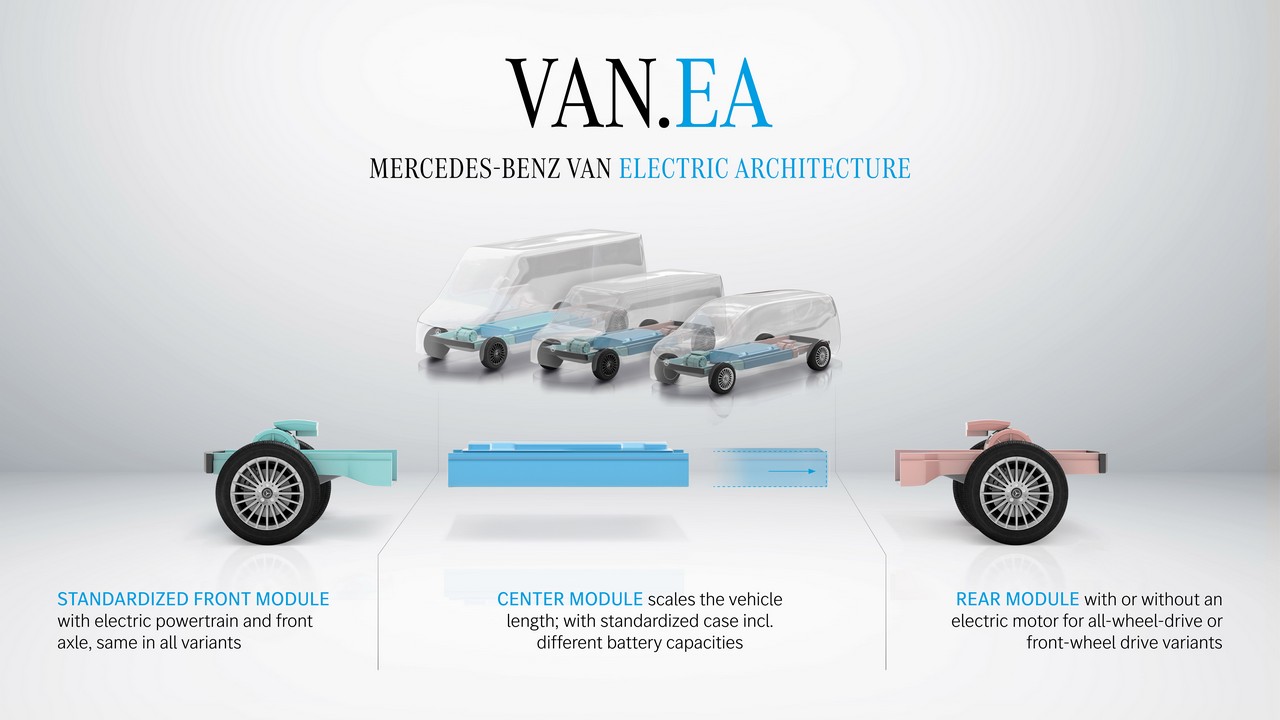
The German brand has developed a new platform for its commercial vehicles, which will only accept electric motors and which will be ready in 2026.
Mercedes has announced that its strategy to convert its entire fleet to electric vehicles will be delayed by one year, but it is ready to take the step. All its cars and commercial vehicles will become electric. And in the case of its van vehicles, the German brand is considering using a new platform, dedicated to electric vehicles.
It is called VAN.EA, and it is prepared to use the company’s electric drive system. The move towards full electrification has already taken place, as the Mercedes Class E will be the last car designed on a platform intended for combustion engines. From now on, models with this type of engine will have to be adapted to platforms designed for electric mobility.
Four platforms for all its models
The range of Mercedes models will be based on just four platforms. The VAN.EA is the latest to arrive at the brand and will be aimed at commercial vehicles. It will arrive in 2026 and from that date, all models will be built on it. This platform will be able to support different sizes, wheelbases and configurations.
The platform is designed to be the basis of the models of the Class V and even of the largest version of the Mercedes Sprinter. With the VAN.EA, the use of electric drive systems will be optimised and the efficiency of combustion engines will be reduced in favour of the former.
Galería de fotos -
PLATAFORMA VAN.EA
The weight this platform has to bear will increase due to the battery, although the maximum payload of each vehicle will be maintained. The Gross Vehicle Weight Rating of smaller vehicles will be 3,500 kg and of the larger ones, 6,000 kg. In addition, there will be different versions of the platform, so that it can use different batteries and can be used in different types of vehicles.
Light commercial vehicles intended for passenger use will use the VAN.EA-P version. It will offer a range of up to 500 kilometres and level 2 autonomous driving systems. The creation of camper-converted models, of larger size, is also contemplated. Larger models can also be fitted with it.
Mercedes’s plans are aimed at a market share in which 50% of the units sold will be electric. To achieve this, the year 2030 has been set. Vehicles with this platform will be manufactured at different locations in Europe, including the Vitoria plant, the United States and China, so it will be adopted globally.


 Peugeot E-208 GTi: a battery-powered toy that revives the spirit of the 1980s sports cars
 New Lexus ES: luxury grows and goes electric
 First contact with the Dacia Sandero Hybrid 155: power and efficiency from €19,890
Deja un comentario