Mild hybrid cars are arriving: hybrids that aren't really hybrids
 Antonio Roncero @roncero_antonio
24 April 2018
6 min.
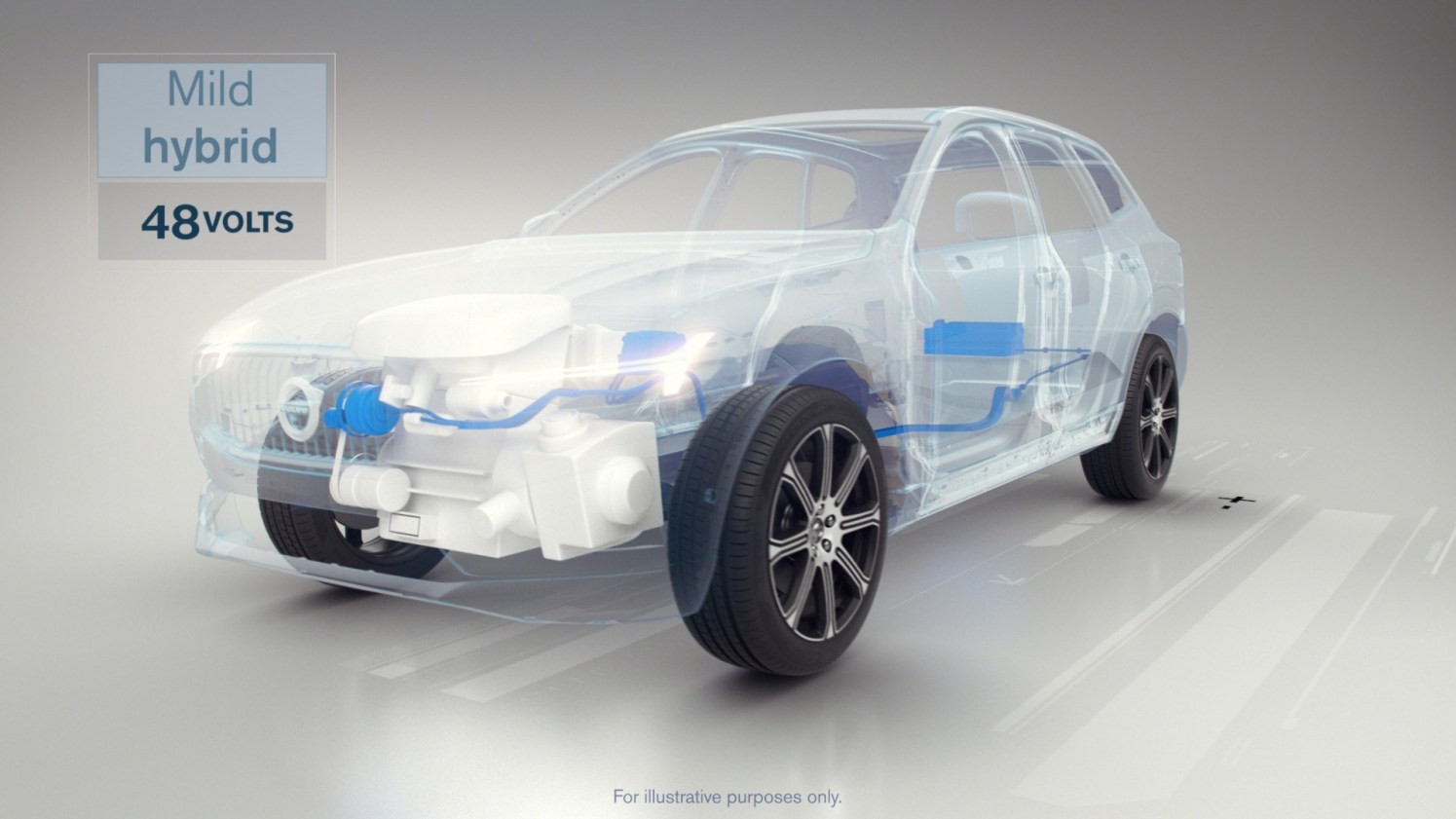
They call it “mild hybrid”, a technology that will become increasingly common to reduce consumption in cars with diesel and petrol engines. But don’t confuse a full hybrid car with one that has a light hybridisation system.
Hybrid cars are all the rage. But just as not everything that glitters is gold, not everyone who boasts about this technology can be called a hybrid. Well, actually, it can be, depending on what you understand by hybrid.
For example, Seat calls its cars that run on natural gas hybrids, and Fiat does the same with its LPG range. They can run on petrol or gas, but although they use two separate tanks for each fuel, they have only a single engine. In this case, the “hybrid” label is more a matter of commercial reasons, to make clear that they can benefit from the same advantages as hybrid cars by carrying the DGT environmental label. But they are not hybrids.
Now comes the arrival of “mild-hybrid” technology (also known as “light hybrids” or “semi-hybrids”), which cannot be considered full hybrids either. But pay attention, because your next car may well have this system.
Full hybrid vs light hybrid or mild-hybrid
For a car to be considered a 100% hybrid, it is not enough for it to have an electric motor – or several – in addition to the combustion engine. It is necessary for the electric motor to be capable of propelling the vehicle on its own using electrical energy stored in a high-voltage battery, even if only for a very short period of time.
When that battery is recharged solely through the vehicle’s energy recovery system during deceleration or braking phases – in which the electric motor acts as a generator – we speak of conventional hybrids, known as HEVs. This is the configuration, for example, of the well-known Toyota hybrids, such as the Yaris Hybrid, the Auris Hybrid or the RAV4 Hybrid.
If the battery can also be recharged by a charger connected to the mains, we are dealing with a plug-in hybrid (PHEV). In these, the electric motor is more powerful and the electrical system more complex, but they can run in fully electric mode for longer periods, typically around 50 km. An example here would be the Mitsubishi Outlander PHEV, the best-selling plug-in hybrid car on the Spanish market.
So, what is a light hybrid? These are hybrid cars in which the starter motor can perform the function of a small electric motor, working as a generator to recover energy during braking or deceleration, but it can never propel the vehicle on its own. In a light hybrid or “mild-hybrid”, the energy recovered by this starter/generator is used for the vehicle’s auxiliary systems that run on electricity, such as the air conditioning, electric windows, sound system or lights, for example. This relieves the conventional electrical system, with its battery and an alternator driven by the combustion engine, of this work, thereby reducing fuel consumption. The image above shows the layout of the components of the 48-volt light hybrid system fitted to the Scénic.
48-volt hybridisation technology
Light hybrids can be based on the car’s traditional 12-volt electrical system, or use the increasingly popular 48-volt systems, which are more efficient and offer many more possibilities. All manufacturers will move towards this latter technology, and it is not far-fetched to think that in the short or medium term, practically all cars that are not hybrids or electric will be “mild-hybrids”, with either 12- or 48-volt systems.
The reason is easy to understand: in terms of homologated consumption, a light hybrid can achieve between 50 and 60 per cent of the advantage offered by a full hybrid, but at a much lower cost.
Audi, for example, has bet heavily on mild-hybrid technology, and all the engines at the launch of the new Audi A8, as well as the new Audi A6 and Audi A7 Sportback, include it as standard. For 4-cylinder engines it uses a 12-volt electrical system, and for six or more cylinders, 48-volt technology. In the case of Audi, the alternator that doubles as a starter motor is called the BAS, and it is connected to the engine by a belt. To give you an idea, its power is 12 kW, compared with the 60 kW of the electric motor in a full hybrid car such as the Toyota Auris.
Here, the electric motor can assist the combustion engine, for example to give an extra boost of power when setting off, or when accelerating hard. But it will never move the vehicle on its own. In its most complete version, with 48-volt technology, its main advantage is that it allows the car to coast with the engine completely switched off at speeds between 55 and 160 km/h for periods of up to 60 seconds.
The electrical supply to all the vehicle’s systems is ensured by the “mild-hybrid” system even with the engine disconnected, and the alternator/starter motor is responsible for restarting the engine quickly when necessary, something it also handles when the start-stop system is operating in town traffic. The car retains a conventional starter motor with a pinion gear, which is used in a limited number of situations, such as when the engine oil is cold and a higher starting torque is required. You can see how everything works in the following video.
https://www.youtube.com/watch?v=3GTdeh8Ekv8&feature=youtu.be
48-volt systems will become established over 12-volt ones for two reasons. Firstly, because they allow longer coasting phases, which means an additional fuel saving. Secondly, because they offer greater output power, which is necessary in cars with ever more electrical systems on board, such as adaptive suspension, active anti-roll bars driven by electric motors, electric compressors, and so on.


 Peugeot E-208 GTi: a battery-powered toy that revives the spirit of the 1980s sports cars
 New Lexus ES: luxury grows and goes electric
 First contact with the Dacia Sandero Hybrid 155: power and efficiency from €19,890
Comentarios cerrados