Peugeot Coupés Sports Cars Photos Tests
Peugeot RCZ 1.6 THP 156 CV, test drive (part II)
 Diego G. Moreira
7 November 2010
4 min.
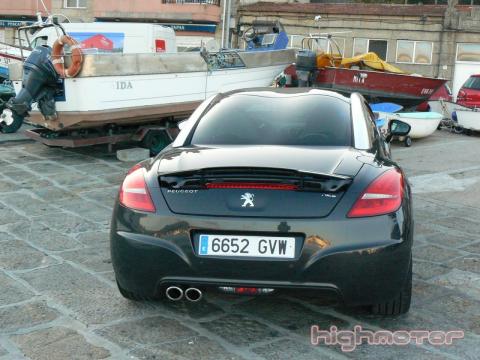
We continue with the test drive of our particular feline, the Peugeot RCZ. Our unit came with the 1.6 THP 156 CV engine, an engine developed in collaboration with BMW, a powerplant that has impressed us with its responsiveness and performance, just as you can see in the first part of the test.
But beyond its behaviour, the RCZ also stands out for other features, and design is certainly one of them. After driving it for a week we can say that you end up getting used to people turning around to look at it, and in many cases making the typical comparison “It looks like the TT”. For now, we are focusing on the RCZ, but we will try to compare both models later on.
Exterior design
Outside, the RCZ stands out for its coupé design with its aluminium arches and a front in the style of the lion brand. But looking more closely, we notice the design of the rear wheel arches that protrude from the overall shape. One of the design’s curiosities is the image you see in the rear-view mirrors: when you sit behind the wheel and look at the mirrors, you can see the figure of the RCZ and its wide rear wheel arches.
At the front, the typical features of the Peugeot stand out, including its bi-xenon adaptive headlights, which offered good night-time visibility. At the rear, the RCZ’s sporty look is accentuated by the two exhaust pipes and the electric spoiler, which can be raised or lowered at will from a button inside.
Finally, we must highlight the size of its 19″ wheels, which round off the whole car, and with 235/40 R19 tyres that showed excellent grip at all times.
Interior design, comfort and boot
As for the interior, the first thing that stands out is the driving position and a dashboard identical to that of the Peugeot 308, with only subtle changes; in our case, it was trimmed in leather, as our test RCZ had the full leather pack. A touch of elegance and distinction is the clock that presides over the centre console in the place of the air vent typical of the 308.
The materials are correct and of good quality, and in our case, with the full leather, there was very little visible plastic on the dashboard. The driving position is quite low and sporty; everything is within reach and the seats offer good body support, including good lateral support.
Finally, the rear seats, where the RCZ is in practice a two-seater, since the rear seats are only suitable for an emergency or for small children, as otherwise you don’t fit and your head hits the glass while sitting in an uncomfortable position. But the RCZ was not designed to offer outstanding space in the back, so it should be thought of as a two-seater that, if necessary, can carry two more people. Access to the rear seats is also quite difficult.
As for storage spaces, the RCZ came fairly well equipped: it had compartments in the centre console for keeping your things, a cup holder in the central tunnel and quite spacious door pockets. But what surprised us most was the boot.
The first test for the RCZ’s boot was loading the luggage of two people for a week that we had previously brought in the Subaru Outback LPG, and on the return trip to Vigo we had to fit everything into the RCZ. Surprisingly, we managed to store everything without major problems, thanks to the 384-litre boot, a considerable size for a coupé. It also has fairly regular shapes, so the space can be used quite efficiently.
After looking at the interior and exterior of the Peugeot RCZ in the third part of the test, we will look at the equipment of this feline, as well as its prices and our overall assessment.
Photos | David Taboada


 Peugeot E-208 GTi: a battery-powered toy that revives the spirit of the 1980s sports cars
 New Lexus ES: luxury grows and goes electric
 First contact with the Dacia Sandero Hybrid 155: power and efficiency from €19,890
Deja un comentario