Coches hidrógeno ECO Furgonetas
Plug-in electric vans with hydrogen fuel cell: Stellantis' bet
 Antonio Roncero @roncero_antonio
5 April 2021
3 min.
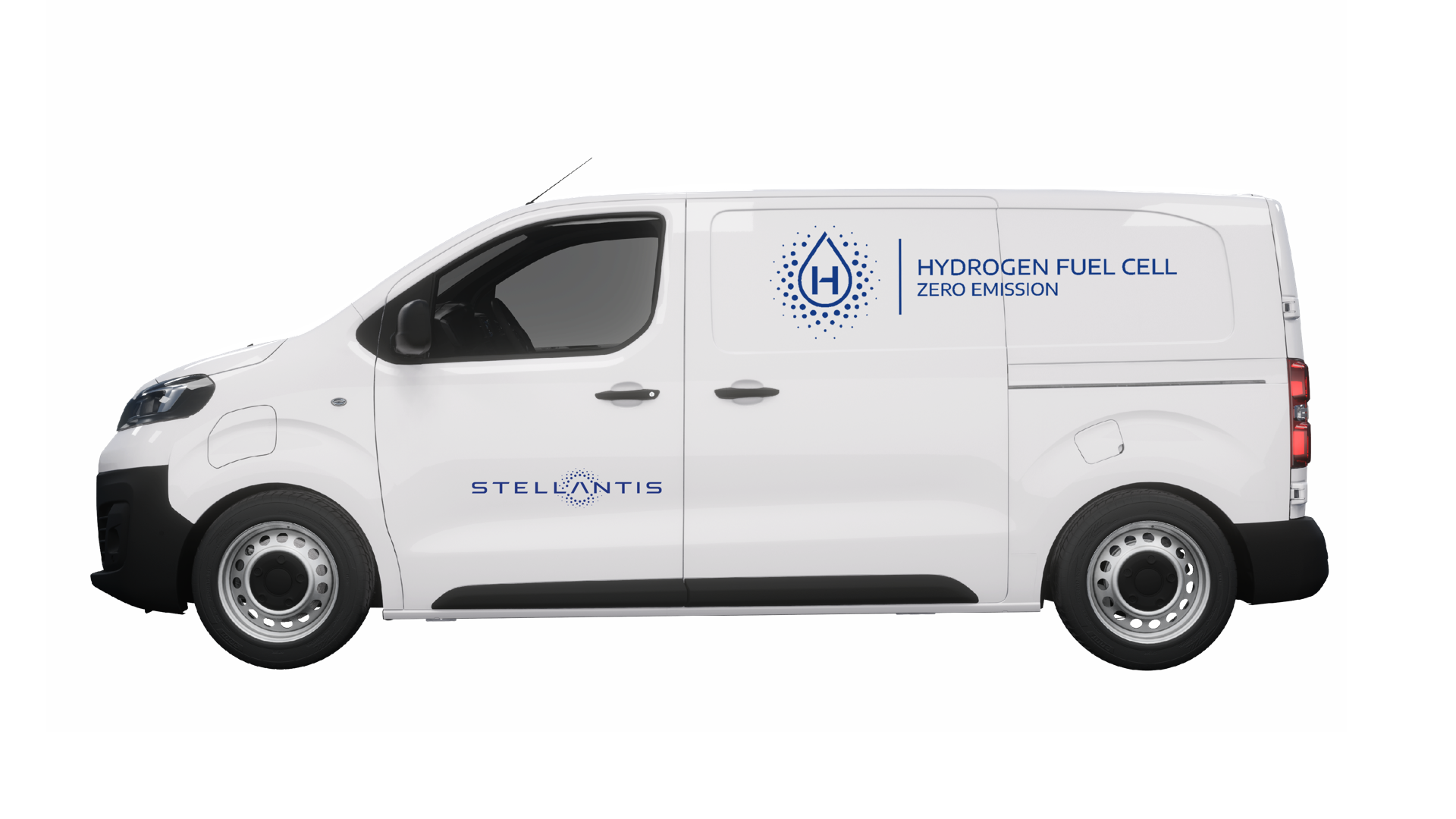
The new generation of Stellantis vans will use an electric propulsion system with a plug-in battery and a hydrogen fuel cell
At the Stellantis Group they are perfectly clear: depending on the type of use, not all light commercial vehicle (LCV) customers will be able to opt for electric propulsion. For Stellantis, commercial vehicle users need, above all, three things:
- Zero-emission vehicles, since the vast majority operate in urban and suburban areas, and capable of offering a long range.
- Short refuelling or recharging times, since their activity does not allow long periods standing still for a recharge.
- Maintaining the operability provided by a large load capacity
Stellantis’ solution, based on the hydrogen fuel cell, meets these three requirements, with the following features:
- Commercial vehicles with the same load capacity as the combustion versions
- Fast refuelling: around 3 minutes
- Ranges of more than 400 km WLTP.
Let us see how they achieve this, based on vans such as the Citroën Jumpy, the Peugeot Expert or the Opel Vivaro.
How Stellantis hydrogen vans work
Stellantis has developed an architecture that differs from the fuel cell systems used so far, called “Full-Power”, which use a large, powerful hydrogen fuel cell and a small battery that is recharged while driving. The hydrogen fuel cell generates electricity on board to power the electric motor that drives the vehicle. This is how, for example, the Hyundai Nexo or the Toyota Mirai work.
The other, less widespread possibility is the “Range-extender”, electric vehicles with a large-capacity battery, in which a small fuel cell acts as a range extender, supplying energy to the battery. In this case, the fuel cell system does not have enough power to supply the electric motor and drive the vehicle.
Stellantis’ option is a “Mid-Power” system, midway between the two previous ones. Here a medium-power fuel cell is used together with a battery like those in the group’s plug-in hybrid SUVs, such as the Citroën C5 Aircross PHEV, the Peugeot 3008 PHEV or the Opel Grandland X PHEV.
Its developers point to several advantages. For example, the system is more compact and can be integrated under the bonnet of a conventional van in place of the combustion engine. The hydrogen tanks go under the floor, where the battery would normally be located in an electric vehicle.
Furthermore, with this solution the system is always able to provide the necessary power: if needed, the battery located under the front seats supplies the electric motor that drives the wheels with the additional energy required to complement what the fuel cell generates.
Finally, the battery, which can be recharged by connecting to the mains electricity supply, has enough capacity to offer around about 50 km of range in electric mode, as in a plug-in hybrid vehicle.
Key partners: Faurecia and Symbio
For the development of the key components of the system, Stellantis has two top-tier partners: Faurecia and Symbio. Faurecia will supply the tanks, capable of storing up to 120 litres of hydrogen at 700 bar pressure. Symbio, for its part, will be responsible for manufacturing the compact fuel cell system at its facilities in Lyon, France.
The assembly of commercial vehicles with this technology will take place from the end of 2021 at Stellantis’ German facilities in Rüsselsheim, where it also has its Hydrogen Competence Centre.


 Peugeot E-208 GTi: a battery-powered toy that revives the spirit of the 1980s sports cars
 New Lexus ES: luxury grows and goes electric
 First contact with the Dacia Sandero Hybrid 155: power and efficiency from €19,890
Deja un comentario