Dacia Hyundai i20 MG MG3 Sandero Suzuki Swift Toyota Yaris Hybrid Cars
Ranking 2026: the 5 city cars with ECO label that are most efficient in urban driving under 20,000 euros
 Iván Navarro
22 November 2026
6 min.
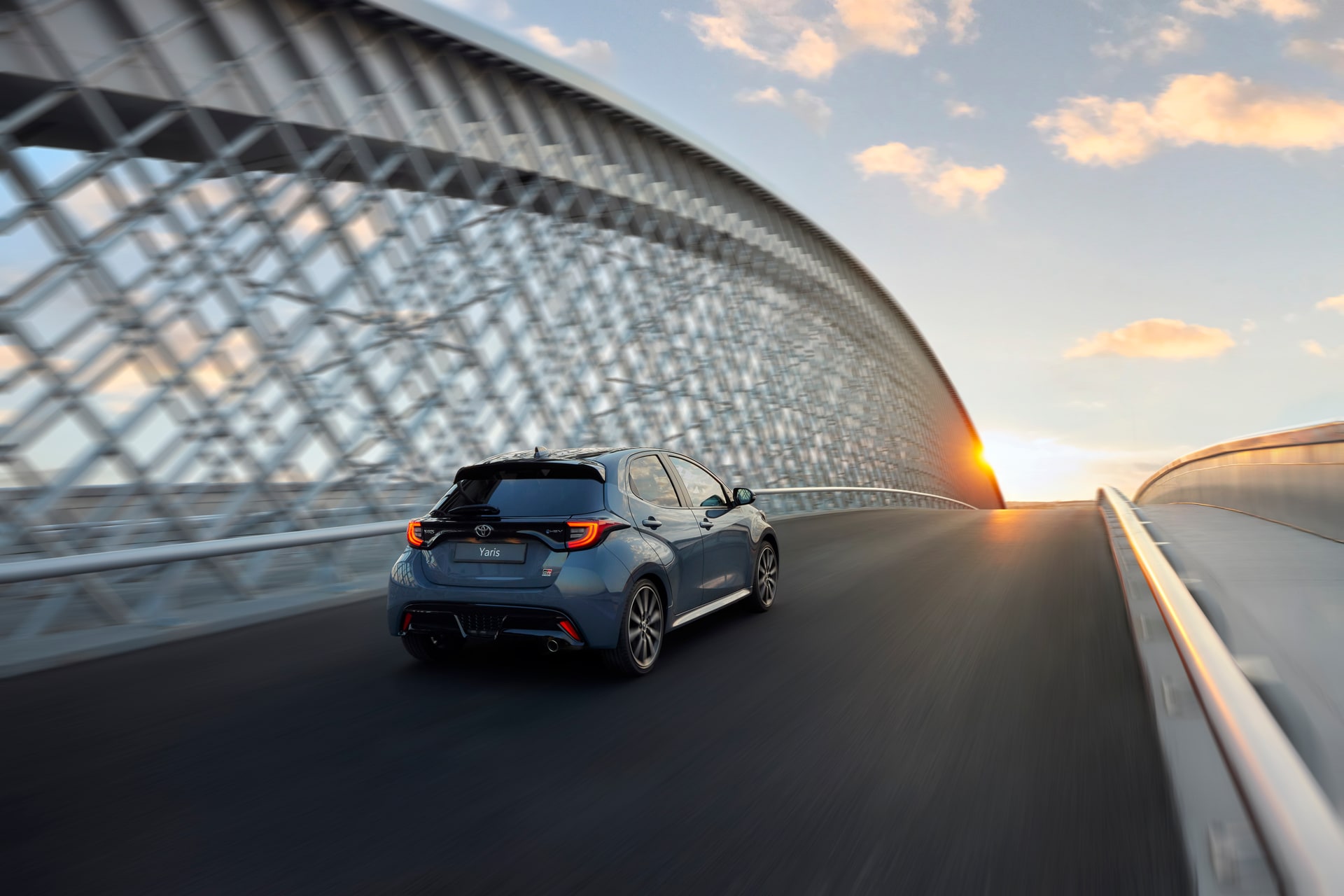
We analyse the most efficient ECO-labelled city cars in town for less than 20,000 euros, with real WLTP consumption figures and final prices after brand discounts. Toyota, MG, Dacia, Suzuki and Hyundai lead this Highmotor 2026 ranking.
Buying a cheap city car with an ECO label in 2026 is no longer an act of faith. It is, above all, an arithmetic decision: how much the car uses in town, what access it has to low-emission zones, and how much of the final price remains once brand discounts are applied. In this ranking we have cross-referenced those three factors for five efficient ECO-labelled city cars currently sold in Spain.
What the ECO label really means in town
The DGT ECO label is not granted to just any efficient engine. It is awarded to non-plug-in hybrids, plug-in hybrids with an electric range of less than 40 km, and vehicles powered by LPG or CNG. Conventional diesel is excluded, however frugal it may be. That distinction matters because in the Low Emission Zones of Madrid, Barcelona or Seville, the ECO label allows driving and parking with advantages over the C label, even during high-pollution episodes.
In urban driving, moreover, the difference is most noticeable. Hybrids recover energy at every traffic-light stop and make use of the electric motor over the first metres, the stretch where a pure combustion engine uses the most fuel. That is why urban WLTP consumption, not just the combined figure, is a key data point for separating the candidates in this ranking.
Highmotor ranking criteria
We have assessed four variables with equal weight: WLTP consumption, final price with brand discounts already applied (not the list price), propulsion technology, and effective access to ZBE zones. We analysed the most affordable options on the Spanish market that keep prices contained around the 20,000-euro barrier.
Top 5 most efficient ECO city cars around 20,000 euros
1. Toyota Yaris Hybrid — from 21,000 €
The Yaris Hybrid remains the benchmark of the segment. Its fifth-generation full hybrid system (115H) delivers 116 CV combined and maintains an urban consumption of just 3.8 l/100 km (3.9 l/100 km combined), a figure few rivals match without resorting to pure electric drive. With current brand discounts, the entry version comes close to the 21,000-euro barrier.
| Power (kW) | Power (CV) | Consumption | Label | Fuel |
|---|---|---|---|---|
| 85 kW | 116 CV | 3.8 l/100 km (urban) | ECO | Hybrid |
2. MG3 Hybrid+ — from 17,490 €
It is the most surprising of the group. MG has fitted a hybrid system with 194 CV combined (195 CV according to the peak power spec sheet), a figure that in this segment sounds almost like mischief, and sells it for less than 18,000 euros. Its homologated consumption is 3.9 l/100 km in urban driving (4.4 l/100 km combined), and the standard equipment more than makes up for its performance layout.
| Power (kW) | Power (CV) | Consumption | Label | Fuel |
|---|---|---|---|---|
| 143 kW | 194 CV | 3.9 l/100 km (urban) | ECO | Hybrid |
3. Dacia Sandero ECO-G — from 14,650 €
The cheapest of the five and, for those who cover the city with a tight odometer, one of the most sensible. Its bi-fuel petrol/LPG engine is not a hybrid, but it meets the ECO label thanks to liquefied petroleum gas, and the saving at the pump is notable compared with any conventional petrol. Admittedly, in terms of consumption (6.5 l/100 km combined and 7.8 l/100 km urban on LPG) it cannot compete with the hybrid systems on this list.
| Power (kW) | Power (CV) | Consumption | Label | Fuel |
|---|---|---|---|---|
| 74 kW | 100 CV | 7.8 l/100 km (LPG, urban) | ECO | Petrol/LPG |
4. Suzuki Swift Hybrid — from 18,500 €
Suzuki has spent years refining its 12V mild hybrid until it became more than a commercial badge. The Swift weighs little, just 919 kg kerb weight in the entry version, and its 82 CV three-cylinder achieves an urban consumption of around 4.7 l/100 km (4.4 l/100 km combined). It is not a full hybrid, but it still earns the ECO label.
| Power (kW) | Power (CV) | Consumption | Label | Fuel |
|---|---|---|---|---|
| 60 kW | 82 CV | 4.7 l/100 km (urban) | ECO | Hybrid (mild) |
5. Hyundai i20 1.0 T-GDI (ECO range withdrawn; current version C label) — from 18,950 €
The i20 with the 100 CV 1.0 T-GDI closes the list as an efficient combustion alternative, although an important change in its range should be clarified: following the latest regulatory updates in Spain, Hyundai dropped the 48V mild hybrid system on this engine, so it currently carries a C label instead of ECO. It maintains an urban consumption of around 6.1 l/100 km (5.1 l/100 km combined), an interior finish one notch above the rest of the group, and a price below 20,000 euros.
| Power (kW) | Power (CV) | Consumption | Label | Fuel |
|---|---|---|---|---|
| 74 kW | 100 CV | 6.1 l/100 km (urban) | C | Petrol |
Ranking comparison table
| Model | Price from | Urban consumption | Label | Highmotor score |
|---|---|---|---|---|
| Toyota Yaris Hybrid | 21,000 € | 3.8 l/100 km | ECO | 9.2 |
| MG3 Hybrid+ | 17,490 € | 3.9 l/100 km | ECO | 8.8 |
| Dacia Sandero ECO-G | 14,650 € | 7.8 l/100 km (LPG) | ECO | 8.0 |
| Suzuki Swift Hybrid | 18,500 € | 4.7 l/100 km | ECO | 8.3 |
| Hyundai i20 1.0 T-GDI | 18,950 € | 6.1 l/100 km | C | 7.9 |
Public aid and the ECO label
It is worth being clear that state purchase aid in Spain (such as the electrified vehicle incentive plans) is aimed at 100% electric vehicles (CERO label) and plug-in hybrids, leaving out conventional hybrids, mild hybrids and LPG vehicles with an ECO label. For these models, the real saving comes exclusively from direct brand discounts, financing campaigns and municipal rebates on the vehicle circulation tax (IVTM) or regulated parking (SER).
The Highmotor verdict
If the criterion is pure consumption in town, the Toyota Yaris Hybrid wins hands down. If what you are looking for is power and equipment at the lowest possible price, the MG3 Hybrid+ offers an equation that is hard to refute. And if the budget outweighs everything else, the Dacia Sandero ECO-G remains the cheapest entry point to the ECO label on the Spanish market. Anyone torn between size and daily running costs can also check our guide on how to choose a city car in 2026, where we compare the compact against the urban SUV on real-world consumption.
Frequently asked questions
Which is the most efficient ECO city car in this ranking in 2026?
The Toyota Yaris Hybrid, with an urban WLTP consumption of 3.8 l/100 km, is the most efficient in this ranking, although its entry price already slightly exceeds the 20,000-euro barrier even with discounts.
Which ECO-labelled city car is the cheapest on the Spanish market?
The Dacia Sandero ECO-G, with its bi-fuel petrol/LPG engine, starts from 14,650 euros and is the most affordable option with an ECO label in this segment.
Do mild hybrids have the same ECO label as full hybrids?
Yes. The DGT grants the ECO label to both full hybrids and mild hybrids with a 48V or 12V system, as well as to LPG and CNG vehicles, provided they meet the current homologation requirements.
Does the ECO label guarantee unrestricted access to any ZBE?
In most cases yes, but the specific conditions depend on each town council. It is advisable to check the local regulations of the relevant Low Emission Zone before taking access for granted during high-pollution episodes.
Technical specifications of the cars in this article


 Kia offers an electric range of 10 models, 50 versions and 400 possible combinations
 The seven finalists for the 2027 European Car of the Year (COTY) are exclusively electric
 Peugeot E-208 GTi: a battery-powered toy that revives the spirit of the 1980s sports cars
Deja un comentario