Alto Arona Bayon C3 C3 Aircross Citroen Dacia Ford Hyundai Juke KIA Nissan Puma Sandero SEAT Stonic Suzuki Toyota Vitara Yaris Yaris Cross Comparisons Rankings Safety SUV
How to Choose an Urban SUV-B for Under €25,000 in 2026: Consumption, Equipment and Residual Value
 Iván Navarro
21 November 2026
7 min.
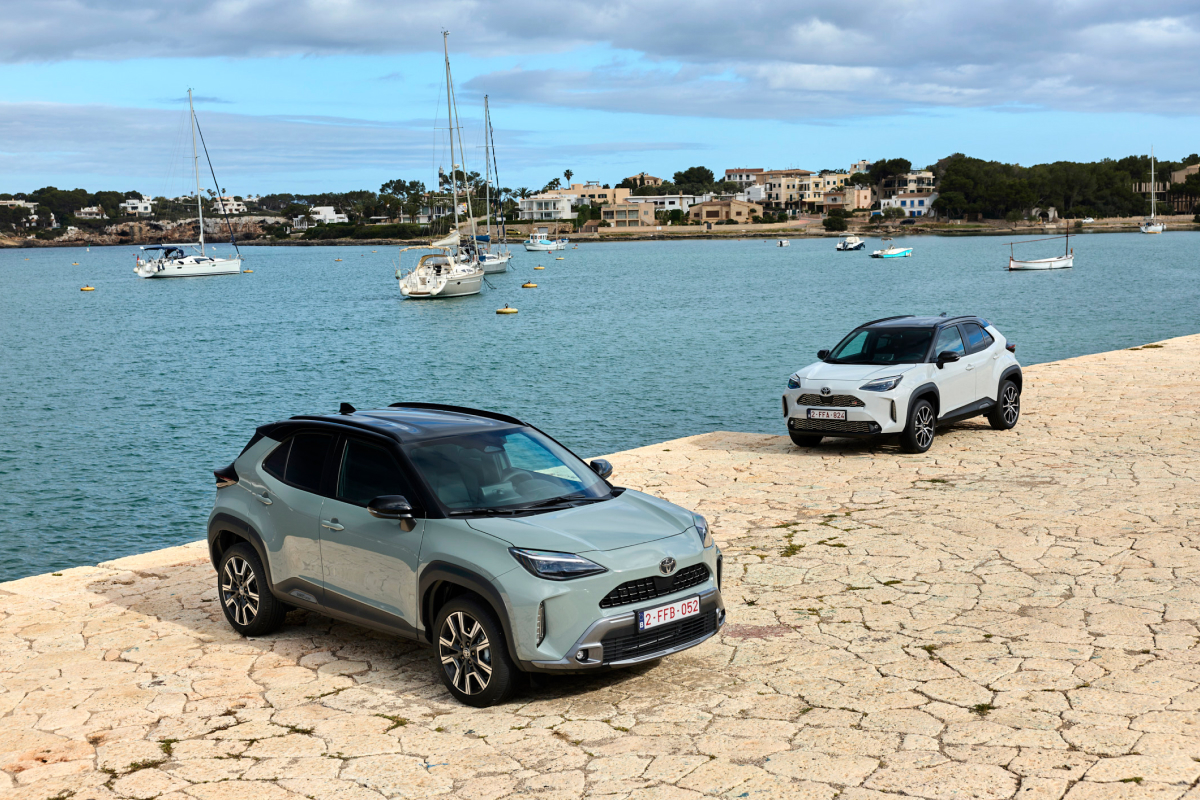
We compare seven urban SUV-Bs on sale in Spain for under €25,000, weighing real-world consumption, GSR2 safety equipment and three-year residual value. Includes an argued ranking and a recommendation based on usage profile.
Twenty-five thousand euros no longer buys much of a car. Even so, the urban SUV-B segment still offers interesting proposals, provided you know what to look at and what to ignore in the sales brochure. The usual trap is focusing only on the entry price and forgetting three things that determine the real cost of owning the car for three years: how much it really consumes, what comes as standard due to regulatory requirements, and how much it is worth when you want to sell it.
What an urban SUV-B is and why it is still thriving in Spain in 2026
The SUV-B measures between 4 and 4.3 metres, handles well in town and offers a raised driving position that Spanish buyers value, even though they rarely take it onto a dirt track. It is the segment that has grown the most over the last decade and accounts for a good share of registrations below €25,000. The question is no longer whether to buy a small SUV, but which one, because the range has multiplied and the differences between models are finer than they appear at first glance.
Real-world consumption: the variable that weighs most on total cost
This is where marketing separates from the monthly bill. A petrol naturally aspirated SUV-B may advertise 5.5 l/100 km on the WLTP combined cycle and deliver 6.5 in dense urban traffic; a hybrid tends to come much closer to the official figure, precisely because its system is designed for stop-and-go driving. With 15,000 km a year and petrol at €1.65 per litre, that half-litre difference per 100 km translates into more than €120 a year. Little, some will say. Multiplied over the three or four years a car is usually kept, it stops being little.
Mandatory GSR2 equipment: what must come as standard
Since July 2024 all new models approved and sold in the European Union must comply with the General Safety Regulation known as GSR2, so in 2026 there are no excuses left: intelligent speed limiter (ISA), autonomous emergency braking with pedestrian and cyclist detection, drowsiness warning and lane-keeping assist are standard on any new SUV-B, whatever the trim level. The real difference between brands no longer lies in whether they fit them, but in whether the ISA calibration intrudes more or less when driving, something you only notice behind the wheel and that no spec sheet records.
Three-year residual value: the figure nobody checks and everybody should
A cheap entry-level car can turn out expensive on the way out if it depreciates quickly. Japanese hybrids, led by Toyota, typically retain around 50-52% of their value after three years and 60,000 km, while some low-cost proposals fall below 40%. That gap of ten or twelve points on a €20,000 car amounts to between €2,000 and €2,400 that the buyer loses without noticing if they only look at the list price.
The contenders: seven SUV-Bs under €25,000
KIA Stonic, from €18,450
The KIA Stonic has long been the benchmark for balance in this segment, something we already analysed when comparing it with the Nissan Juke on everyday running costs. Its strength is not any extreme, but that it fails at nothing.
| Power | Consumption | Label | Fuel |
|---|---|---|---|
| 100 CV (74 kW) | 5.5 l/100 km | C | Petrol |
Hyundai Bayon, from €19,900
The Bayon makes good use of interior space for its size, and its range includes the 48V mild-hybrid 1.0 T-GDi petrol engine, which helps real-world urban consumption, a terrain where we have already measured it against the Ford Puma hybrid.
| Power | Consumption | Label | Fuel |
|---|---|---|---|
| 100 CV (74 kW) | 5.2 l/100 km | ECO | Petrol MHEV |
Dacia Sandero Stepway, from €15,320
It is the cheapest on the list, and by some distance. It is not the most sophisticated SUV in the group, but its value proposition remains hard to match for anyone who prioritises the entry price over every other variable.
| Power | Consumption | Label | Fuel |
|---|---|---|---|
| 90 CV (67 kW) | 5.5 l/100 km | C | Petrol |
Toyota Yaris Cross, from €24,400
The most expensive at entry level and, at the same time, the one that performs best on real-world consumption and residual value. It brushes the €25,000 limit in its base trim, but makes up for it with an efficiency no pure petrol rival reaches in town.
| Power | Consumption | Label | Fuel |
|---|---|---|---|
| 116 CV (85 kW) | 4.5 l/100 km | ECO | Hybrid |
SEAT Arona, from €20,900
Built on the MQB A0 platform of the Volkswagen Group, it offers a somewhat firmer driving character than average, inherited from the brand’s DNA, along with good connectivity equipment for the price.
| Power | Consumption | Label | Fuel |
|---|---|---|---|
| 115 CV (85 kW) | 5.3 l/100 km | C | Petrol |
Citroën C3 Aircross, from €18,990
It prioritises comfort over dynamics, with specific suspensions that absorb urban potholes well. It is the most comfortable in the comparison, though not the most frugal on consumption.
| Power | Consumption | Label | Fuel |
|---|---|---|---|
| 100 CV (74 kW) | 5.9 l/100 km | C | Petrol |
Suzuki Vitara, from €24,000
Its 48V mild-hybrid system with optional all-wheel drive makes it different from the rest: it is the only one on the list also designed for those who leave the tarmac from time to time.
| Power | Consumption | Label | Fuel |
|---|---|---|---|
| 129 CV (95 kW) | 5.3 l/100 km | ECO | Petrol MHEV |
Summary table: comparison and score
| Model | Price from | Consumption | Residual 3 years | Score (1-10) |
|---|---|---|---|---|
| Toyota Yaris Cross | €24,400 | 4.5 l/100 km | ~52% | 8.8 |
| KIA Stonic | €18,450 | 5.5 l/100 km | ~45% | 8.3 |
| Hyundai Bayon | €19,900 | 5.2 l/100 km | ~44% | 8.1 |
| Suzuki Vitara | €24,000 | 5.3 l/100 km | ~42% | 7.6 |
| SEAT Arona | €20,900 | 5.3 l/100 km | ~43% | 7.5 |
| Citroën C3 Aircross | €18,990 | 5.9 l/100 km | ~40% | 7.2 |
| Dacia Sandero Stepway | €15,320 | 5.5 l/100 km | ~38% | 7.0 |
Argued ranking: the best urban SUV-B under €25,000 in 2026
If we could only keep one, it would be the Toyota Yaris Cross: it consumes less than any rival on the list and depreciates less than all of them, a combination that over three years outweighs its higher entry price. That said, its base trim is short on equipment compared with the rest, and moving up a grade pushes the price clearly above €25,000.
For those who do not want a hybrid or seek the best overall balance, the KIA Stonic remains the safest bet: it neither shines nor fails in any area, and in a daily-use car that counts for more than it seems.
Recommendation by user profile
Those who make short trips and many cold starts should look first at the Yaris Cross or, with caveats, the Vitara: their electrification shows up precisely in that scenario. If budget outweighs every other consideration, the Sandero Stepway remains unbeatable on entry price, though you must give up some residual value when it comes to resale. And if you want the middle ground without surprises, the Stonic and Bayon cover that gap with very little difference between them. It is also worth checking whether the chosen model qualifies for the current Plan Auto+, whose amount should be confirmed on the official website before closing the purchase.
Frequently asked questions
Which is the cheapest urban SUV-B on sale in Spain in 2026?
The Dacia Sandero Stepway, from €15,320, is the most affordable entry in the segment with a mainstream brand warranty.
Is it worth paying more for a hybrid in an urban SUV-B?
If use is mostly urban and you exceed 12,000-15,000 km a year, yes: the consumption savings and better residual value usually offset the initial price difference within two or three years.
What does GSR2 mean and does it affect all new SUV-Bs?
It is the European safety regulation in force since July 2024 that requires intelligent speed limiter, emergency braking and drowsiness warning as standard on all new cars, with no exceptions by brand or trim level.
Which urban SUV-B holds its value best over three years?
The Toyota Yaris Cross, with an estimated residual value of around 50-52%, is the one that best retains value within this comparison, ahead of the Korean proposals.
Technical specifications of the cars in this article

 Kia offers an electric range of 10 models, 50 versions and 400 possible combinations
 The seven finalists for the 2027 European Car of the Year (COTY) are exclusively electric
 Peugeot E-208 GTi: a battery-powered toy that revives the spirit of the 1980s sports cars
Deja un comentario