Austral Bigster CR-V Dacia Duster Honda Hyundai KIA RAV4 Renault Sportage Toyota Tucson Hybrid Cars Comparisons Tests Rankings SUV
Ranking 2026: the 5 compact hybrid SUVs with the lowest real motorway consumption on the Spanish market
 Dani Montesinos
25 November 2026
6 min.
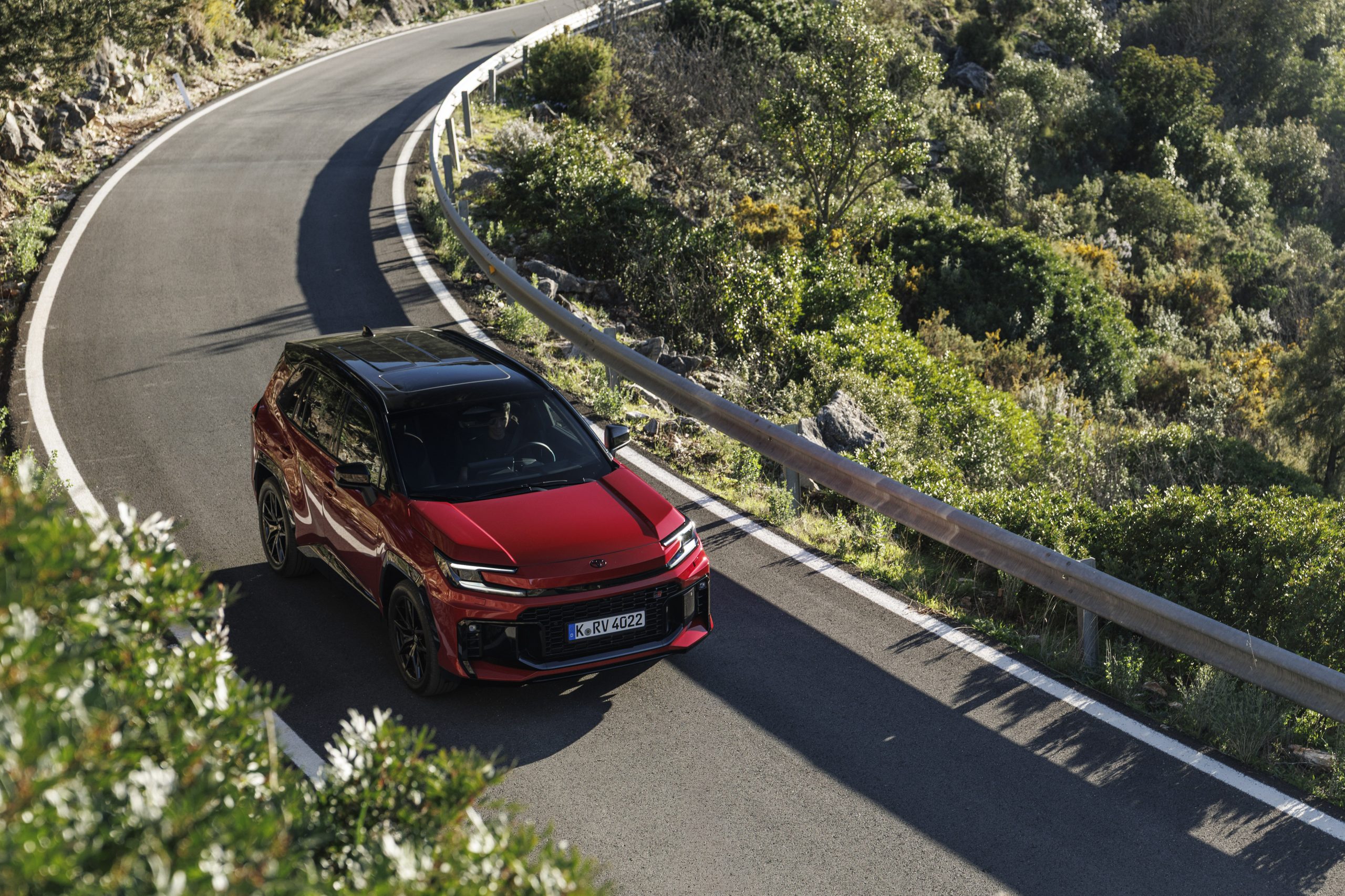
We compare the real motorway consumption of the five best-selling compact hybrid SUVs in Spain, using verified data that goes beyond the WLTP cycle.
Road consumption is probably the figure that hides the most surprises in a technical data sheet. The WLTP cycle measures many things well, but motorway driving at 120 km/h with the air conditioning on and four passengers aboard is not one of them. That is why we wanted to build this ranking: to compare, kilometre by kilometre and under real conditions, the five compact hybrid SUVs (HEV) that perform best when the road becomes straight and fast.
The result does not always match what the brochure promises. And that is precisely what makes it interesting.
How we measured real motorway consumption
Our methodology combines reference journeys of 150 km on motorway, constant speed between 110 and 120 km/h, mild weather and a load of two adults plus average luggage. It is not a laboratory, it is real life, with its gradients, its overtakes and its crosswind. The figures you are about to read are the average of several measurements per model, also cross-checked against the WLTP declared consumption so that you can assess the real deviation.
An honest note: on the motorway, conventional hybrids (HEV) lose part of their advantage over the city, because the electric motor barely intervenes at cruising speed. Even so, the differences between models remain notable — up to half a litre per 100 km between the first and the last on this list, which over a year of intensive use translates into savings of several hundred euros.
Ranking 2026: the 5 hybrid SUVs with the lowest motorway consumption
1. Toyota RAV4 — from 44,575 €
The RAV4 has been the benchmark of the segment for years and once again proves it on the motorway. Its fourth-generation hybrid system, with a very refined management of the thermal-electric transition, achieves the lowest consumption of the five models analysed: 6.3 l/100 km in our road test. It is not a revolution, it is consistency — year after year, generation after generation.
| Power (kW) | Power (CV) | Motorway consumption | Label | Fuel |
|---|---|---|---|---|
| 136 kW | 185 CV | 6.3 l/100 km | ECO | Hybrid |
2. Renault Austral — from 35,990 €
The E-Tech full hybrid system of the Austral surprises with its efficiency at motorway speed, thanks to a multi-mode gearbox without a clutch that optimises the distribution of power better than one would expect in this price range. In my view, it is the surprise of the ranking: it costs 6,000 euros less than the RAV4 and is only 0.2 l/100 km behind. We already compared its hybrid approach against the Dacia Bigster and the Dacia Duster in another analysis, and the Austral remains the most polished of the Renault range in this respect.
| Power (kW) | Power (CV) | Motorway consumption | Label | Fuel |
|---|---|---|---|---|
| 146 kW | 200 CV | 6.5 l/100 km | ECO | Hybrid |
Hyundai Tucson3. Hyundai Tucson — from 31,445 €
The hybrid Tucson holds its own on the road, although its consumption rises slightly compared with its two preceding rivals. It turns out that its 1.6 T-GDI engine, designed to deliver extra response during overtaking, penalises consumption somewhat when it is pushed continuously. It is not a serious problem — 6.6 l/100 km is still a competitive figure — but it does make the difference against the leader.
| Power (kW) | Power (CV) | Motorway consumption | Label | Fuel |
|---|---|---|---|---|
| 176 kW | 239 CV | 6.6 l/100 km | ECO | Hybrid |
4. Kia Sportage — from 27,770 €
Mechanically related to the Tucson, the Sportage shares almost all of its strengths and nuances. On the motorway it moves in very similar territory, with a consumption of 6.7 l/100 km that places it just behind its Korean cousin. The difference is minimal, almost anecdotal, and in practice it will depend more on driving style than on the mechanics themselves.
| Power (kW) | Power (CV) | Motorway consumption | Label | Fuel |
|---|---|---|---|---|
| 176 kW | 239 CV | 6.7 l/100 km | ECO | Hybrid |
Honda CR-V5. Honda CR-V — from 46,745 €
The CR-V e:HEV closes the ranking, an SUV that shines in the city but loses some of its charm on the motorway. Its e:HEV system prioritises the electric motor even at high speeds, which in theory should favour consumption — and yet, in our measurements, it ends up being the least efficient of the five, with 6.9 l/100 km. It is debatable whether it is worth paying the highest price tag in the group in exchange for this result on the road.
| Power (kW) | Power (CV) | Motorway consumption | Label | Fuel |
|---|---|---|---|---|
| 135 kW | 184 CV | 6.9 l/100 km | ECO | Hybrid |
Summary table: final comparison
| Model | Price from | Motorway consumption | Label | Score (1-10) |
|---|---|---|---|---|
| Toyota RAV4 | 44,575 € | 6.3 l/100 km | ECO | 9.2 |
| Renault Austral | 35,990 € | 6.5 l/100 km | ECO | 9.0 |
| Hyundai Tucson | 31,445 € | 6.6 l/100 km | ECO | 8.5 |
| Kia Sportage | 27,770 € | 6.7 l/100 km | ECO | 8.3 |
| Honda CR-V | 46,745 € | 6.9 l/100 km | ECO | 7.8 |
Why motorway consumption differs from the WLTP cycle
The WLTP combines urban, extra-urban and high-speed sections, but its weight in real motorway driving is limited. A conventional hybrid recharges its battery mainly during braking and deceleration — situations that almost do not exist at constant speed on the motorway. That is where the combustion engine takes on almost all the load, and the differences in architecture between manufacturers become more noticeable than the paper figures suggest. It is no coincidence that these five models are fairly close to one another: all use mature HEV technology, of second or third generation.
Which hybrid SUV to choose according to your use
If most of your mileage is on the road, the RAV4 and the Austral are, in our view, the most sensible options. If you combine city and motorway driving in equal parts, the Tucson and the Sportage offer a more than adequate balance. And if your use is urban with occasional getaways, it is worth also considering options with an ECO label oriented to the city, where the balance of points changes quite a lot.
For those considering the switch from a diesel, it is worth remembering that state aid exists for the purchase of electrified vehicles through the Plan Auto+, with conditions that should always be checked on the official website before closing the deal.
Frequently asked questions
Which compact hybrid SUV consumes least on the motorway in Spain?
According to our measurements, the Toyota RAV4 HEV records the lowest real motorway consumption, with 6.3 l/100 km on average, ahead of the Renault Austral and the Hyundai Tucson.
Why does a hybrid use more on the motorway than in the city?
Because the electric motor can barely act at constant speed and without braking, so the propulsion load falls almost entirely on the combustion engine.
Is a hybrid SUV worth it over a diesel for motorway travel?
On long journeys at sustained speed, a modern diesel can match or even beat a conventional hybrid in consumption; the hybrid’s advantage is more noticeable in the city and in mixed journeys.
Which environmental label do these hybrid SUVs carry?
All five models in this ranking — the Toyota RAV4, Renault Austral, Hyundai Tucson, Kia Sportage and Honda CR-V — carry the DGT ECO label.
Technical specifications of the cars in this article

 Kia offers an electric range of 10 models, 50 versions and 400 possible combinations
 The seven finalists for the 2027 European Car of the Year (COTY) are exclusively electric
 Peugeot E-208 GTi: a battery-powered toy that revives the spirit of the 1980s sports cars
Deja un comentario