E-308 Megane Peugeot Renault Electric Cars Compact Comparisons
Renault Megane E-Tech vs. Peugeot e-308: which electric compact offers better tech equipment and safety in 2026
 Iván Navarro
18 November 2026
6 min.
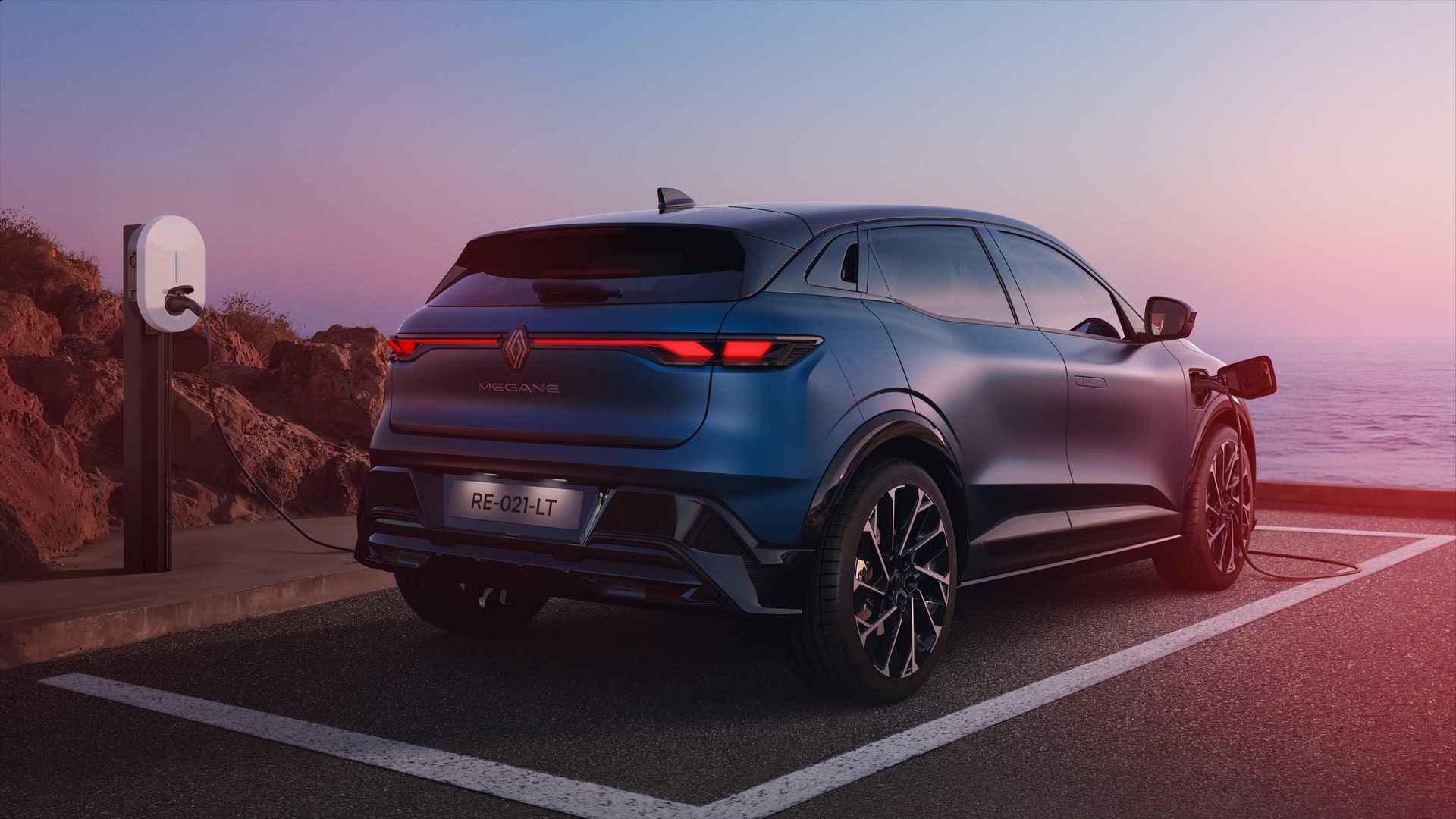
We compare the Renault Megane E-Tech and the Peugeot e-308 in tech equipment, ADAS and passive safety. Two electric compact proposals with very different approaches to screens, ergonomics and real-world range.
The Spanish electric compact is no longer judged only on range or price. In 2026 the battle is fought on the screen, in the software and in how many sensors are fitted before the car even starts. Renault and Peugeot know this, which is why the Megane E-Tech and the e-308 have become two almost opposite philosophies for understanding the same segment.
One bets on Google built in as standard and a vertical screen that recalls a large phone. The other sticks with its i-Cockpit, with a small steering wheel and the instrument cluster raised above it, a formula Peugeot has defended for more than a decade. Which one better handles the day-to-day of someone who charges at home and makes mixed journeys? Let’s break it down.
Renault Megane E-Tech, from €40,700: equipment and technology
The Megane E-Tech comes in the Autonomía Confort 220 version with a 60 kWh usable battery, Techno trim and automatic gearbox, with an indicative price from €40,700 RRP. It is the variant that Renault promotes as the balance between range and price within its compact electric range.
Its main asset is the OpenR Link system, with Google built in as standard: maps, voice assistant and Play Store without relying on the phone. The large vertical central screen dominates the dashboard and, for anyone coming from a combustion car with small screens, the change is noticeable as soon as you sit down.
| Model | Fuel | Power (kW) | Power (CV) | Top speed | Range | Battery | DGT label |
|---|---|---|---|---|---|---|---|
| Renault Megane E-Tech | Electric | 160 kW | 218 CV | 160 km/h | ≈454 km | 60 kWh |
Peugeot e-308, from €38,400: equipment and technology
The e-308, in Style trim with a 58.3 kWh gross battery (55.4 kWh usable), starts from approximately €38,400 RRP. It is, at the entry level, the more affordable of the two, and that difference of over 2,000 euros weighs in any purchase decision.
Its interior remains faithful to the i-Cockpit: compact steering wheel, configurable digital cluster set high and a smaller central touchscreen than the Megane’s. It works well for those who already know the formula Peugeot, although those unfamiliar with it may take a couple of days to find the right line of sight between the steering wheel and the instruments.
| Model | Fuel | Power (kW) | Power (CV) | Top speed | Range | Battery | DGT label |
|---|---|---|---|---|---|---|---|
| Peugeot e-308 | Electric | 115 kW | 156 CV | 170 km/h | ≈450 km | 58.3 kWh |
Infotainment: OpenR Link vs. i-Cockpit
Here the difference is almost philosophical. OpenR Link opts for full integration with the Google ecosystem, quick response and a screen that invites less physical and more digital touch. The i-Cockpit, on the other hand, keeps physical shortcuts below the screen and a raised cluster that some drivers appreciate for keeping their eyes closer to the road.
There is no absolute winner: it depends on whether you prefer a car that resembles your phone or one that keeps a certain analogue distance from the controls.
ADAS and active safety in both electric compacts
Both models incorporate the assistance systems that are already standard in the 2026 electric compact segment: emergency braking, lane keeping and traffic sign recognition, among others, typical of the ADAS category setting the pace in today’s compact electric cars. The execution varies more in calibration nuances than in the list of functions, which is common when both manufacturers share similar sensor suppliers.
Passive safety and structure
In passive safety, both are built on platforms designed for electrification, with the battery integrated into the floor to lower the centre of gravity. We have no verified Euro NCAP results specific to these particular versions, so the prudent course is to refer the reader to the homologated datasheet before deciding, rather than venturing a score that is not confirmed.
Range, power and behaviour in real use
The Megane E-Tech stands out for a homologated range of up to 454 km and 218 CV of power (marketed as the 220 version), with a 60 kWh usable battery. The e-308 gets around 450 km of range and 156 CV, with a 58.3 kWh gross battery (55.4 kWh usable). In real-world range there is barely any difference between the two, but the Megane’s extra 62 CV is clearly noticeable when joining a motorway or overtaking.
Price and value for technology
The e-308 starts cheaper, from €38,400 versus the Megane E-Tech’s €40,700. Those 2,300 euros buy the Renault considerably more power and a multimedia system with Google as standard. If budget is the priority, the Peugeot has its arguments; if the criterion is tech equipment and performance per euro invested, the Megane comes out ahead. It is worth remembering that these prices are the manufacturer’s indicative RRP, without dealer discounts or special campaigns, and before any aid.
Final comparison table
| Model | Price from | Power (CV) | Range | Battery | Infotainment | Score /10 |
|---|---|---|---|---|---|---|
| Renault Megane E-Tech | ≈€40,700 | 218 CV | ≈454 km | 60 kWh | OpenR Link (Google built in) | 8.2 |
| Peugeot e-308 | ≈€38,400 | 156 CV | ≈450 km | 58.3 kWh | i-Cockpit | 7.6 |
Verdict: which electric compact to choose based on your profile
For the urban techie
If you’re into the big screen, Google as standard and feeling that the car is a step ahead in software, the Megane E-Tech fits better. Its greater mechanical solidity also helps those who combine city driving with weekend getaways, something we already covered in our guide to choosing a mixed-use electric compact.
For those prioritising ergonomics and a tight budget
If the budget is tight and the priority is a traditional driving position with physical controls to hand, the e-308 delivers without fuss. It is not the most powerful, but it practically matches the Renault in range and its price difference is real and noticeable in the monthly instalment of any financing.
Frequently asked questions
Which has more range, the Renault Megane E-Tech or the Peugeot e-308?
Both are very close: the Megane E-Tech is homologated for up to 454 km versus the approximately 450 km of the e-308 with its 58.3 kWh battery, a minimal difference in daily use.
Which infotainment system is better, OpenR Link or i-Cockpit?
OpenR Link integrates Google as standard and has a larger screen, while i-Cockpit prioritises physical controls and a raised cluster. There is no absolute best: it depends on whether you prefer a more digital or a more traditional experience.
Which is cheaper between the Megane E-Tech and the e-308?
The Peugeot e-308 starts from approximately €38,400 RRP, around 2,300 euros below the Megane E-Tech, which starts at around €40,700 RRP.
Do both have the DGT 0 label?
Yes, as fully electric vehicles, both the Megane E-Tech and the e-308 carry the DGT 0-emissions environmental label.
Technical specifications of the cars in this article


 Kia offers an electric range of 10 models, 50 versions and 400 possible combinations
 The seven finalists for the 2027 European Car of the Year (COTY) are exclusively electric
 Peugeot E-208 GTi: a battery-powered toy that revives the spirit of the 1980s sports cars
Deja un comentario