Hyundai Ioniq 5 Electric Cars Compact Review
Review Hyundai IONIQ 5: why the Korean electric compact remains the benchmark in 2026
 Iván Navarro
1 September 2026
6 min.
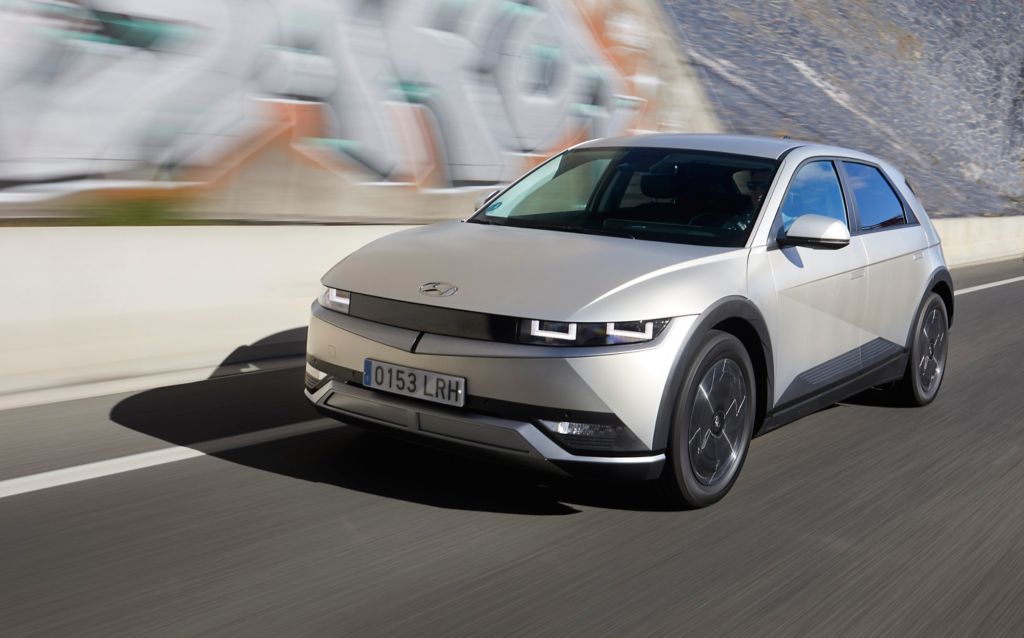
We analyse the Hyundai IONIQ 5 2026 with its 63 kWh battery: range, price, 800 V E-GMP platform, and why it still sets the bar for the electric compact in Spain.
The Hyundai IONIQ 5 has been on the market since 2021 and, against all odds in a segment where commercial lifespans shrink every season, it enters 2026 without having lost its status as a reference car. Neither the Chinese wave nor the renewal of European rivals has managed to displace it from the conceptual podium of the electric compact. And that, in 2026, says a lot.
A clarification before we get into the analysis: this piece deliberately leaves out two names the reader might expect. On one hand, the range of BYD, not for lack of merit, but because in this review we want to talk about the car that best embodies the segment’s standard, not every possible candidate. On the other, Nissan, whose Leaf was an absolute pioneer in affordable electric motoring; in our editorial judgement, the current generation of the segment has raised the bar on range, charging curve and digital experience to a point where the Japanese car’s contribution now falls short of what is expected today.
The IONIQ 5 in 2026: context and positioning
Hyundai launched the IONIQ 5 as a statement of intent — the first model on the E-GMP platform, a native 800 V architecture it would share with the Kia EV6 and the Genesis GV60. Five years on, that technical bet still holds up. Many rivals have only just arrived where this car was in 2021.
In Spain it is offered in several configurations. The version at the centre of this review is the 63 kWh Light with 170 CV, the sensible entry point to the range.
Design: retrofuturism that has aged well
Here lies one of the IONIQ 5’s great assets. The pixelated light signatures, the nods to the original Pony of the seventies, those almost architectural straight lines — all of that, which could have looked like a passing fad, has consolidated into an identity. In our view, it is one of the few electric cars of the decade that does not suffer from aesthetic fatigue.
It measures more than it appears. At 4.65 metres long with a 3-metre wheelbase, this is a car that looks like a compact in photos but, in person, stands up to saloons of the D segment.
Interior and space: the surprise that isn’t a surprise
When you open the door you understand why a dedicated platform matters. Flat floor, sliding centre console, front seats that recline almost fully — it is a lounge on wheels. The rear seats offer legroom that many mid-size SUVs fail to match. The boot stands at 520 litres, with a small front frunk as a bonus.
The materials are restrained, with recycled textiles and an overall decent feel. It does not compete with German luxury, nor does it aim to. The 12.3-inch twin screens do their job without fuss: a clear interface, quick response, physical buttons where it counts. That is appreciated.
E-GMP platform and charging: the definitive technical argument
This is where the IONIQ 5 still plays in a different league. The 800 V architecture allows DC fast-charging times that most rivals are still chasing. We are talking about going from 10 to 80% in around 18 minutes on a suitable HPC charger — a figure that, on a long journey, makes the difference between stopping to stretch your legs and stopping to wait. A topic we have already covered in depth in our ranking of compact electric cars with the fastest charging.
Furthermore, the V2L function turns the car into a 3.6 kW mobile battery. Camping, power tools on a job site, a portable fridge over a weekend — it is not a whim, it is real utility.
Real-world range and consumption
With the 63 kWh battery, the homologated figure is around 440 km WLTP. In practice, as anyone who has spent a winter with an electric car knows, the real figure hovers around 340–370 km in mixed driving at moderate temperatures. On the motorway at 120 km/h and in the cold, it drops to the 290–320 km bracket. Correct for the segment, not spectacular.
The 170 CV rear motor moves the car with competence. Don’t expect sporty thrills: for that there is the N variant with 650 CV, a different league altogether. This version is the balanced, sensible one, the one bought by someone who wants a useful electric car without paying for power they won’t use.
Price and direct competition
Starting from a recommended retail price of €44,670 — excluding dealer discounts, one-off campaigns or aid from the Plan Auto+, whose amounts should be checked on the updated official website — the IONIQ 5 sits in a band where it has to justify every euro against more recent rivals. And it does so, above all, through the combination of technical platform, space and design.
| Power kW | Power CV | Top speed | Range | Consumption | Label | Fuel |
|---|---|---|---|---|---|---|
| 125 kW | ≈170 CV | 185 km/h | ≈440 km | ≈15.6 kWh/100 km | ZERO | Electric |
Weak points worth acknowledging
Not everything is cause for celebration. Rear visibility is tight, due to the small rear window and the C-pillar lines. The regenerative braking, although configurable in several positions from the paddles, does not reach the purist one-pedal driving of a Model 3. And consumption on the motorway, when you push the pace, rises more than one would expect from a car so aerodynamically conceived.
That said, for most real-world uses — urban and interurban commuting and occasional long trips with a fast-charging stop — the package remains well rounded.
Overall rating
| Model | Power | Range | Label | Price from | Score |
|---|---|---|---|---|---|
| Hyundai IONIQ 5 63 kWh Light | 170 CV | ≈440 km | ZERO | €44,670 | 8.7/10 |
Frequently asked questions
Is the Hyundai IONIQ 5 worth it in 2026?
Yes, especially if you value DC fast charging, upper-segment interior space and a design that has proven it doesn’t age. It is one of the most balanced bets in the electric compact segment this year.
How much does the Hyundai IONIQ 5 cost in Spain?
Entry to the range with the 63 kWh battery and 170 CV starts at a recommended retail price of €44,670, excluding dealer discounts and public aid from the Plan Auto+.
What is the real-world range of the 63 kWh IONIQ 5?
The WLTP homologation sits at around 440 km. In realistic mixed use with mild temperatures, the practical range is around 340–370 km; on the motorway at high speed and in the cold it can drop to the 290–320 km bracket.
Why is the IONIQ 5 charging so fast?
Because of its E-GMP platform with 800 V electrical architecture, still uncommon in the compact segment. It allows going from 10 to 80% charge in about 18 minutes on a suitable HPC charger, a time that remains a benchmark in 2026.
Technical specifications of this car

 Peugeot E-208 GTi: a battery-powered toy that revives the spirit of the 1980s sports cars
 New Lexus ES: luxury grows and goes electric
 First contact with the Dacia Sandero Hybrid 155: power and efficiency from €19,890
Deja un comentario