C10 Leapmotor Electric Cars Review SUV
Review Leapmotor C10: the electric SUV that redefines value for money in 2026
 Iván Navarro
19 August 2026
7 min.
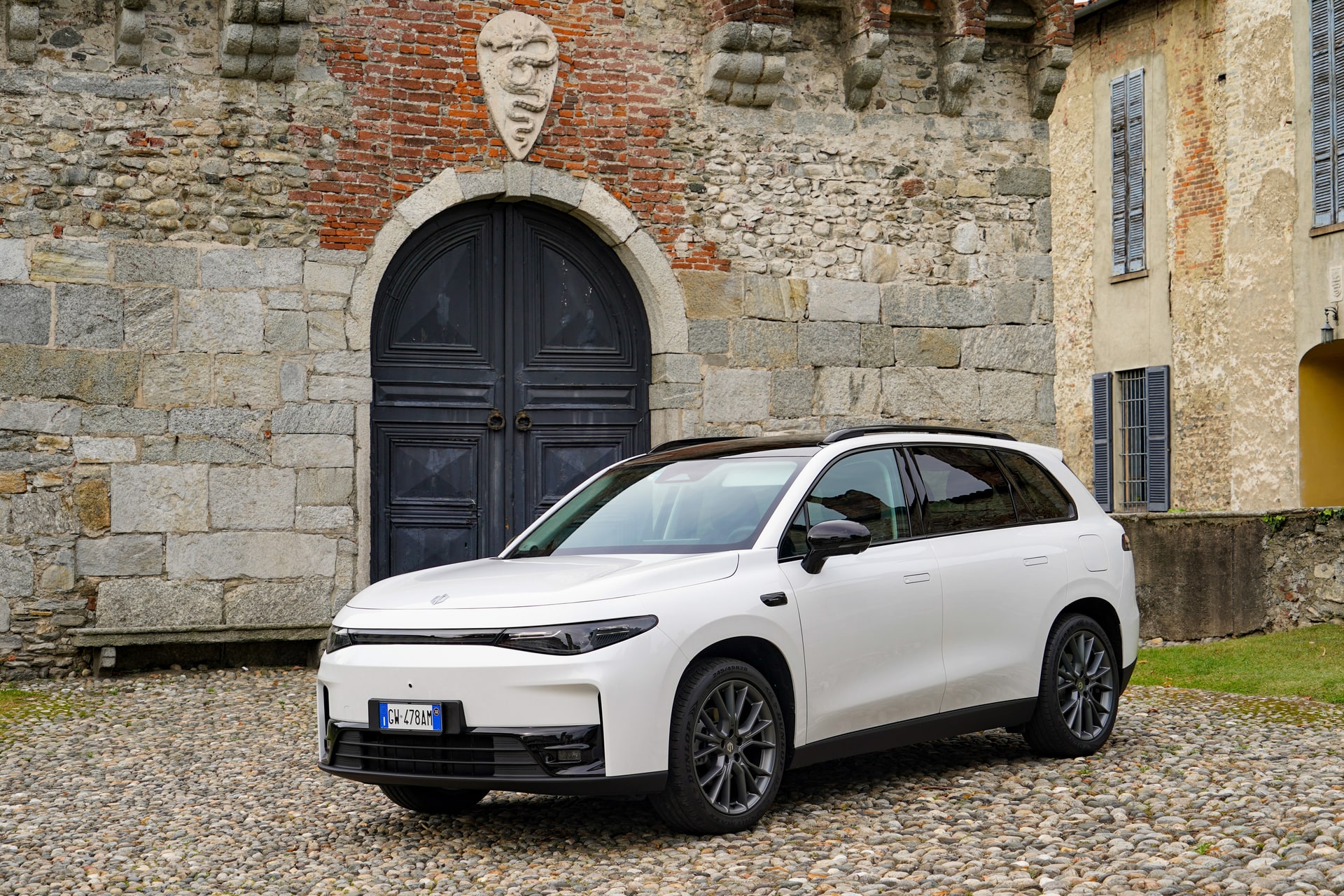
We analyse the Leapmotor C10 REEV, a Chinese SUV backed by Stellantis that offers 215 CV, 145 km of electric range and an indicative RRP from 36,800 €. Is it the best value-for-money proposition in its segment in 2026?
Some cars reach the Spanish market making a lot of noise, while others arrive almost on tiptoe, letting the figures speak for themselves. The Leapmotor C10 belongs to the second group. A compact SUV with Chinese DNA, backed by Stellantis’s sales network, which in its REEV version presents an equation that is hard to ignore: 215 CV, 145 km of electric range and an indicative RRP from 36,800 €. On paper, unbeatable. In practice, we shall see.
Leapmotor C10 review: why this Chinese SUV matters in Spain
That a manufacturer unknown to the general public should land under the Stellantis group is no minor detail. It means dealer network, a workshop close to home, backed warranty and accessible spare parts. Three things that, until recently, were the Achilles’ heel of any Chinese brand wanting to sell you a car in Cuenca or Badajoz.
The C10 comes in two flavours: 100% electric and REEV (Range Extended Electric Vehicle). Our review focuses on the REEV, which has generated the most interest in the Spanish market for its promise of life without range anxiety. And yes, it must be clarified from the outset, because we have read too much confusion on forums and social networks: the REEV is not a conventional plug-in hybrid. It is an electric car with a petrol generator on board.
Exterior design: restrained, clean and with fewer flourishes than expected
The first thing that surprises about the C10 is how little it shouts. In a segment where Asian ostentation usually prevails, here we find clean surfaces, black pillars that slim the silhouette and an LED light signature that reads well both by day and by night. 4.74 metres long, balanced proportions and a stance that, to my taste, recalls European design language more than what we usually see coming from the Asian giant.
That said, it is not a car that will stir aesthetic passions. It is correct. Even elegant. But do not expect the visual drama of a Peugeot 3008 nor the strong personality of a Volvo EX30.
Premium interior for 36,800 €: the C10’s great argument
This is where the Leapmotor C10 lays its cards on the table. Pleasant-touch materials, synthetic leather upholstery with exposed stitching, fixed panoramic roof and a 14.6-inch central screen that directs all interaction. It feels a step above the price paid, and that is something German rivals at twice the cost have spent years failing to achieve.
Minimalism, however, has its toll. Almost everything is controlled from the touchscreen, and on the move that is uncomfortable. Adjusting the climate or the mirror demands more attention than is desirable. It is not a problem exclusive to the C10, but it is worth knowing.
The rear seats offer ample space for two tall adults, and the boot stands at 400 litres — sufficient for family use without fuss.
Leapmotor C10 range and REEV system: how it works in practice
The technical heart of the C10 REEV is the most interesting part of this review. A 158 kW (roughly 215 CV) electric motor drives the rear wheels. Always. The 1.5 petrol engine, when the 28.4 kWh battery has insufficient charge left, acts as a generator and produces electricity to keep going. It never drives the wheels.
The practical translation? The first ~145 km are 100% electric if you set off with a full battery. Afterwards, the car continues to run as an electric vehicle — with the petrol engine topping up the electric supply — and the homologated consumption stays at a ridiculous 0.4 l/100 km weighted WLTP. In real use, once the battery is depleted, expect consumption closer to 6 l/100 km on motorways. But without recharging stops.
For typical Spanish urban and peri-urban use — a daily commute of 40–50 km, home with a plug — the C10 REEV will behave practically like a pure electric. And for the occasional trip to Cádiz in August, there will be no need to plan around chargers. That is the argument.
| Power kW | Power CV | Top speed | Range | Consumption | Label | Fuel |
|---|---|---|---|---|---|---|
| 158 kW | 215 CV | 170 km/h | 145 km electric | 0.4 l/100 km | 0 emissions | REEV |
Dynamic behaviour: comfortable before sporty
With 215 CV to the rear wheels and the instant acceleration typical of an electric, the C10 has no trouble in traffic. It accelerates with solvency and responds with the silent elasticity everyone already expects from an electric motor. But it is not enjoyed like a sports car, nor does it pretend to be. The steering is heavier than that of a Cupra Terramar, and the chassis prioritises comfort over sportiness. Fine.
Leapmotor C10 price and competition: is it really worth it?
This is where the most useful analysis comes in. The C10 REEV starts from around 36,800 € RRP (without discounts, campaigns or Plan Auto+ aid applied). Its direct rivals, in the Chinese compact SUV format with hybrid or plug-in proposals, sit in similar price brackets. Let us see.
Jaecoo 7 SHS — from ≈33,000 €
A plug-in hybrid proposal with a similar approach to the REEV but with conventional PHEV architecture. Notable interior, expanding dealer network and a detailed analysis of the Jaecoo 7 that we published recently.
Omoda 7 — from ≈32,000 €
Compact SUV with a more aggressive look. Technological interior and aggressive pricing. Less power than the C10.
MG HS PHEV — from ≈35,000 €
A MG HS plug-in hybrid with an established dealer network. Notable electric range and a 7-year warranty.
Geely Starray EM-i — from ≈32,000 €
Another Chinese PHEV that is making waves for its product and price.
Comparison table: Highmotor score
| Model | Price from | Power | Electric range | Label | Score |
|---|---|---|---|---|---|
| Leapmotor C10 REEV | 36,800 € | 215 CV | 145 km | 0 emissions | 8.7 |
| Jaecoo 7 SHS | 33,000 € | 279 CV | 90 km | 0 emissions | 8.4 |
| Omoda 7 | 32,000 € | 279 CV | 90 km | 0 emissions | 7.8 |
| MG HS PHEV | 35,000 € | 272 CV | 100 km | 0 emissions | 8.5 |
| Geely Starray EM-i | 32,000 € | 262 CV | 80 km | 0 emissions | 8.2 |
The prices indicated are manufacturer RRPs and do not include commercial discounts, one-off campaigns or purchase aid currently in force under the Plan Auto+ framework.
Leapmotor C10 opinions: the good, the questionable and what remains to be seen
In our view, the C10 REEV gets the important things right: a surprising interior, a well-resolved REEV system for Spanish use and a competitive price backed by Stellantis. The questionable points: total dependence on the touchscreen and dynamic behaviour that does not invite enjoyment on a winding road. What remains to be seen is how well it will hold its resale value in the medium term, the great unknown for recently arrived Chinese brands.
Frequently asked questions
What is the difference between the Leapmotor C10 electric and the REEV?
The 100% electric version is only recharged by plug and relies on a larger battery for its full range. The REEV adds a 1.5 petrol engine that acts exclusively as an electricity generator when the battery runs out, never driving the wheels. In practice, it is always driven like an electric car.
Does the Leapmotor C10 have the DGT 0-emissions label?
Yes. The REEV version is homologated with the 0-emissions label by exceeding 40 km of WLTP electric range, allowing free access to ZBE zones in Madrid, Barcelona and other cities with restrictions.
Where is the Leapmotor C10 repaired and serviced in Spain?
The dealer and after-sales network relies on selected Stellantis dealerships, which guarantees broad territorial coverage and spare parts availability similar to that of a consolidated European brand.
Is the Leapmotor C10 REEV worth it compared with a conventional plug-in hybrid?
It depends on use. If you have a plug at home and make short daily trips, the C10 REEV works as a pure electric car with no range anxiety on long journeys. For those who drive many motorway kilometres without the ability to recharge, a traditional PHEV may prove more efficient.
Technical specifications of this car


 Kia offers an electric range of 10 models, 50 versions and 400 possible combinations
 The seven finalists for the 2027 European Car of the Year (COTY) are exclusively electric
 Peugeot E-208 GTi: a battery-powered toy that revives the spirit of the 1980s sports cars
Deja un comentario