SEAT Ibiza 1.6 TDI 90 CV, Road Test (Exterior Design, Interior and Finishes)
 Chema
8 January 2013
3 min.
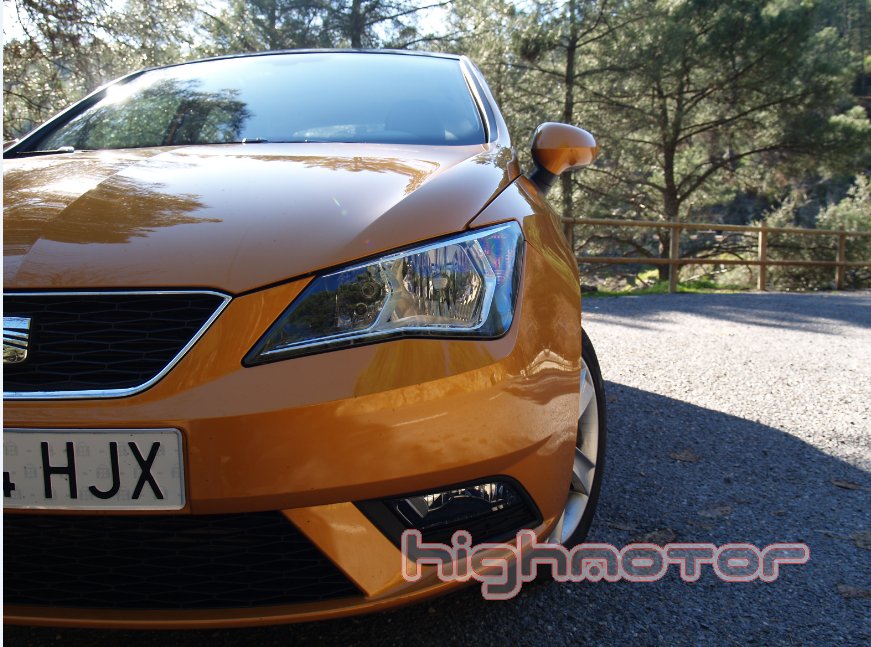
We continue with the second part of the road test of SEAT’s small city car, the Ibiza five-door Style 1.6 TDI with 90 CV. Today we talk about the quality of the finishes, its exterior and interior design.
Today, at Highmotor, we continue with the second part of the road test of our small SEAT Ibiza 1.6 TDI with 90 CV of power. Yesterday we reviewed the good and the bad of the engine, the performance, the handling and the consumption of this Spanish supermini with a youthful appeal.
Now, in the second part, we turn to discussing the quality of the finishes, the space for occupants and luggage, its exterior design and, of course, the interior of the cabin.
EXTERIOR DESIGN
At the end of 2012, SEAT made small changes to the exterior of the vehicle, keeping it young and modern, something the Ibiza has always been known for. The main changes compared with the 2008 version focus on new headlights, with LED options both front and rear. The grille and the bumpers, which are now sharper and leave behind rounded shapes, give the driver a sporty touch. The alloy wheels and the fog lights are also new.
Our five-door unit, painted in a colour called Amarillo Tribu, quite eye-catching, paired with the black glass roof and the 16-inch alloy wheels, turned heads among the younger crowd in my city. At night, with the lights on, the “show” grew. It is not usual to see that colour combination on such a small car that exceeded 21,000 euros.
INTERIOR DESIGN, QUALITY AND FINISHES
As soon as I sat in our SEAT Ibiza, I noticed its high driving position, something I really dislike, but after a week with it you get used to it. It is not a vehicle known for its generous headroom for occupants, but I, who am not especially short, had more than enough clearance between my head and the roof. The latter is somewhat lower on versions with a sunroof, showing a step between the rear and front sections.
Two people can travel comfortably in the rear seats, as long as the front occupants are not too tall. The centre seat is reserved only for very short journeys due to its smaller size, its higher position and a fairly hard cushion that can become uncomfortable.
The boot, in the five-door version, offers 292 litres of capacity, expandable if we fold down the rear seats. Although it is not one of the largest on the market (above it we find the one in the Skoda Fabia or the Dacia Sandero), it allows long trips thanks mainly to its regular shapes that offer a correct placement of suitcases or objects.
All versions come standard with a puncture repair kit, so in the spare wheel well (optional), we could keep adding items in case the boot were full.
The dashboard, in the Style trim, is divided into two materials. The lower part offers a softer plastic, while the upper one is really hard and of low quality. Within the same group (Volkswagen), the Polo is much better finished. Even so, it seems it could last many years under rough treatment with barely any wear. The steering wheel and gear lever are finished in leather, something appreciated after many kilometres of driving.
The air conditioning system, standard air conditioning, works really well. It heats or cools quickly. It only reaches the front, so the rear has to make do with the air arriving from the other zone of the vehicle or from the leg air vents.
In the third part of the test we will talk about its price, its equipment and I will give an overall assessment of the vehicle. Don’t miss it.
Photography | Highmotor
Technical specifications of this car


 Kia offers an electric range of 10 models, 50 versions and 400 possible combinations
 The seven finalists for the 2027 European Car of the Year (COTY) are exclusively electric
 Peugeot E-208 GTi: a battery-powered toy that revives the spirit of the 1980s sports cars
Deja un comentario