Audi e-tron Electric Cars Dakar Range / versions
The Audi RS Q e-tron prepared for the Dakar receives its latest updates for 2024
 Óscar Sanz
29 November 2023
3 min.
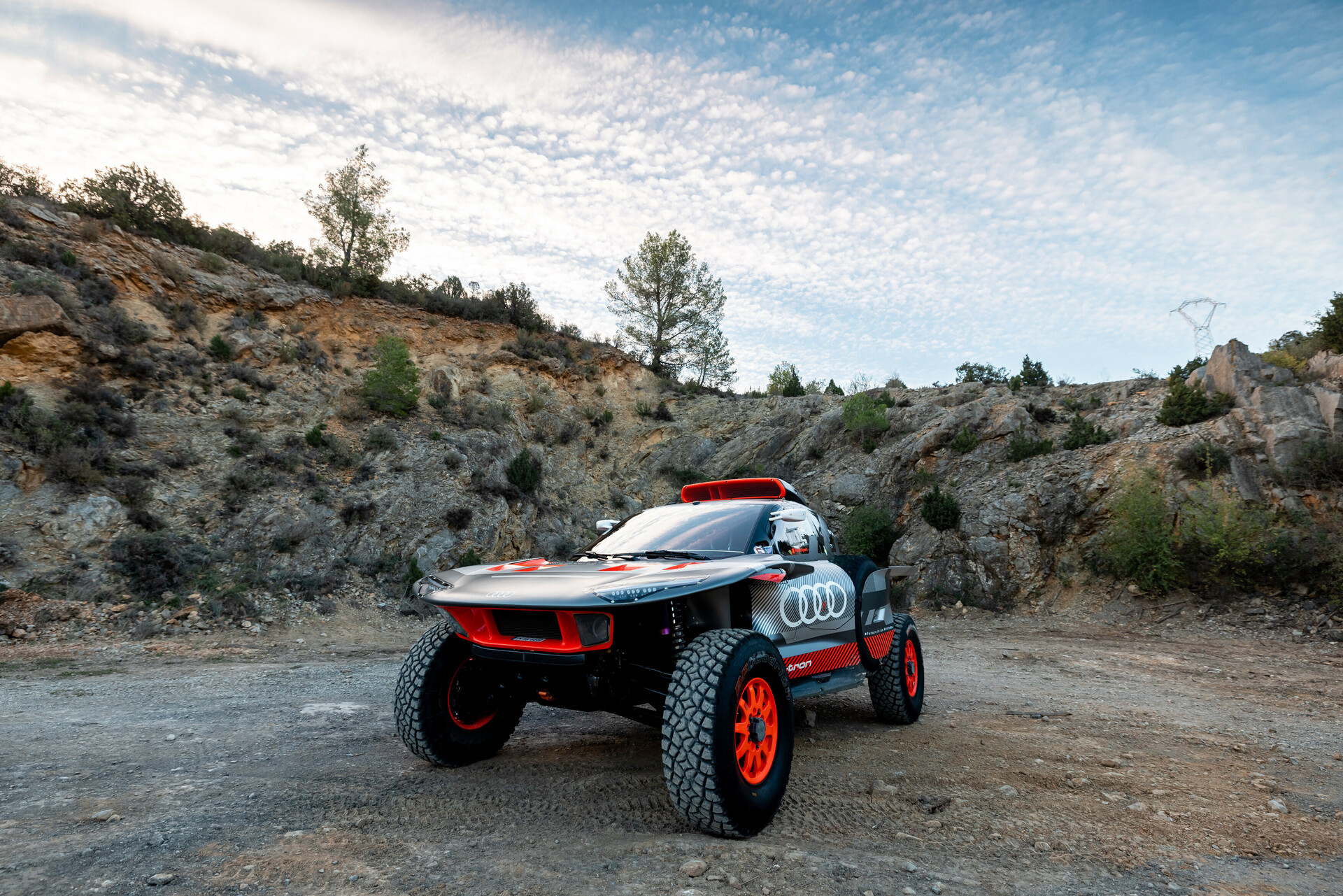
Audi introduces several innovations to its Dakar-prepared model to make it safer, more reliable and ready for the desert challenge
Audi, a pioneer in low-emission vehicles, presents significant improvements to its RS Q e-tron prototype, preparing for its third foray into the Dakar Rally 2024. The innovative electric vehicle, known for its unique propulsion system and high-voltage battery, has undergone significant advances in five key areas: safety, reliability, comfort, performance and maintenance times.
Safety:
The comprehensive focus on safety in the RS Q e-tron has led to substantial improvements. Engineers have redesigned the suspension elements, distributing loads more effectively for optimal chassis control. The CFRP structure at the front of the chassis has been extended to better absorb energy in the event of frontal landings, prioritising occupant safety. In addition, the seat foam has been optimised for a more efficient distribution of loads, contributing to greater durability over time.
Reliability:
The reliability of the RS Q e-tron has been tested in extreme conditions, with all three prototypes reaching the finish line on their first participation in 2022. Now, attention is focused on smart details. The improved wheel design prevents stones from getting trapped, minimising the need for wheel changes and reducing maintenance times.
Comfort:
The well-being of drivers and co-drivers is essential in the demanding Dakar Rally, so Audi has optimised the sound insulation and the cabin sealing to create a more comfortable environment. A modified front bonnet better repels mud and water, ensuring constant visibility through the windscreen.
Performance:
From the chassis to the software, the RS Q e-tron has undergone improvements in various areas to increase its competitiveness. The optimisation of the set-up, the lightening of key components and an adjustment of the electric motor power are just some of the innovations that make the RS Q e-tron a force to be reckoned with in the next Dakar.
To approach the minimum weight limit of 2,100 kilograms and offset the weight increase from the new, more robust tyres, Audi has lightened several components of the RS Q e-tron. These include the rear bonnet, the brake calipers and the co-driver’s footrest. The regulations also adjust the power-to-weight ratio compared with rivals in the T1 class, modifying the maximum power of the electric motors from 263 kW at the start of the 2023 season to 271 kW during the Dakar Rally, due to a regulatory change. From January 2024, power will increase to 286 kW. Likewise, the regulations impose a 10 kg increase in the weight of T1 category models, setting it at 2,010 kilograms.
Less maintenance, better results:
In its constant search for improvements, the development team at Audi Sport has simplified maintenance processes. Modified bolted joints, optimised devices and innovative solutions for bodywork parts have helped make maintenance simpler and faster. These changes have been successfully implemented, ensuring that the RS Q e-tron is fully equipped to face the Dakar Rally 2024.
With Carlos Sainz, Mattias Ekström and Stéphane Peterhansel back behind the wheel, the RS Q e-tron promises an exciting and environmentally friendly performance in the upcoming Dakar Rally. Audi once again demonstrates its commitment to innovation and excellence in off-road competition, setting new standards in sustainable mobility.
Image gallery Audi RS Q e-tron


 The seven finalists for the 2027 European Car of the Year (COTY) are exclusively electric
 Peugeot E-208 GTi: a battery-powered toy that revives the spirit of the 1980s sports cars
 New Lexus ES: luxury grows and goes electric
Deja un comentario