C-HR Toyota Electric Cars Hybrid Cars Range / versions SUV
The new range of the Toyota C-HR, with its 223 CV hybrid version, starts production
 Óscar Sanz
6 November 2023
3 min.
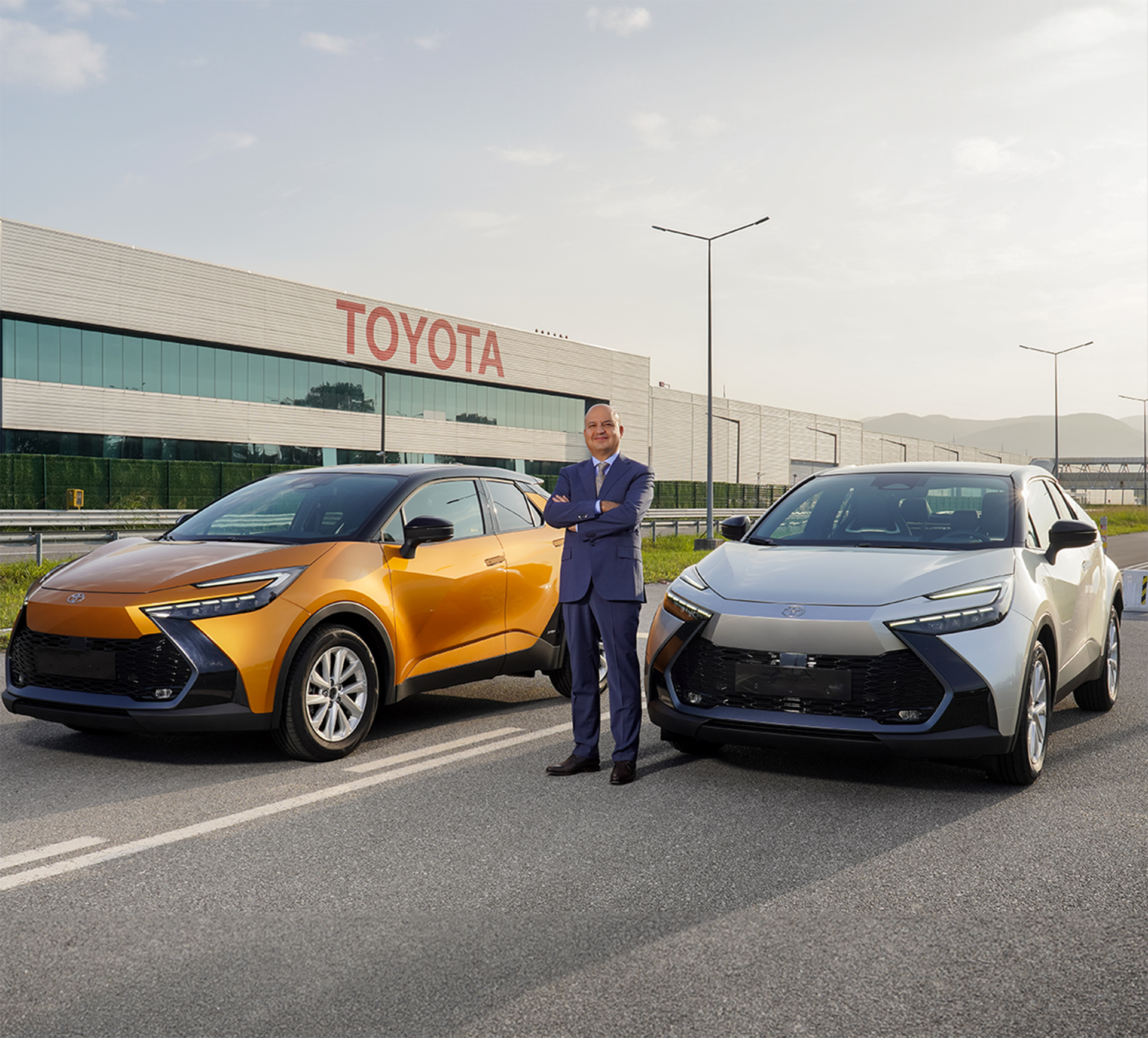
Toyota has everything ready for the start of production of its renewed C-HR, which covers everything from 1.8- and 2.0-litre electric hybrid versions to 2.0-litre plug-in hybrid (PHEV) versions
The motoring world has witnessed the overwhelming success of the Toyota C-HR, a city car with a distinctive character that has won over 800,000 drivers around the world. This vehicle, built by the Japanese brand, has managed to stand out in a highly competitive market, and now Toyota Motor Europe (TME) goes a step further by starting production of the renewed Toyota C-HR at its Sakarya plant, Turkey. But that is not all: this plant becomes a centre of electrification by including Toyota’s first European battery assembly line, marking a milestone in the manufacture of plug-in hybrid vehicles on the continent.
The Toyota C-HR stood out from its launch for its revolutionary style in the European C-SUV segment, with a radical design closer to sports coupés. This model, which has become a benchmark for daring design, was developed and designed in Europe. Its impact on the European market contributed to the increase in the brand’s market share of Toyota, rising from 4% to 7%.
Toyota Motor Manufacturing Turkey (TMMT)
Toyota has made an investment of 308 million euros in modernising TMMT’s production lines in Sakarya, bringing the total investment in the plant to an impressive 2,500 million euros. This new investment will allow TMMT to further diversify its production, including the manufacture of batteries for plug-in vehicles in Europe for the first time. The new battery line has an assembly capacity of 75,000 units per year.
Yoshihiro Nakata, president and chief executive officer of Toyota Motor Europe, expressed his satisfaction with the launch of the new Toyota C-HR and the expansion of TMMT’s production facilities. The capacity to produce a plug-in hybrid version with batteries assembled on the continent is another step in Toyota’s strategy to achieve a 100% reduction in CO2 emissions across its European vehicle range by 2035.
Toyota has committed to achieving carbon neutrality in Europe by 2040, and aims to reach carbon neutrality at all its European factories by 2030. TMMT is moving towards this goal by implementing measures to minimise energy consumption and transitioning to renewable energy, including low-CO2 paint technologies, carbon-free ventilation systems and the use of solar energy.
Engine range
As for the mechanical side, the new Toyota C-HR reaches the market with four powertrain variants, ranging from 1.8- and 2.0-litre electric hybrid (HEV) versions to 2.0-litre plug-in hybrid (PHEV) versions, which can also be equipped with an intelligent all-wheel-drive system.
The least powerful version of the new C-HR produces 140 CV with the 1.8-litre engine, while the HEV versions with the 2.0-litre engine reach 198 CV and the versions with plug-in hybrid technology reach 223 CV, thus offering a range of options to meet drivers’ needs in terms of performance and efficiency.
Technical specifications of this car


 Peugeot E-208 GTi: a battery-powered toy that revives the spirit of the 1980s sports cars
 New Lexus ES: luxury grows and goes electric
 First contact with the Dacia Sandero Hybrid 155: power and efficiency from €19,890
Deja un comentario