Hilux Toyota Coches hidrógeno Pick-up
The Toyota Hilux hydrogen fuel cell continues development in the UK
 Victor Alós Yus @sepelaci
11 September 2023
2 min.
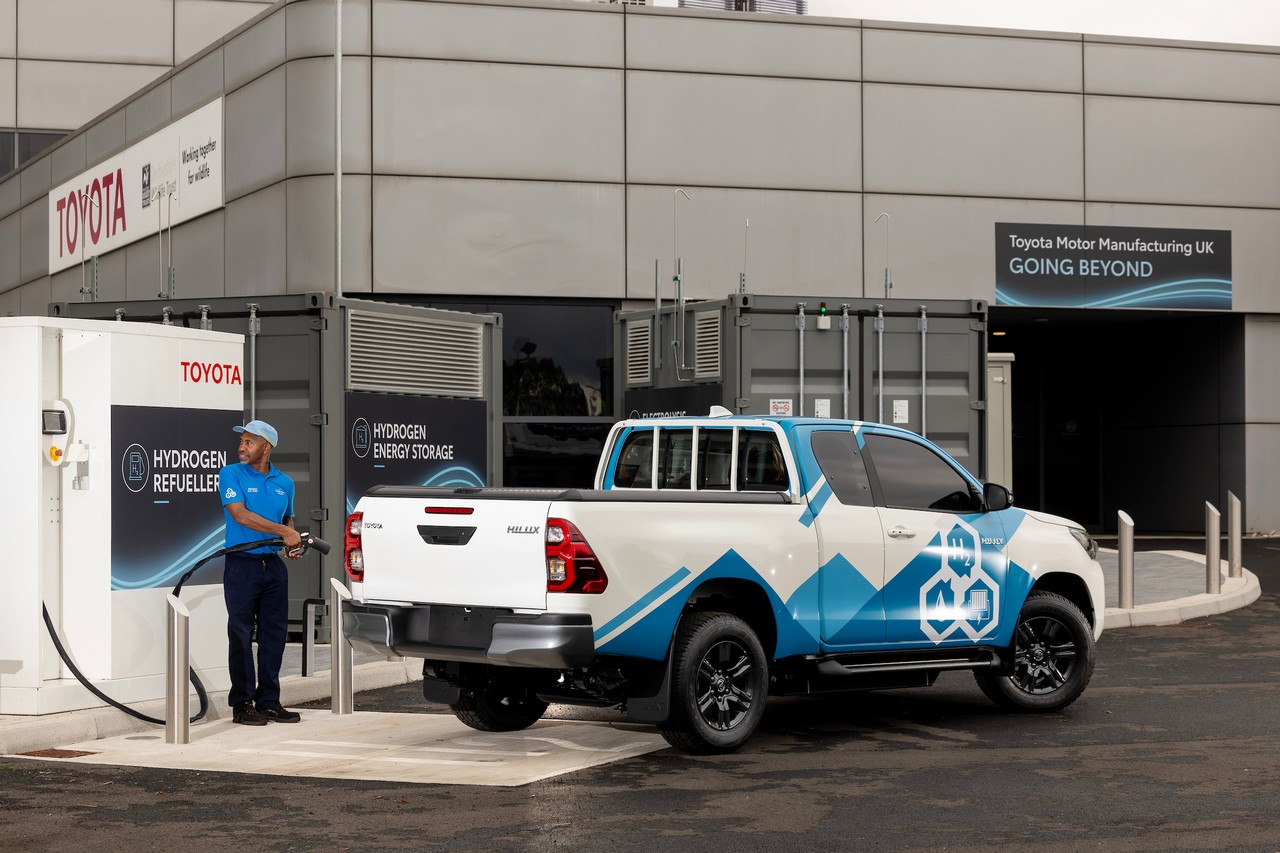
The British division of the Japanese brand is developing a variant of the popular pick-up and has presented the first prototype of the 10 planned.
Electric mobility is something that is already taken for granted. But within it there are several options for obtaining the electricity that will power these vehicles. In addition to charging through electric chargers, some manufacturers are betting on hydrogen fuel cells. These use this element to convert it into energy that powers the vehicle. One of their advantages is the greater range compared with battery electric vehicles.
Toyota is one of the manufacturers that relies on this way of obtaining energy, so is carrying out tests to create more models that work this way. The Toyota Mirai has been on the market for a few years and now they want to launch a pick-up that uses hydrogen to move.
The Toyota Hilux hydrogen, closer than ever
The vehicle chosen to carry out this transition towards hydrogen mobility has been the Toyota Hilux. Specifically, a Hilux with a fuel cell is being prepared and is being tested in the UK, and it aims to be the initial step toward offering a version of this type under the brand’s badge.
Galería de fotos -
TOYOTA HILUX HIDROGENO
The prototype presented has come off the line at Toyota UK’s plant in Derby. It is the first of the 10 that are planned to be used for different tests before its move to production is considered. Development of this prototype began in 2022 and it took almost a year to come off the assembly line, as assembly started in June of this year.
To power this vehicle, the drivetrain of the Mirai was chosen, consisting of an electric motor fed by the hydrogen fuel cell. This is stored in three tanks located at different points on the body. It also features an electric battery located at the rear of the model, so as not to reduce cabin space.
The other components are located under the bonnet, just as the combustion engine would be. As for range, this pick-up is expected to reach between 580 and 600 kilometres.
Once the 10 test units are ready, work will be done to gather as much data as possible to improve the vehicle and practically plan the production of the model. According to the company, this could happen before 2030.
Technical specifications of this car


 Peugeot E-208 GTi: a battery-powered toy that revives the spirit of the 1980s sports cars
 New Lexus ES: luxury grows and goes electric
 First contact with the Dacia Sandero Hybrid 155: power and efficiency from €19,890
Deja un comentario