SU7 Xiaomi Sedans Electric Cars
The Xiaomi SU 7 unveils its interior as production is already under way
 Victor Alós Yus @sepelaci
9 February 2024
2 min.
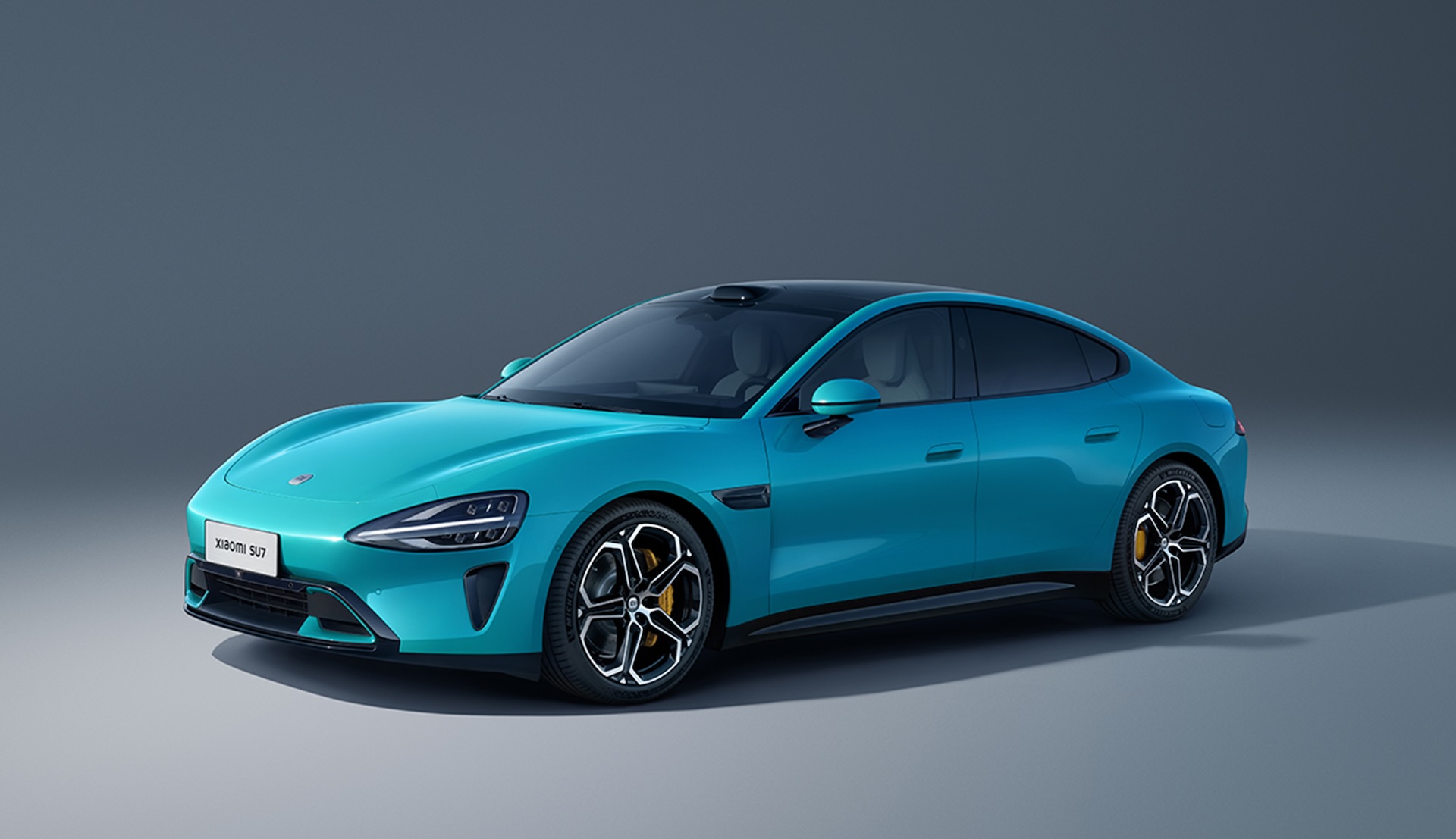
After having presented the exterior design of its first electric vehicle, the technology company has now shown what awaits us inside the car.
Only a few weeks ago we had the chance to see the exterior of the Xiaomi SU7, the first electric car developed by the Chinese tech company for the global market. But there was something else we still needed to see and which, as a technology company, it was bound to surprise us with: the cabin equipment.
We have finally been able to see it, thanks to a post on X, where user @TychodeFeijter published these images, showing how the Chinese company has laid out the driver’s position and the rest of the vehicle’s seats. The cabin is dominated by a large 16.1-inch screen, which takes centre stage, but there is much more.
For the moment we set this screen aside and focus on the instrument display. It is not very large, but it is complemented by a Head-Up Display that projects the image onto the windscreen at a size of 56 inches. A view more than sufficient to have all the necessary data about traffic without losing sight of the road.
The steering wheel is round and has several physical buttons. In the centre tunnel you can also see some of these physical controls, including the start and stop button. This space also includes a platform for wirelessly charging mobile phones.
Galería de fotos -
XIAOMI SU7 INTERIOR
Moving on to the central screen, we learn that most of the car’s functions will be controllable through it. The panel it houses is, as one would expect, one of the most advanced on the market. With this, we already have a closer idea of what the technology brand is going to bring us in the form of a car. In addition, it will have two more screens on the back of the front seats, to offer multimedia content to rear-seat passengers.
Xiaomi SU7 features
This electric saloon has a length of 4.99 metres, a considerable size. As for its electric motor, two variants are available. One offers a power output of 218 kW, that is 295 CV, while the other has a power output of 488 kW, equivalent to 664 CV.
As for the battery, both versions will come with a lithium-ion battery supplied by CATL with a capacity of 101 kWh. It provides 700 kilometres of range under the WLTP cycle, which is not bad at all. We do not know the price at which it will be sold, although it could be around 45,000 euros.


 Peugeot E-208 GTi: a battery-powered toy that revives the spirit of the 1980s sports cars
 New Lexus ES: luxury grows and goes electric
 First contact with the Dacia Sandero Hybrid 155: power and efficiency from €19,890
Deja un comentario